Quick Summary:
- Awareness Initiative: April 2026 marks Women’s Eye Health Month, focusing on the unique vision challenges faced by women globally.
- The Gender Vision Gap: Women represent 55% of the vision-impaired population and have a 27.1% higher risk of blindness than men.
- Next-Gen AI Integration: Advanced assistive devices are bridging the vision gap by leveraging LLM-based document summarization, real-time spatial mapping, and object detection to restore user independence and confidence.
- Empowerment Areas: Technology focus is on three key pillars: Professional Independence, Navigational Autonomy, and Social Confidence.
- Market Opportunity: For clinics and distributors, prioritizing gender-responsive assistive technology is a strategic growth driver for the 2026 fiscal year.
As April arrives, the global eye health community unites once again for Women’s Eye Health and Safety Month, an initiative led by Prevent Blindness to raise awareness about the unique vision challenges women face. For low vision aid suppliers, clinics and distributors , this is a strategic moment to refocus service offerings, connect with a historically under-served demographic, and drive meaningful growth in 2026.

The Gender Vision Gap: Why 2026 is the Year to Prioritize Women’s Eye Care
The global vision health landscape shows a persistent gender disparity. According to data from the International Agency for the Prevention of Blindness (IAPB), approximately 55% of the world’s population living with vision impairment are women. Furthermore, a recent global analysis published in the American Journal of Ophthalmology (2025) highlights that women face a 27.1% higher prevalence of blindness and vision loss compared to men, with this gap widening significantly in older age groups.
For organizations and distributors in the low vision industry, the message is clear—April is an opportunity to develop targeted service models and product recommendations for women’s eye health, positioning your practice as a trusted resource in this growing market.
Biological & Longevity Factors: Understanding the Unique Risks for Women
The higher prevalence of ocular conditions in women is rooted in a complex interplay of biology and longevity. Globally, women outlive men by an average of 5 to 7 years, according to the World Health Organization (WHO) Global Health Observatory. While this longer lifespan is a biological achievement, it also means women are exposed to age-related degeneration for a longer duration.
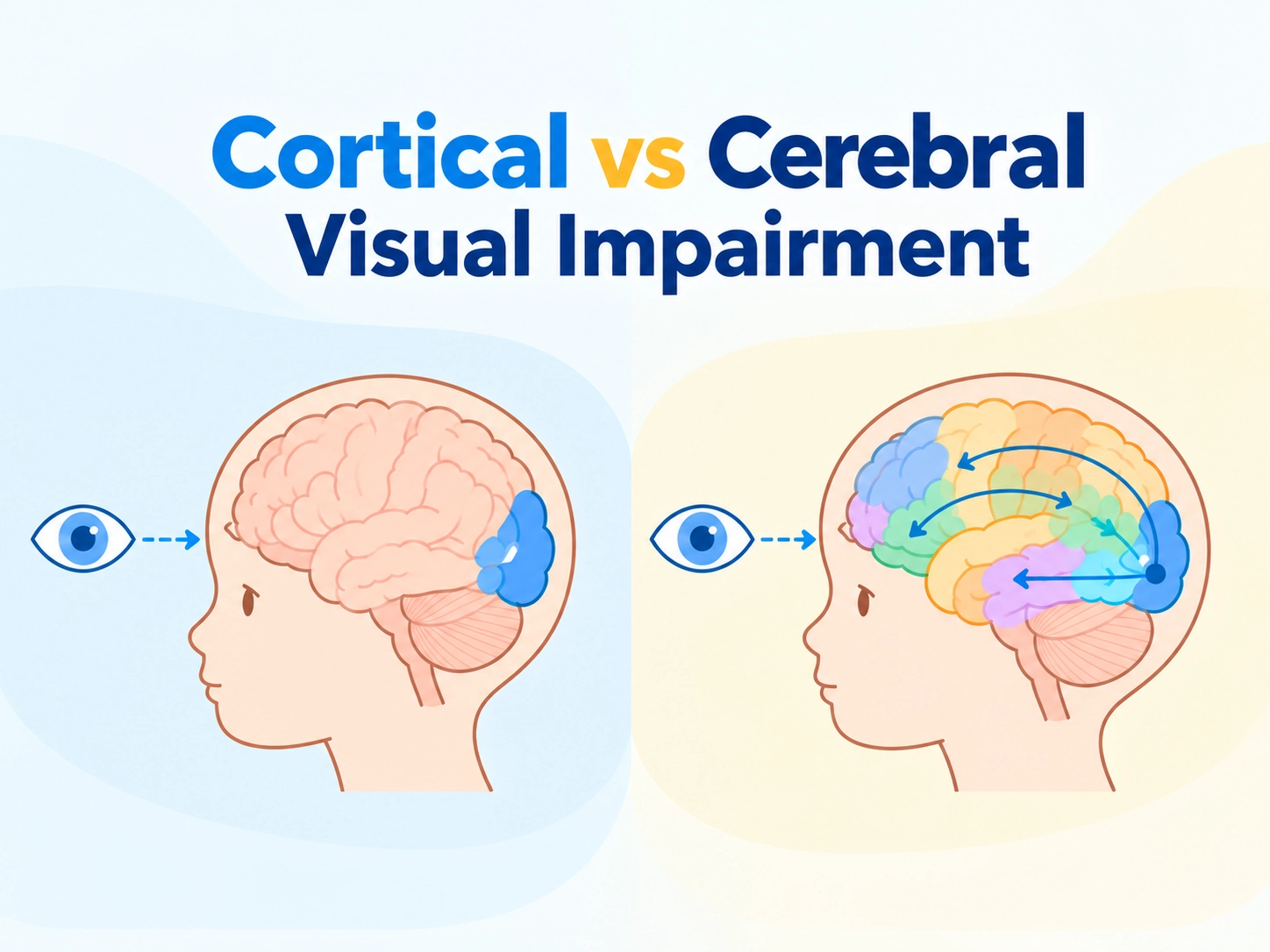
Beyond the well-documented risks of Age-related Macular Degeneration (AMD), women are statistically more susceptible to other sight-threatening conditions, including cataracts and glaucoma. Research published in journals such as The Ocular Surface and Current Opinion in Ophthalmology consistently demonstrates that hormonal fluctuations—particularly during and after menopause—alter the ocular surface and tear film. These physiological changes often lead to an increased incidence of chronic dry eye, a condition that can significantly exacerbate visual discomfort in aging women.
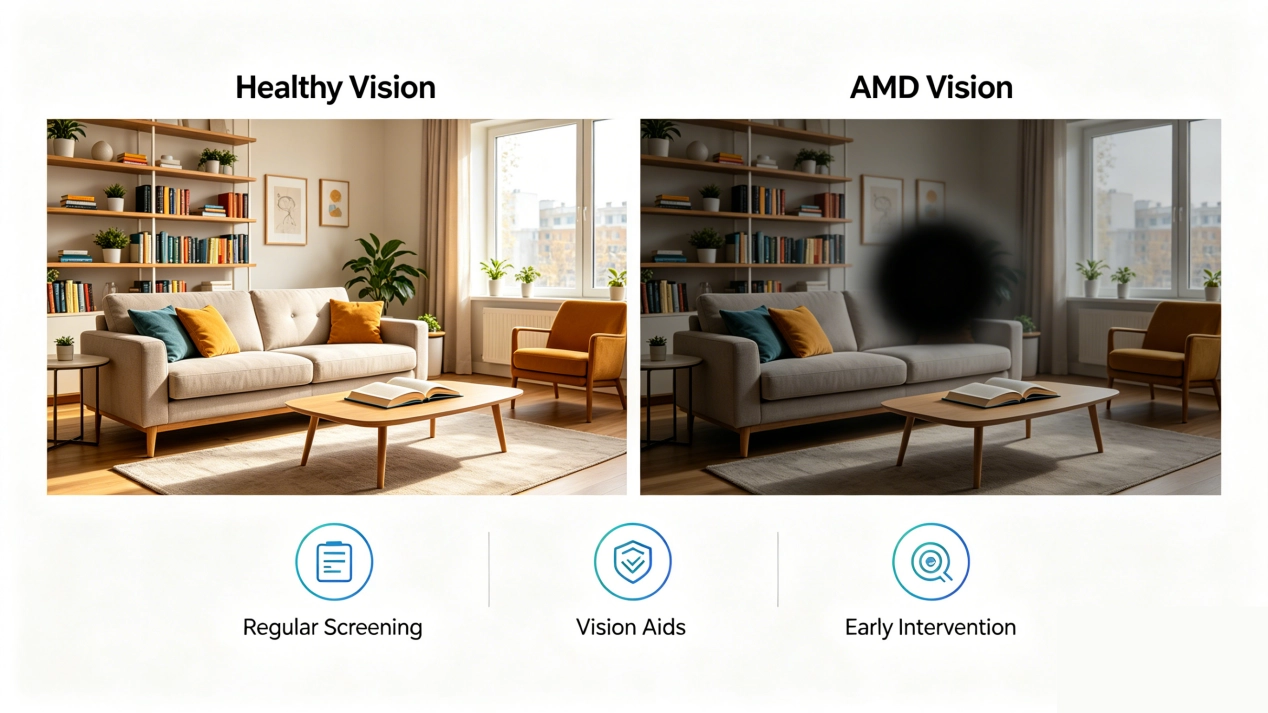
When advising patients, it is vital to emphasize that these risks are cumulative. Early intervention with low vision aids for macular degeneration and other assistive tools can significantly mitigate the impact of these progressive conditions on daily independence. For Zoomax partners, understanding these biological nuances allows for more precise, clinically backed recommendations, ultimately building long-term trust with female clients who are navigating the unique challenges of ocular aging.
The Intelligence of Sight: How AI-Powered Features Restore Confidence for Female Users
2026 has been a watershed year for assistive technology. The integration of artificial intelligence is no longer futuristic—it is a standard expectation. Today, an AI assistant for visually impaired users can do far more than simple magnification; it acts as a digital companion that interprets the world in real-time.
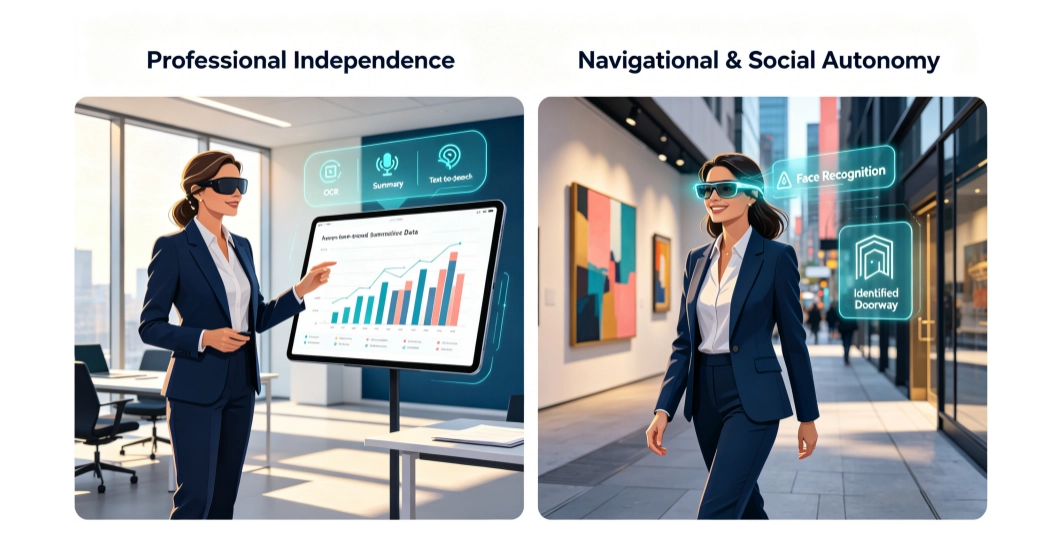
For the modern visually impaired woman, this technology is transformative in three key areas:
- Professional Independence: With advanced Optical Character Recognition (OCR) combined with Large Language Models (LLMs), devices can now summarize complex meeting documents, convert handwritten notes into clear audio, and even describe the layout of a PowerPoint presentation, allowing her to stay competitive in the workplace without constant assistance.
- Navigational Autonomy: Using spatial mapping and real-time object detection, next-gen assistive devices can alert users to environmental obstacles, identify doorways, or distinguish between different retail items in a supermarket. This “intelligent sight” provides the spatial awareness necessary for safe, independent travel.
- Personalized Interaction: AI-powered facial recognition and emotion detection help identify familiar faces in a room and even provide subtle audio cues regarding the social context, significantly reducing the anxiety often associated with social gatherings or networking events.
These AI features bridge the gap between dependence and empowerment. By reclaiming the ability to manage professional documents, navigate public spaces, and engage in social environments, visually impaired women are restoring the confidence needed to thrive in all facets of life.
Versatility in Daily Life: Bridging the Gap Between Household and Professional Excellence
Modern women navigate multiple roles—professional, caregiver, homemaker, and community participant. Their low vision solutions must adapt seamlessly across these contexts. A device that works well for reading a restaurant menu should also handle reviewing a work presentation, cooking a family meal, or shopping for groceries.
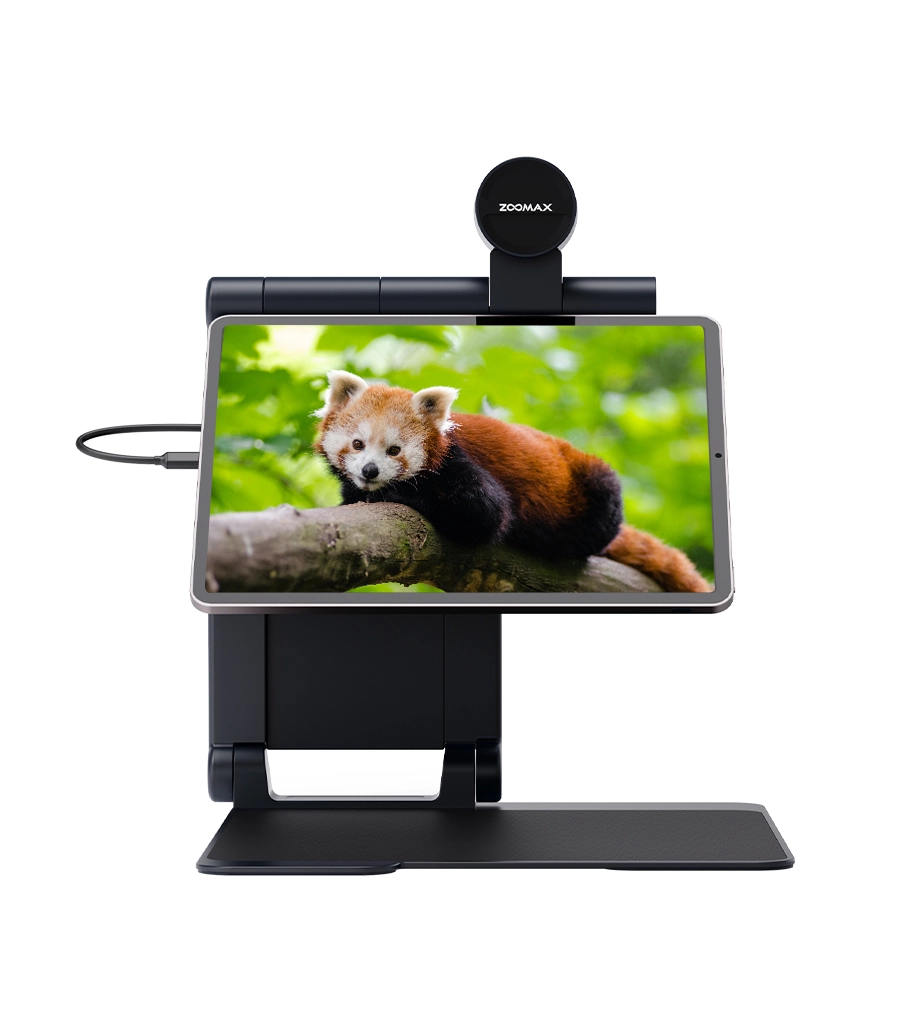
Zoomax Snow Pad: An ideal portable electronic magnifier for low vision professional who requires a large screen for complex document reading and office tasks. In a fast-paced meeting, the Snow Pad allows her to stay fully engaged; she can use the powerful distance-view lens to clearly see far-off PPT slides or whiteboard notes, while the split-screen feature lets her simultaneously magnify physical documents on her desk or take notes. When it is her turn to lead the discussion, she can use the wireless casting function to project her Snow Pad screen directly onto the conference room’s large display, ensuring a confident, professional, and accessible presentation.
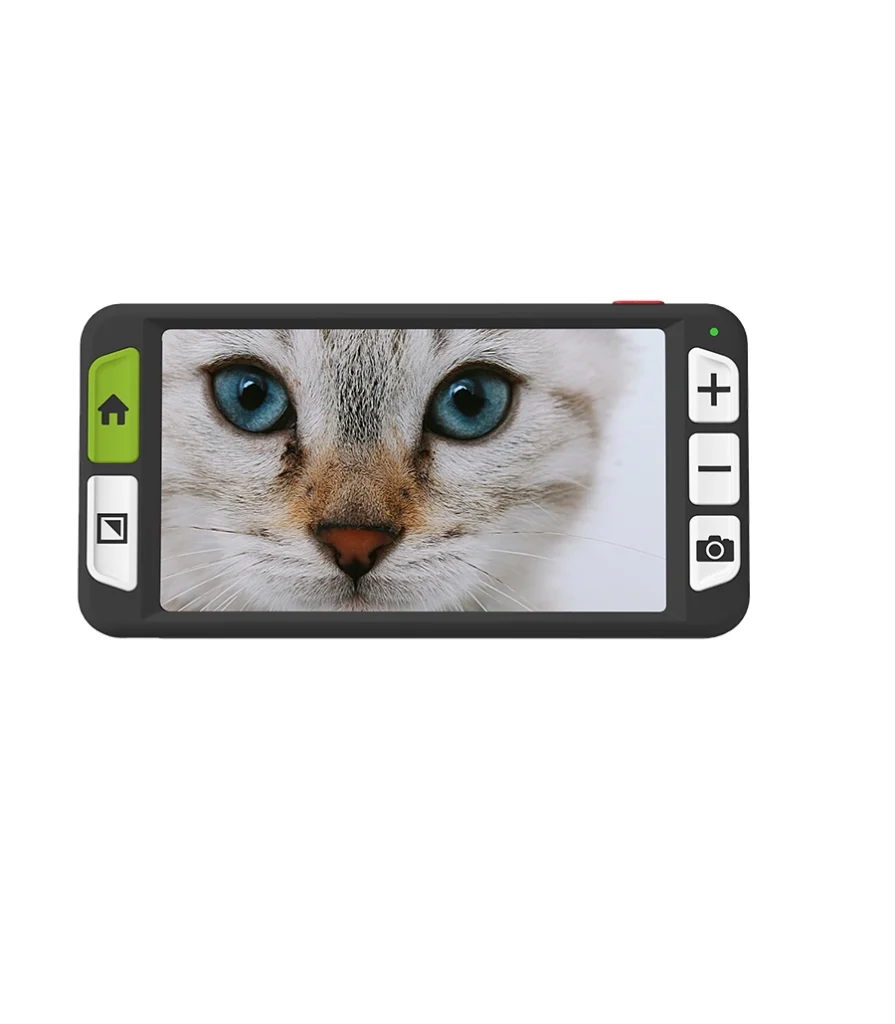
Zoomax Luna 6: The ultimate handheld digital magnifier for the visually impaired, perfectly suited for everyday reading and on-the-go magnification. In the comfort of her home, she can utilize the crisp near-view function to enjoy books and newspapers, or safely check the fine print on prescription bottles and instruction manuals. When she steps out into the world, the Luna 6 becomes her most reliable travel companion. Whether she is reading street signs, navigating public transit schedules, or checking price tags during a grocery run, its pocket-sized design and high-definition clarity ensure she maintains her independence and security wherever she goes.
Recommended Digital Magnifier for Women | ||
Display Size & Portability | Tablet Size – Foldable Portable Digital Magnifier | 5.5-Inch Pocket Size – Lightweight Handheld Digital Magnifier With Handle |
Key Technical Functions | Pairs With User’s Own Tablet | Tactile Button Controls |
Primary Target Demographic | Active Retired Women | Seniors Who Prefer Physical Buttons |
Ideal Usage Scenarios | Home & Family Moments | Home Basic Reading |
These products are specifically designed to cater to low vision products for seniors and active professionals alike, proving that utility and portability can coexist.
Partnering with Zoomax: Strategic Growth for Clinics and Distributors in 2026
The market for women’s low vision solutions is evolving rapidly. By integrating the latest AI-enabled technology into your catalog, you can meet the rising demand for sophisticated, user-friendly devices.
At Zoomax, we are committed to supporting our partners with the tools, training, and innovation needed to capture this growth. As we observe women’s eye health awareness, we invite you to explore our distributor partnership opportunities.
This April, during Women’s Eye Health and Safety Month, take action. Educate your community. Stock the right solutions. And partner with Zoomax to make a difference that matters—both for your business and for the millions of women waiting for better vision care.
Frequently Asked Questions (FAQ)
Q1: Why is it important for eye care providers to focus on “Women’s Eye Health and Safety Month” in April?
A: April serves as a critical strategic window for clinics and distributors. With data indicating that women comprise over 55% of the vision-impaired population and face a 27.1% higher risk of vision loss compared to men, providers who launch specialized outreach or educational campaigns in April can effectively reach an underserved demographic, strengthen patient loyalty, and drive demand for gender-responsive low vision products.
Q2: Are there specific biological factors that increase the risk of eye disease in women?
A: Yes. Women tend to have longer life expectancies, which correlates with a higher cumulative exposure to age-related ocular risks. Conditions such as Age-related Macular Degeneration (AMD), cataracts, and glaucoma are highly prevalent in aging female populations. Furthermore, hormonal shifts during and after menopause can influence ocular health, leading to chronic dry eye and increased visual discomfort, making early intervention with professional low vision products for elderly women essential.
Q3: Which low vision devices are most suitable for active, professional women?
A: Active women often require versatile, portable solutions. The Zoomax Snow Pad is ideal for professional excellence, offering a large, high-definition screen for document reading and office tasks. For those on the go, the Zoomax Luna 6 serves as a perfect portable electronic magnifier for low vision, fitting easily into a handbag for tasks like grocery shopping, reading labels, or navigating public spaces.
Q4: How can Zoomax support clinics and distributors in expanding their market share in 2026?
A: Zoomax empowers its partners by providing industry-leading technology, comprehensive training, and clinical resources. By partnering with Zoomax, low vision aid suppliers can offer their clients the latest AI-driven innovations and clinically backed devices designed specifically for the needs of the visually impaired. We offer scalable partnership programs to help your clinic or business capture the growing demand for specialized eye care solutions this year.
References
- International Agency for the Prevention of Blindness (IAPB). Gender and blindness: Vision Atlas. https://visionatlas.iapb.org/topics/gender/
- Global, regional, and national burden of blindness and vision loss in women, 1990 to 2021. Am J Ophthalmol. 2025;280:123-145. doi:10.1016/j.ajo.2025.12.005. https://pubmed.ncbi.nlm.nih.gov/41407091/
- World Health Organization (WHO). Global Health Observatory: Life expectancy and leading causes of death and disability. Published 2026. Accessed April 13, 2026. https://www.who.int/data/gho/data/themes/mortality-and-global-health-estimates
- Sullivan DA, Rocha EM, Aragona P, et al. TFOS DEWS II sex, gender, and hormones report. Ocul Surf. 2017;15(3):284-333. doi:10.1016/j.jtos.2017.03.004
- Schaumberg DA, Sullivan DA, Buring JE, Dana MR. The role of sex hormones in the ocular surface and dry eye disease. Curr Opin Ophthalmol. 2004;15(4):355-360. doi:10.1097/01.icu.0000132331.78206.e4