Quick Summary
In collaboration with the Zoomax R&D Center and our medical advisory experts, we are sharing and exploring the most cutting-edge glaucoma treatment technologies in this article to provide authoritative insights for the industry. As the industry pivots from intraocular pressure (IOP) management to active restoration, this article provides a comprehensive analysis of the evolving glaucoma landscape for B2B stakeholders. Key highlights include:
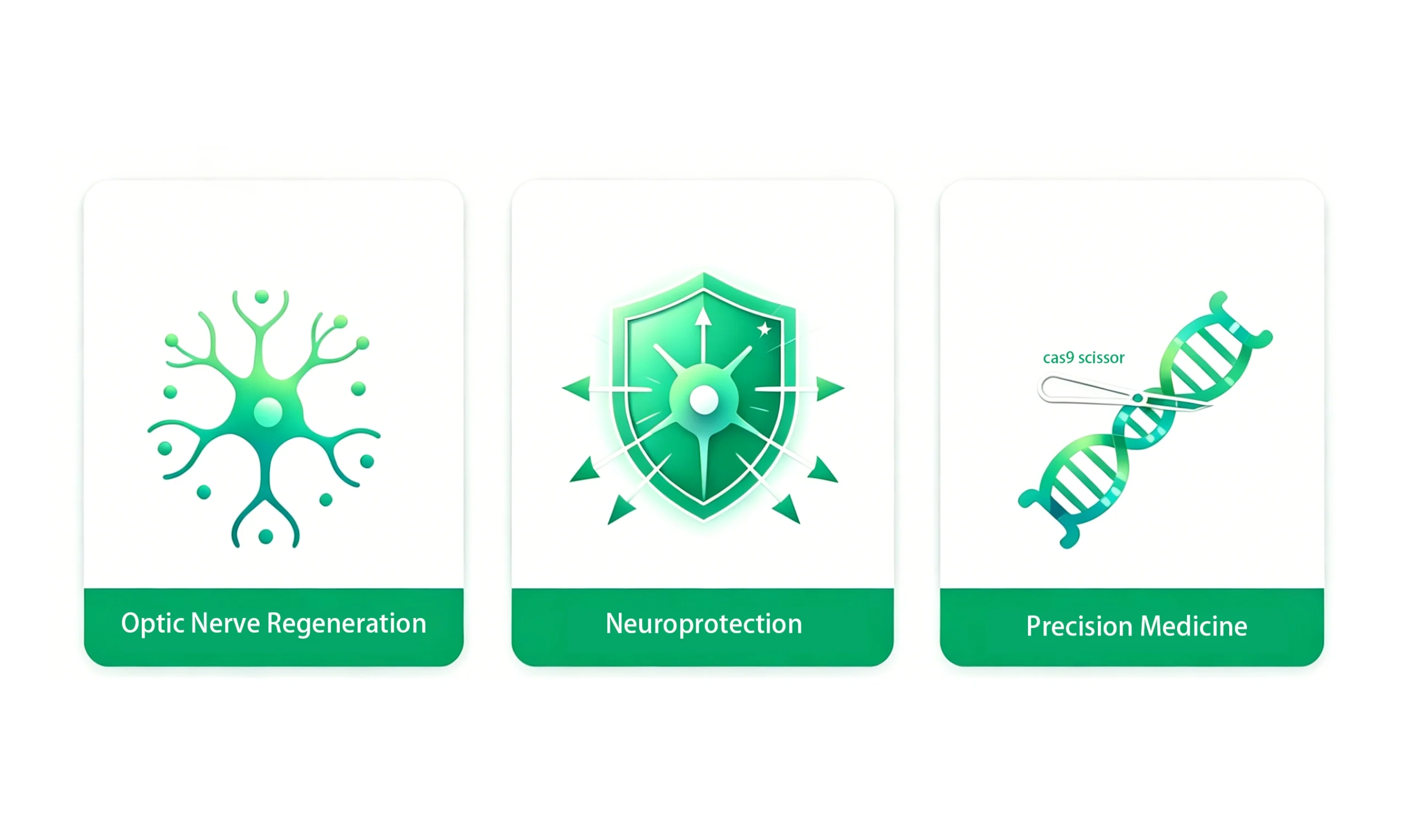
- Clinical Paradigm Shift: Exploration of the move toward optic nerve regeneration, featuring Harvard’s OSK gene reprogramming and Phase 1 human clinical trials.
- Neuroprotective Breakthroughs: Evidence-based insights into high-dose Nicotinamide (Vitamin B3) and its role in stabilizing retinal ganglion cells (RGCs).
- Precision Medicine: The emergence of CRISPR-Cas9 and exosome therapy for personalized, mutation-targeted glaucoma treatment.
- The Treatment-Rehabilitation Loop: Understanding how assistive technology bridges the gap between biological repair and functional independence.
- Zoomax B2B Solutions: A strategic guide to deploying Snow 12 (for advanced POAG/OCR needs) and Luna 6 (for mobile contrast enhancement) within clinical and senior-care settings.
- Commercial Synergy: How distributors and clinics can leverage elderly-centric design and professional support to enhance patient outcomes in a new era of vision restoration.
Looking ahead, optic nerve regeneration 2026 is becoming a key reference point for clinicians and distributors evaluating the next wave of glaucoma care.
The landscape of new glaucoma treatment is undergoing a profound paradigm shift. For decades, the gold standard for clinical management has been the reduction of intraocular pressure (IOP). However, with millions still facing progressive visual impairment, the field is moving beyond symptom management toward regenerative and precision therapies.
In this featured analysis, we have partnered with the Zoomax Technology R&D Center and a panel of medical consultants to examine the latest breakthroughs in ophthalmology and bio-engineering. As professionals in the low vision industry, understanding these breakthroughs is critical for anticipating patient needs and integrating cutting-edge glaucoma low vision aids into the modern care continuum.
At the same time, glaucoma breakthrough 2026 is no longer just a marketing phrase but a signal that restorative care is moving closer to real-world implementation.
Optic Nerve Regeneration: The Frontier of OSK Gene Reprogramming
Perhaps the most ambitious development in new glaucoma treatment 2025 is the transition from halting nerve death to active restoration. Research spearheaded by Harvard-affiliated teams has demonstrated that partial epigenetic reprogramming—using the OSK (Oct4/Sox2/Klf4) gene cocktail—can reverse age-related cellular decline.
In landmark studies involving non-human primate models, this approach successfully facilitated the regrowth of optic nerve axons and restored partial visual function [1.1, 1.2]. With FDA clearance for human Phase 1 clinical trials of these epigenetic therapies now secured, we are witnessing the first steps toward true vision restoration [1.1, 1.3].
The broader conversation around optic nerve regeneration is now shaping how hospitals, clinics, and senior-care partners evaluate future patient pathways.
Neuroprotection: Harnessing Nicotinamide (Vitamin B3)
While regenerative medicine targets the long-term potential for repair, neuroprotection focuses on the immediate stability of retinal ganglion cells (RGCs). High-dose nicotinamide (Vitamin B3) has emerged as a scientifically robust intervention.
Recent clinical trials have confirmed that nicotinamide supplementation improves inner retinal metabolic function and can significantly delay visual field loss in patients already receiving standard IOP-lowering treatments [2.1, 2.2]. By supporting mitochondrial health, this therapy offers a vital bridge for patients while awaiting more advanced regenerative solutions.
For readers tracking glaucoma gene therapy, the field is rapidly expanding from pressure control toward mutation-targeted and regeneration-based solutions.
Professional Tip: Clinical Integration
When consulting with patients, emphasize that neuroprotective agents are designed to complement standard care, not replace it. Proper counseling on the glaucoma medical treatment journey helps manage expectations and improves therapy adherence.
Precision Medicine: CRISPR and Exosome Therapy
The future of what are the treatment for glaucoma is increasingly personalized, driven by genetic insights.
CRISPR Gene Editing: Targeting mutations such as MYOC and OPTN, CRISPR-Cas9 technology offers the potential for “one-time” therapeutic corrections to alleviate trabecular meshwork stress [3.1, 3.2].
Exosome Therapy: Researchers are exploring extracellular vesicles (exosomes) as non-viral, targeted delivery vehicles for genetic cargo, significantly reducing the risks associated with traditional viral vectors [3.1].
Among the most closely watched topics is optic nerve regeneration breakthrough, which reflects the growing expectation that true functional recovery may eventually complement standard glaucoma care.
How Medical Breakthroughs Empower Assistive Technologies
The emergence of these therapies does not render assistive technology obsolete; rather, it creates a powerful “treatment-rehabilitation” synergy. While biology works to restore the optic nerve, the patient’s functional independence remains a primary clinical objective.
Assistive technology bridges the gap between limited vision and daily autonomy. By integrating advanced glaucoma low vision aids into the patient’s rehabilitation plan, clinics can offer immediate quality-of-life improvements. In clinics for patients, the practical value of assistive devices remains immediate even while biologic repair continues to advance. When patients have access to tools that enhance contrast and magnification, they maintain the independence necessary to adhere to complex medical regimens and participate in ongoing clinical trials.
Technical Specifications Summary: Zoomax Solutions
For teams comparing care pathways, new glaucoma treatment 2026 represents a shift from symptom control toward a more integrated model of restoration, rehabilitation, and daily support.
For our professional partners—including specialized distributors, eye clinics, and senior living facilities—Zoomax provides more than just hardware. We offer a comprehensive support ecosystem designed to enhance clinical outcomes and business growth.
Why B2B Partners Choose Zoomax for Glaucoma Care
Some readers also ask what year is optic nerve regeneration expected to become widely available, and that question is already influencing how clinics prepare for the next generation of low vision support.
- Clinical Efficacy: Our devices are specifically engineered to address the most debilitating visual symptoms of glaucoma, including peripheral vision loss, tunnel vision, reduced contrast sensitivity, and extreme light hypersensitivity.
- B2B Professional Support: We provide our partners with comprehensive marketing kits, in-depth technical training, and a robust global after-sales service network to ensure seamless integration into your service model.
- Elderly-Centric Design: Recognizing that glaucoma primarily affects the aging population, our R&D focuses on intuitive interfaces and ergonomic form factors that minimize the learning curve for seniors.
Product Selection Guide for Glaucoma Rehabilitation
The following table outlines why the Zoomax Snow 12 and Zoomax Luna 6 are the preferred choices for medical professionals and procurement officers in the low vision sector.
Feature Category | Zoomax Snow 12 | Zoomax Luna 6 |
Display & Portability | 12-inch Full HD screen. Foldable stand design; optimized for desktop stability. | 6-inch pocket-sized display. Ultra-slim and lightweight with a built-in handle. |
Key Technical Functions | Advanced OCR & Text-to-Speech (Full page reading) | Dual-lens technology for near reading and distance spotting |
Glaucoma Sub-type Suitability | Advanced POAG: Best for large-field text processing | Early to Mid-stage Glaucoma: Best for active visual fluctuations |
Ideal Usage Scenarios | Rehab centers for intensive visual training | Hospital clinics for quick label/price tag identification |
Professional Tip: Addressing Glaucoma-Specific Fatigue
Many elderly glaucoma patients suffer from “visual exhaustion” due to the brain working harder to process degraded signals. We recommend B2B providers emphasize the OCR (Optical Character Recognition) feature. By switching from visual reading to auditory listening, patients can stay informed without straining their remaining retinal ganglion cells.
Embracing the Future of Vision Rehabilitation
Even where the medical roadmap is still evolving, latest cataract treatment without surgery remains part of the broader conversation about noninvasive vision care and patient expectations.

As regenerative medicine matures, the definition of success in glaucoma treatment is expanding. We are no longer limited to “controlling eye pressure”; we are moving toward “regeneration and restoration.”
For our distribution partners and clinical stakeholders, the message is clear: the most effective strategy is a holistic one. By combining the latest glaucoma treatment drugs and regenerative research with the immediate, proven support of Zoomax adaptive devices, we can truly empower patients to transition from managing vision loss to reclaiming their sight.