
The global low vision market is undergoing a seismic shift. For decades, the industry was defined by a singular goal: magnification. If a device could make text larger, it was successful. However, as we move through 2026, the demographics of visual impairment are diversifying at an unprecedented rate.
As a manufacturer, we are seeing a “Double-Peak” demand curve. On one side, we have the traditional high-age seniors who prioritize tactile simplicity. On the other, we have a rapidly growing segment of “Tech-Confident” seniors and younger professionals who demand AI integration and mobile connectivity. For B2B distributors, the challenge—and the opportunity—lies in balancing these two worlds.
The Evolution of the End-User: Why One Size No Longer Fits All
To succeed as a distributor in 2026, you must first understand that “low vision users” are no longer a monolithic group. We categorize the current market into three distinct personas:
- The Traditionalist (Age 80+): This user often struggles with cognitive load or dexterity issues. They want a device that works instantly without a “boot-up” time. For them, a dedicated desktop video magnifier is a lifeline, not just a tool.
- The Active Senior (Age 60-75): This is the “Baby Boomer” generation. They are the first generation of seniors who have used smartphones for over a decade. They own iPads, they use WhatsApp, and they refuse to carry a device that looks like a clunky medical instrument.
- The Modern Professional & Student: These users need to integrate their low vision aids with their workflow. They are looking for software-hardware hybrids that can assist with spreadsheets, video calls, and distance viewing in classrooms.
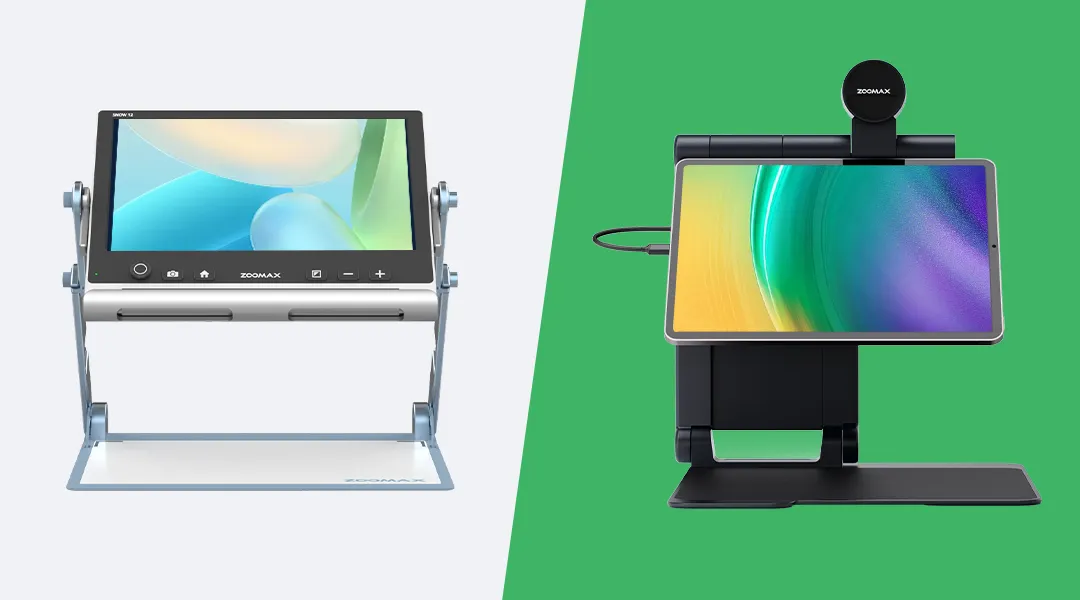
By offering a portfolio that includes both traditional hardware and AI-powered tablet solutions, you aren’t just selling products; you are providing a customized “Visual Lifestyle” solution.
Section 1: The Enduring Power of Classic Video Magnifiers
In the rush toward AI, some distributors mistakenly believe that traditional electronic magnifiers are obsolete. This is a costly misconception. Our classic line of video magnifiers remains the “Gold Standard” for deep reading and stationary tasks.
Tactical Reliability and “Zero-Learning Curve”
For a user with significant macular degeneration or hand tremors, the physical tactile feedback of a dedicated device is irreplaceable. Our traditional desktop models offer:
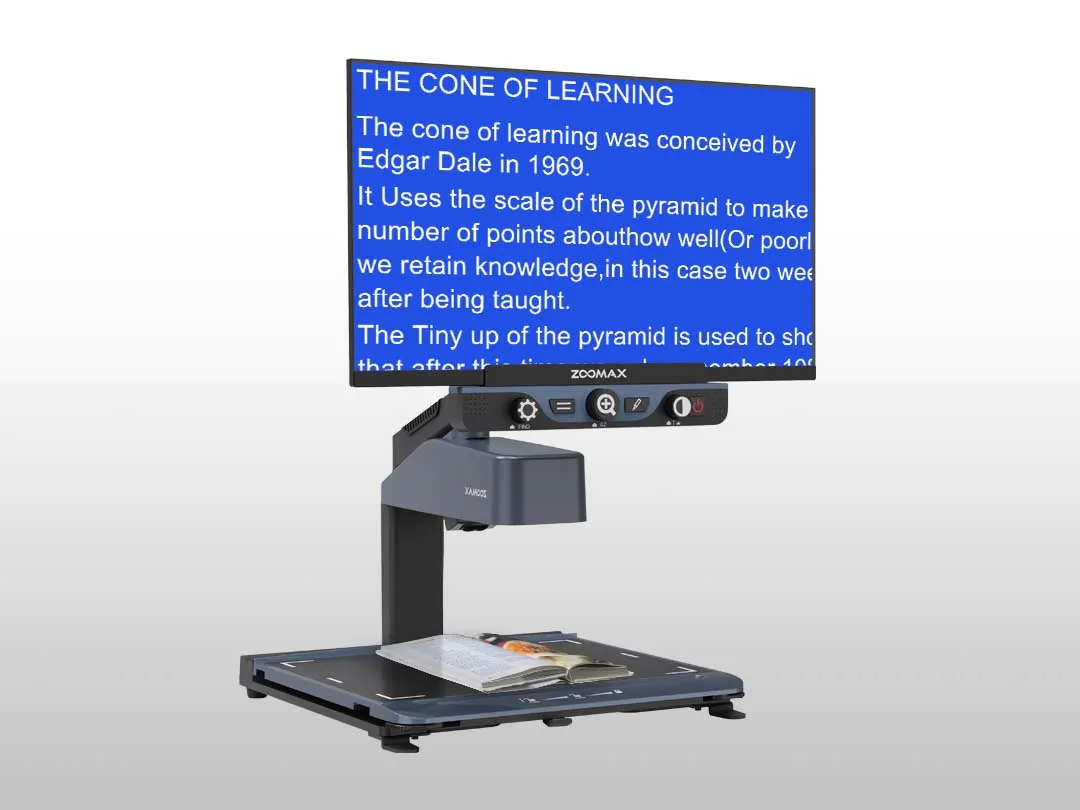
- Physical Knobs and Buttons: Providing haptic feedback that touchscreens cannot replicate.
- Optimum Ergonomics: An integrated X-Y table allows for smooth reading of heavy books or newspapers without the fatigue of holding a tablet.
- Optical Stability: Zero-latency imaging that is critical for users prone to motion sickness from digital lag.
For the distributor, these products represent Stability. They have predictable return-on-investment, lower technical support requirements, and are the “bread and butter” of government tenders and VA hospital contracts.
Section 2: The AI Revolution—Why Tablet-Based Solutions are the “Door Opener”
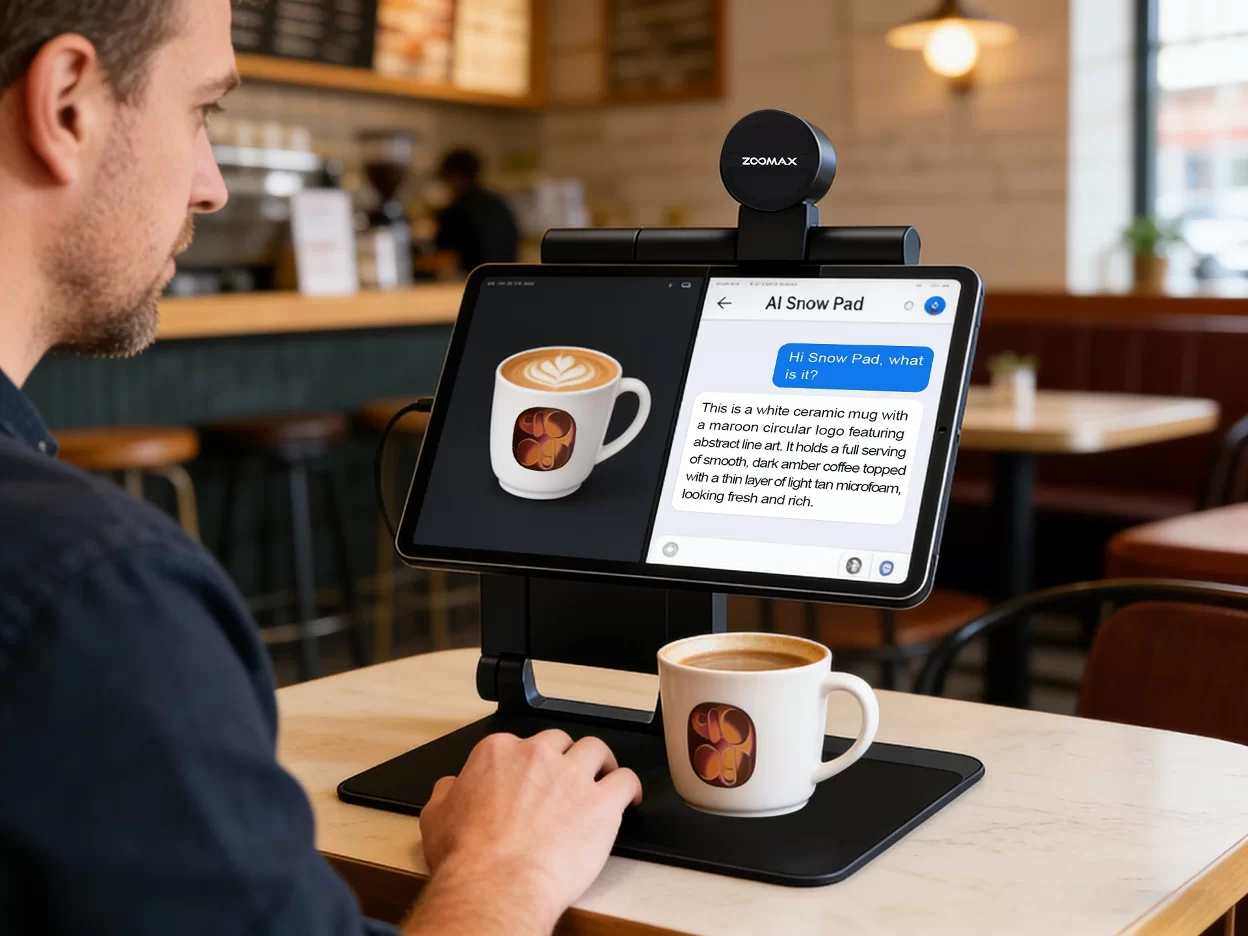
Our latest innovation—the AI-Powered Tablet Integrated Aid—is designed to solve the “Stigma” problem will come soon. This device connects seamlessly to iPads and Android tablets, turning a consumer electronics device into a sophisticated vision assistant.
AI is the “Brain,” the Tablet is the “Eye”
Traditional magnifiers only enlarge. Our AI-driven solutions interpret.
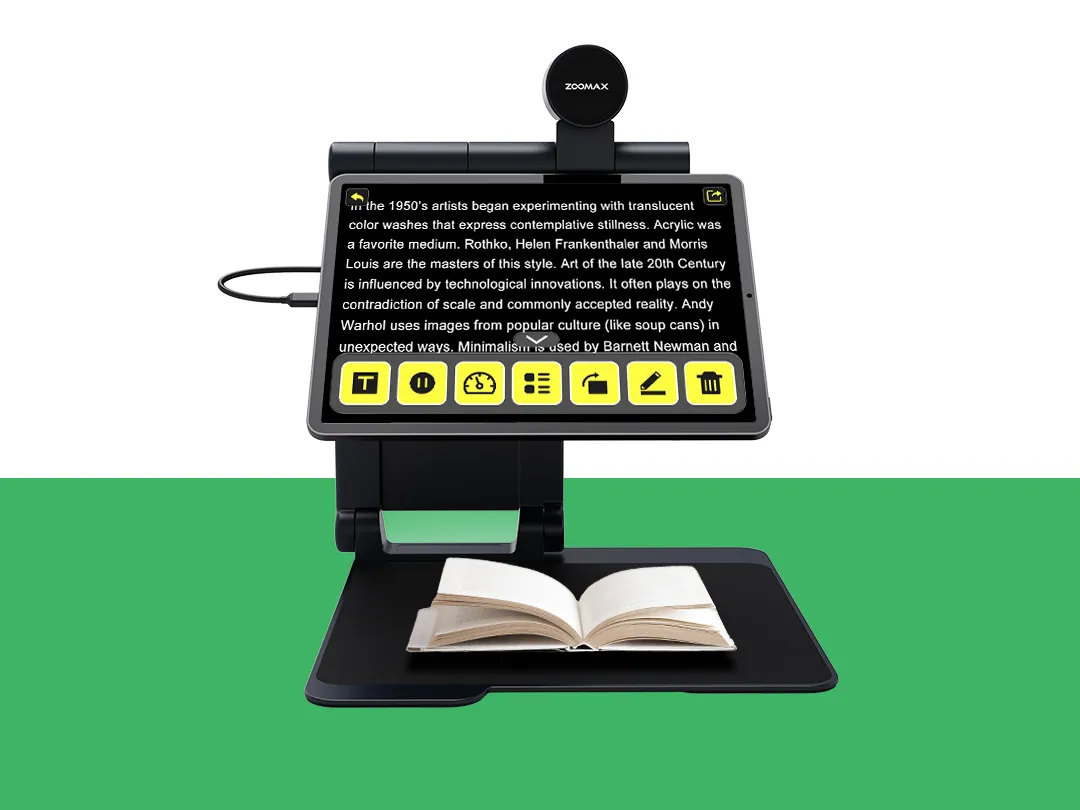
- Real-Time OCR and Text-to-Speech: In a senior living community dining hall, a user can simply point their tablet at a menu, and the AI will read it aloud via Bluetooth earbuds.
- Facial and Object Recognition: For many, the greatest pain of low vision is social isolation. Our AI will help users identify family members or locate objects in a room, fostering independence.
- The “iPad Synergy”: Because the device uses the tablet’s high-resolution screen, the hardware we provide is lightweight and portable. This makes it an ideal choice for the “Active Aging” population who travel and socialize.
Why Distributors Should Lead with AI in 2026
From a sales perspective, the AI tablet aid is your most powerful Lead Magnet. It is “Instagrammable” and high-tech. When you demonstrate an AI reading a pill bottle or recognizing a face to a nursing home director, the “Wow Factor” is immediate. It positions you as a forward-thinking partner rather than just a hardware vendor. [Get a Quote for Your Project]
Section 3: Tapping into the Senior Living Boom—A Strategic B2B Playbook
The “Senior Living” market is currently one of the largest purchasers of assistive technology. However, their procurement logic has changed. They are no longer looking for “medical equipment”; they are looking for “Amenity Upgrades.”
Positioning Your Portfolio for Institutional Tenders
When bidding for a contract with a luxury retirement village or an assisted living chain, use the “Hybrid Approach”:
- The Library/Common Area: Propose our Traditional Desktop Magnifiers. These are durable, “vandal-proof,” and easy for any resident to use without staff assistance.
- The Resident Experience: Propose our AI Tablet Solutions as a premium service. The facility can offer these to residents for use in their private apartments or on group outings.

By offering this dual-tier system, you provide the facility with a “Vision Accessibility Ecosystem.” This increases your contract value and makes you indispensable to the facility management. [Become an Authorized Distributor]
Section 4: Navigating the 2026 SEO Landscape and Google Trends
Distributors searching for manufacturers today are using more specific, “Intent-Based” queries. To help you capture this traffic, our marketing support focuses on several key 2026 trends:
- Digital Inclusion: Google is prioritizing content that discusses “Web Accessibility” and “Digital Inclusion.” Our tablet-based aids fit perfectly into this narrative, as they allow low-vision users to access the internet and apps.
- Age-Tech: This is a trending search term. By marketing our AI aids as “Age-Tech,” you tap into a broader investment and consumer pool beyond the traditional medical niche.
- Eco-Friendly Tech: Our tablet-based solutions have a smaller carbon footprint than massive plastic desktop units. This is increasingly a requirement in European and North American government tenders.
Section 5: Overcoming the “Cannibalization” Myth
“If I sell the new AI aid, will I stop selling the old ones?” The answer is a resounding No.
In our experience, the AI tablet aid attracts a customer who previously bought nothing. These are people who felt “too young” for a magnifier or found traditional devices too expensive. Meanwhile, the high-need patients continue to buy the classic units.
As a manufacturer, we have engineered these lines to be complementary. The AI software in our new devices actually uses the same image-processing algorithms perfected in our classic hardware. We are not replacing our past; we are expanding your future.
Conclusion: Partnering with a Manufacturer that Understands the Full Spectrum
The low vision industry is no longer about just selling a “better lens.” It is about understanding the intersection of human dignity, technological capability, and business agility.
Whether your client is a specialized ophthalmology clinic requiring the rock-solid reliability of our classic video magnifiers or a modern retirement community looking for the “future-ready” appeal of our AI tablet solutions, we provide the tools you need to win.
The future of low vision is not either/or; it is both.
Join the Global Distributor Network
Are you ready to diversify your portfolio and capture the high-growth AI segment while maintaining your core classic business? Our 2026 Distributor Kits are now available, featuring full technical specifications for both our traditional and AI-integrated lines.