











Low Vision & Assistive Technology: Frequently Asked Questions
FAQs
Frequently Asked Questions About Low Vision & Assistive Technology
Understanding Low Vision
What is low vision? Can you give me an authoritative definition?
According to the World Health Organization (WHO) and the American Optometric Association (AOA), low vision is a significant visual impairment that cannot be fully corrected with standard eyeglasses, contact lenses, medication, or surgery. People with low vision have reduced visual acuity (typically 20/70 or worse in the better eye with best correction) and/or significant visual field loss. However, they still retain some usable vision. Low vision is not total blindness. Individuals with low vision may experience difficulties with daily tasks like reading, recognizing faces, watching television, or navigating safely, which is why low vision aids and assistive technology are essential tools for maintaining independence.
What does vision 20/200 mean? What are the common symptoms or visual experiences at this level?
Vision of 20/200 is a clinical measurement that means what a person with normal (20/20) vision can see clearly at 200 feet, someone with 20/200 vision needs to be as close as 20 feet to see with the same clarity. This level of vision is a common benchmark for being classified as legally blind in many countries, including the United States.
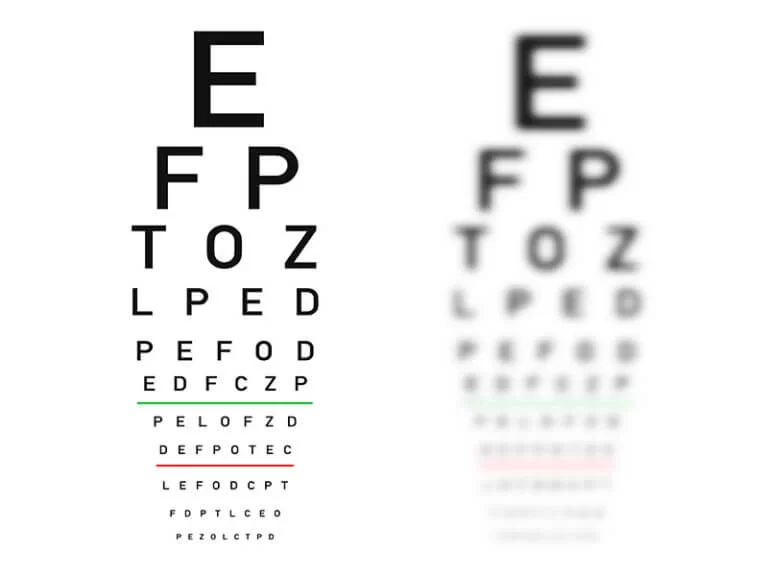
What are the most common eye diseases that cause low vision?
Low vision is typically caused by irreversible eye conditions or damage. Understanding the cause is the first step in finding the right aid. Common eye diseases that cause low vision include:
- Age-related Macular Degeneration (AMD): Causes blind spots or distortion in central vision.
- Diabetic Retinopathy: Damage to the retina’s blood vessels due to diabetes.
- Glaucoma: Leads to a gradual loss of peripheral vision.
- Retinitis Pigmentosa: A genetic disorder causing night blindness and tunnel vision.
- Cataracts (untreated or with poor post-surgical vision): Clouding of the lens leads to blurry vision.
- Optic Nerve Atrophy: Damage to the optic nerve resulting in vision loss.
These common causes of low vision are primary reasons individuals seek low vision aids and electronic video magnifiers. Zoomax devices are designed to help users manage daily tasks despite these conditions.
Can age-related macular degeneration (AMD) lead to low vision? How to cope with it?
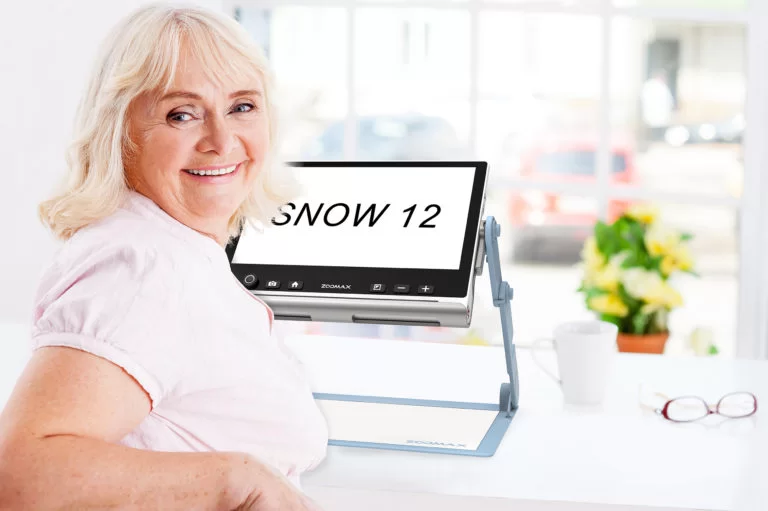
Yes, age-related macular degeneration (AMD) is one of the leading causes of low vision in older adults. It damages the macular area responsible for central vision, resulting in blurred or distorted central vision that affects reading, recognizing faces, and daily activities. To cope with AMD-related low vision, specialized electronic magnifiers for AMD patients (such as Zoomax Snow 12) are highly recommended—they enhance central vision details through adjustable magnification and contrast optimization. Features like text-to-speech (TTS) and high-contrast color modes further reduce visual strain for AMD patients using low vision aids tailored for macular degeneration.
How Electronic Video Magnifiers Help
How exactly can an electronic video magnifier help a person with low vision? Can it cure eye diseases?
An electronic video magnifier is a powerful low vision assistive device. It uses HD camera and screen and adopts advanced assistive technology to magnify and enhance vision clarity. It is important to note that it does NOT cure or treat eye diseases. Its primary benefits are:
- High Magnification: Offers greater and more flexible magnification than traditional optical magnifiers, ideal for reading small print (on medicine bottles, books).
- Viewing Mode & Contrast Enhancement: Adjustable contrast settings (e.g., white-on-black, yellow-on-black) significantly improve reading comfort, especially for those with macular degeneration.
- Distance & Near Viewing: Many models (like the Zoomax Acesight VR and Snow series) function as all-in-one low vision aids for both distance (watching TV, seeing a whiteboard) and near tasks (reading, hobbies).
- Portability & Connectivity: Portable electronic magnifiers are ideal for shopping or travel; some can connect to a TV or monitor for screen sharing.
For individuals exploring how to improve quality of life with low vision, selecting the right electronic video magnifier is a crucial step.
Which Zoomax devices are most suitable for students?
Students require portable, versatile, and high-performance tools to succeed in educational environments. We recommend the Snow 12 with Snow Eye or Snow Pad.
- Snow 12 is ideal for reading textbooks, writing assignments,and viewing distance whiteboards(when connecting with Snow Eye) thanks to its detachable foldable stand and excellent image quality.
- Snow Pad offers a tablet-like experience and high portability, making it perfect for students who need to carry their assistive tech between classrooms while continuing the use of their personal tablets. The split-screen feature (near/distance viewing simultaneously) is deeply loved by students in the class.
What are the best Zoomax low vision solutions for seniors?
For senior users, we prioritize ease of use, intuitive physical buttons, and visual comfort. The Luna 6 and Luna 8 are our top recommendations. These devices feature have complex menus. The Luna 6 is incredibly lightweight for pocket-sized tasks like reading labels or menus, while the Luna 8 provides a larger viewing area for comfortable, long-term reading of newspapers and books without eye strain.
Which Zoomax products are recommended for working professionals?
Professionals often need to manage high volumes of documents and integrate their assistive devices with modern office setups. We recommend the Snow Pad and our Wearable Series (such as Acesight VR Glasses).
- Snow Padserves as a powerful workstation tool, allowing for efficient document scanning and multitasking. It can even mirror the powerpoint or any content when the professionals giving a presentation.
- Zoomax Acesight VR glasses provide a hands-free experience, which is essential for tasks like computer work, attending meetings, or navigating office spaces while maintaining a natural posture and professional appearance.
Which Zoomax low vision aids feature OCR and Text-to-Speech (TTS)?
If you prefer listening to printed text rather than reading it, the Snow 12 and Snow Pad are our premier devices featuring advanced Optical Character Recognition (OCR) and Text-to-Speech (TTS) capabilities.
- These devices can scan full pages of text and read them aloud in multiple languages with high accuracy.
- Users can adjust the reading speed and volume, making these tools indispensable for enjoying long-form content like novels or complex professional reports without visual strain.

Choosing the Right Assistive Products
How do I choose the right low vision aid for myself or a family member?
Selecting the best low vision assistive technology involves considering several factors. Follow this guide to make an informed decision:
- Identify Primary Needs: Is it mainly for reading, seeing at a distance, or use on the go? This determines if you need a portable, desktop, or head-mounted device.
- Evaluate Vision Condition: Different eye diseases (like peripheral vision loss or central scotomas) may require specific features like contrast reversal or a wide field of view.
- Consider Ease of Use: Is the device simple to operate? Is the interface clear? For seniors, physical buttons are often easier than complex touchscreens.
- Try Before You Buy: We strongly recommend trying a low vision aid before purchasing. Zoomax offers detailed online guidance and suggests you visit a local low vision clinic or specialist for a professional assessment and hands-on demo.
- Balance Budget & Features: From basic portable digital magnifiers to advanced multi-function devices, Zoomax offers a range of products at different price points to meet various needs of the visually impaired.
If you need more help on how to choose a video magnifier, our expert team is available for a personalized consultation.
Among many brands, why should I choose Zoomax low vision products?
Choosing Zoomax means partnering with a focused, innovative, and user-centric brand. Our key advantages include:
- Dedicated Expertise: We specialize exclusively in low vision technology innovation. We deeply understand the daily challenges of the visually impaired, so our products are designed for real-world usability.
- Advanced Technology: Zoomax continuously integrates cutting-edge technology, such as intelligent image processing and user-friendly interfaces, ensuring our electronic magnifiers offer reliable performance and a superior experience.
- Comprehensive Product Line: We provide full-scenario solutions for home, work, and outdoor use—from the ultra-portable Snow series to the versatile Luna series—meeting diverse low vision assistance needs.
- Global Service & Support: As an internationally recognized brand, we provide expert pre-sales consultation, comprehensive setup guides, and reliable after-sales service, ensuring support is available worldwide.
- Proven User Trust: Users in over 80 countries trust Zoomax, and their feedback drives our continuous improvement. Visit our “User Testimonials” to read genuine low vision aid reviews and stories.
Choosing Zoomax is not just about purchasing a product; it’s about selecting a long-term partner committed to enhancing your independence and quality of life. Click to learn more about Zoomax Technology.
Who should I contact for after-sales service and repairs for Zoomax products?
Zoomax has an extensive network of authorized local dealers worldwide. For any technical support, maintenance, or repair needs, we recommend contacting the local dealer from whom you purchased the device. They provide professional on-site or regional consultation and services to ensure your device continues to perform at its best.
Contact us to find the local dealer.
Are Zoomax products eligible for government subsidies or insurance coverage?
In many countries, Zoomax low vision aids are included in government procurement programs or are eligible for specialized disability subsidies. Since policies vary by region, we suggest contacting your local authorized dealer. They can provide detailed guidance on the application process and help you determine if you qualify for full or partial funding, minimizing your out-of-pocket costs.
We can also help you find the local authorized dealer. Contact us now.
Can I try Zoomax products at an eye hospital, clinic, or low vision center?
Yes, absolutely. Zoomax products are widely available for demonstration at various professional institutions. We recommend contacting a low vision clinic, eye hospital, or specialized vision rehabilitation center in your area to inquire if they have Zoomax devices available for testing. Once confirmed, you can schedule a personalized demo to experience how our technology fits your specific vision needs before making a purchase.