Key Takeaways
- Vision loss is a proven driver of geriatric depression: The PMC 2026 Longitudinal Study confirms a strong causal link between uncorrected sensory impairment and the onset of depression in older adults, accelerating decline in quality of life.
- Low vision aids restore psychological agency: By enabling independent reading, medication management, and social participation, aids for visually impaired seniors reduce learned helplessness and measurably improve mental well-being.
- Technology choice directly impacts psychological outcomes: Poorly designed devices exacerbate “technological exclusion stress”; intuitive, certified solutions like Zoomax products lower adoption barriers and build user confidence.
- Age-stratified recommendations maximize impact: Active adults (50s–60s) benefit from multifunctional, tablet-based systems like the Snow Pad, while traditional seniors (70s–80s+) thrive with dedicated, simplicity-first devices like Snow 12and Luna 6.
- Positioning assistive technology as emotional care unlocks B2B value: Partners who frame Zoomax solutions as tools for preserving dignity and family connection differentiate themselves in the growing aging in place home care market.

The global conversation around aging in place home care has long focused on mobility aids, fall prevention, and home safety modifications. Yet one of the most profound threats to successful aging remains largely unaddressed: the invisible psychological toll of vision loss.
According to the World Health Organization (WHO) Report on Aging and Vision, the vast majority of vision loss globally occurs in individuals over the age of 50. This is not a niche clinical concern—it is a demographic certainty that reshapes the economics of elder care and the quality of life for millions. For ophthalmologists, rehabilitation centers, home care agencies, and assistive technology distributors, understanding the intersection of vision loss and mental health is no longer optional—it is a strategic imperative.
The Invisible Burden: How Vision Loss Impacts Mental Well-being in Older Adults
Vision loss does more than blur the world—it erodes the psychological foundations of independence. For older adults, the gradual or sudden inability to read a prescription label, recognize a loved one’s face, or navigate familiar environments triggers a cascade of emotional responses that clinical research is now quantifying in full.
The Clinical Evidence: A Compelling Case for Intervention
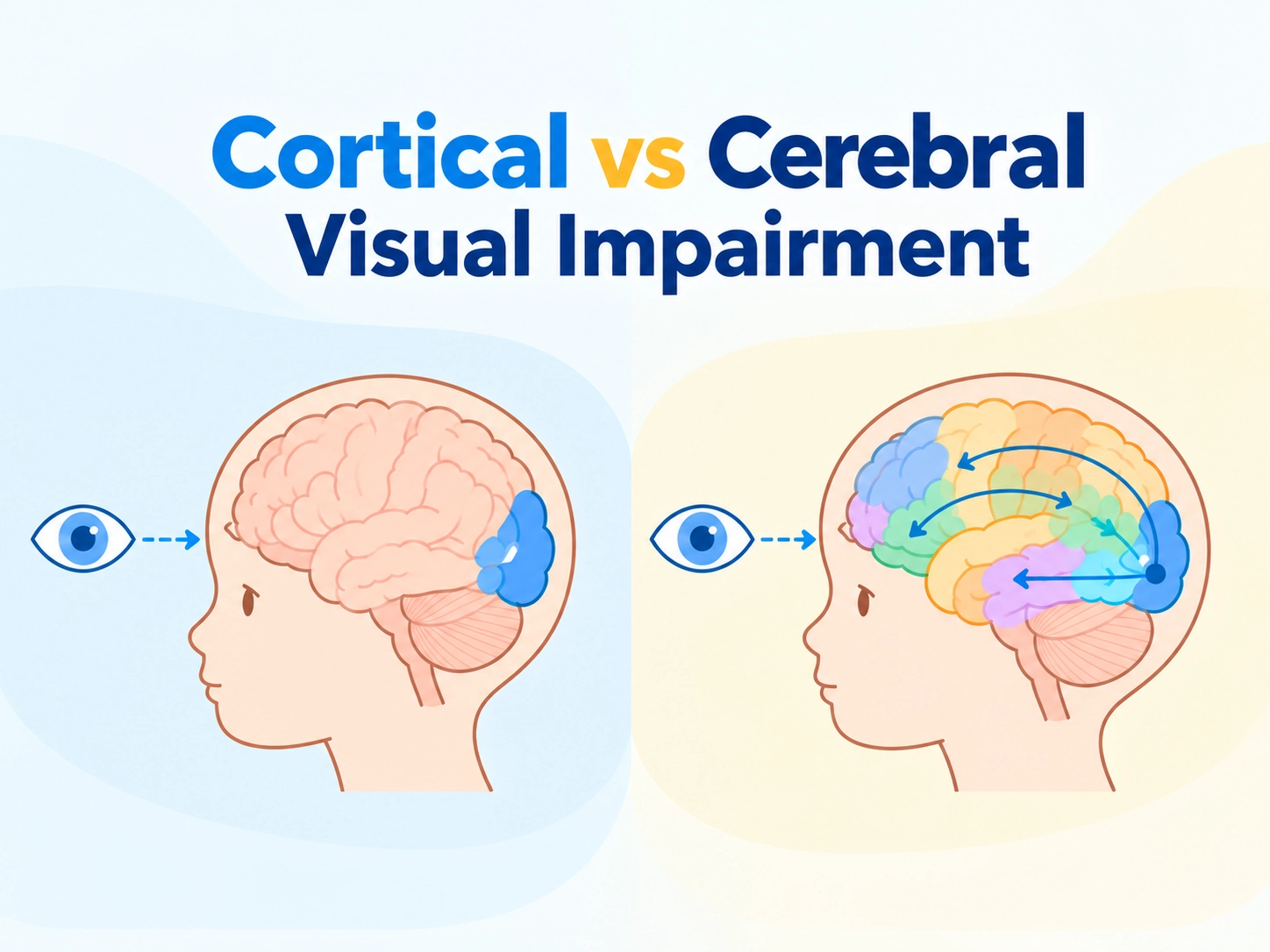
The PMC 2026 Longitudinal Study Sensory Impairment and Geriatric Depression: A Multi-Year Analysis of Quality of Life,” provides a definitive look at this connection. The multi-year analysis confirms a strong, causal link between uncorrected sensory loss and the onset of geriatric depression. The study emphasizes that visual impairment does not merely accompany aging; it actively accelerates the decline in quality of life by systematically dismantling an individual’s sense of autonomy.
Further underscoring the economic and human cost, the World Health Organization (WHO) Report on Aging and Vision highlights that untreated low vision is a primary driver of seniors mental health issues such as anxiety and social withdrawal. The WHO report notes that the fear of being a burden or the inability to perform basic activities of daily living (ADLs) creates a significant barrier to aging in place home modifications, as the physical structure of a home becomes irrelevant if the occupant cannot confidently interact with their environment.
Beyond Depression: The Social Isolation Cascade
The psychological impact of vision loss in older adults extends beyond diagnosable mood disorders. When an older adult can no longer read a menu independently at a restaurant, recognize faces at a family gathering, or navigate public spaces confidently, withdrawal becomes a rational—if maladaptive—response.
The research confirms that vision impairment creates a self-reinforcing cycle: functional limitation → activity restriction → social withdrawal → reduced life satisfaction → further functional decline. This cycle not only exacerbates seniors mental health issues but also places additional strain on aging in place home care resources and caregivers.
B2B Insight: The Clinical Opportunity
For ophthalmologists and rehabilitation professionals, the implications are clear: treating the eye condition is necessary but insufficient. The WHO Report on Aging and Vision explicitly calls for a multidisciplinary approach that integrates mental health support and assistive technology deployment. This is where aids for visually impaired seniors become not merely convenience devices but essential components of a comprehensive care plan.
Reclaiming Independence: The Psychological Value of Low Vision Aids
The transition from “I can’t” to “I can” represents far more than functional improvement—it is a psychological reclamation of agency. For older adults navigating vision loss, assistive technology serves as a bridge back to the activities that define a meaningful life.
Breaking the Isolation Cycle
The mechanism by which low vision aids mitigate mental health risk is both straightforward and profound: by restoring the ability to perform valued activities independently, these devices reduce the learned helplessness that fuels depression and anxiety. When a senior can once again read a medication label without assistance, check a bank statement privately, or enjoy a hobby without frustration, the message sent to the brain is clear: I am still capable. I am still in control. Addressing visual impairment is one of the most cost-effective strategies to promote healthy aging in place home care and aging in place safety.
For care providers, this understanding transforms the value proposition of assistive technology for seniors. A handheld digital magnifier or tablet-based system is not a luxury accessory—it is a tool for preserving the psychological well-being that underpins successful aging.
The Cost of Inadequate Technology
Equally important is recognizing that not all assistive technology yields positive psychological outcomes. Devices that are difficult to learn, unreliable in performance, or stigmatizing in appearance can actually compound feelings of frustration and inadequacy—a phenomenon noted in the PMC 2026 Study as “technological exclusion stress.” For older adults already navigating the emotional challenges of vision loss, a poorly designed low vision aid becomes yet another reminder of their limitations rather than a pathway to independence.
3. Defining “Successful Aging”: Why Your Choice of Technology Matters
The concept of successful aging has evolved beyond physical health metrics to encompass psychological well-being, social engagement, and sustained independence. For the growing population of older adults with visual impairment, access to high-performance, intuitively designed independent living technology is foundational to achieving these outcomes.
The Technical Foundations of User Confidence
When evaluating low vision solutions for older adults, several technical parameters directly influence user adoption and sustained engagement:
- Image Quality and Frame Rate: A 60 FPS refresh rate eliminates the disorienting lag that can cause motion sickness and visual fatigue, particularly important for users with vestibular sensitivity.
- Magnification Range and Optical Zoom: True optical zoom (as opposed to digital zoom alone) preserves image clarity at higher magnification levels, reducing the Color Contrast Modes: Multiple high-contrast color modes accommodate different visual conditions—white-on-black for photophobia, yellow-on-blue for macular degeneration, and customizable settings for individual preferences.
- Ease of Use: Intuitive interfaces minimize the learning curve, reducing the frustration that leads to device abandonment. Features like auto-focus, one-touch controls, and clearly labeled tactile buttons are not convenience features—they are psychological enablers.
Certification and Compliance: Building Trust in B2B Partnerships
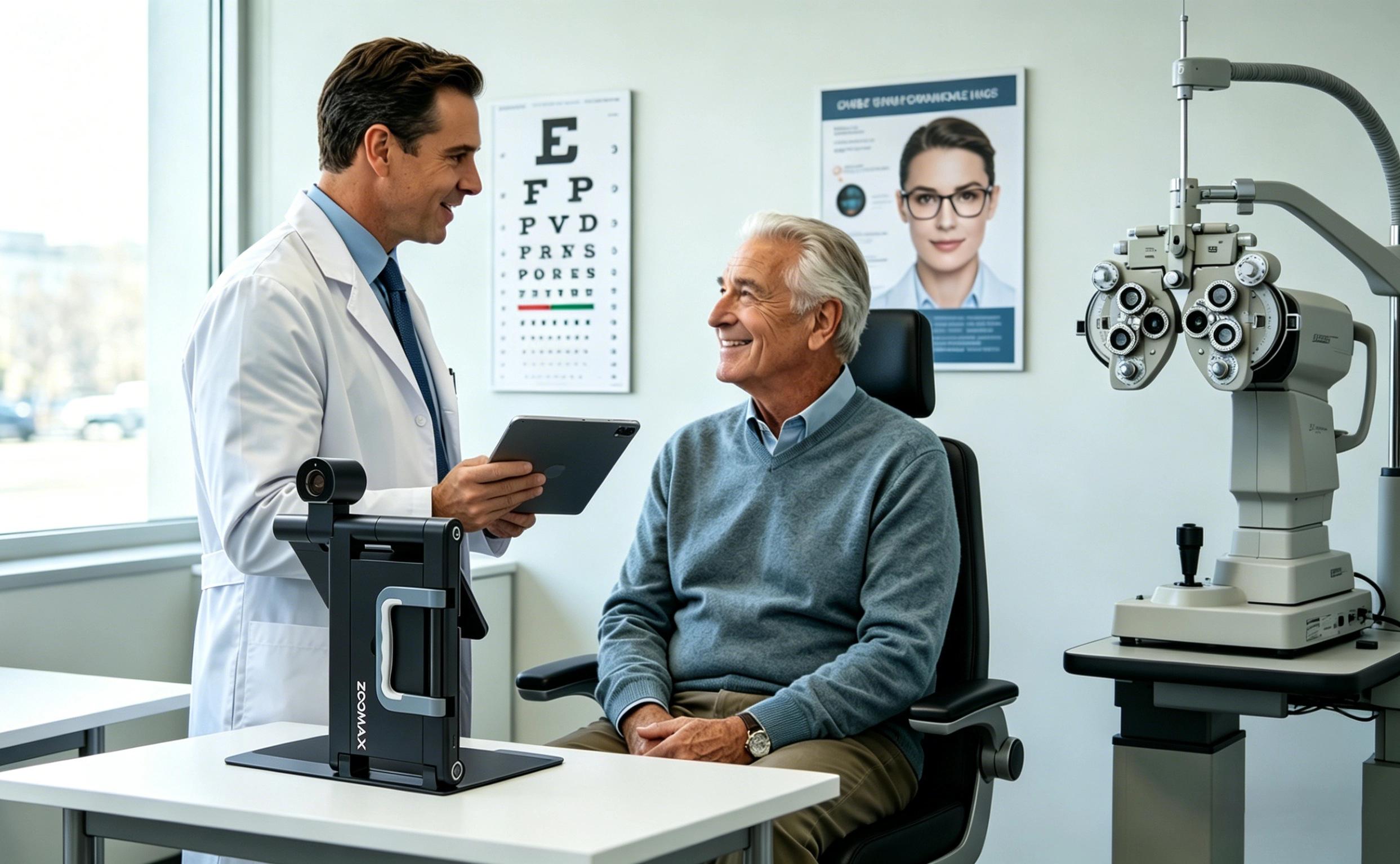
For B2B partners—whether ophthalmology practices recommending devices to patients or senior care facilities equipping residents—regulatory compliance is non-negotiable. Zoomax electronic video magnifiers carry CE and FDA certifications, ensuring that partners can recommend and deploy these solutions with confidence in their safety, quality, and clinical appropriateness. This certification status also simplifies procurement processes for institutional buyers and provides essential documentation for insurance and reimbursement pathways where applicable.
The global assistive technology for low vision market is being driven by increasing adoption of digital assistive devices, expansion of remote and home-based care solutions, and continuous advancements in computer vision technologies. Partners who align with certified, technologically advanced manufacturers position themselves to capture this growth while delivering genuine value to their clients.
Zoomax Solutions for Daily Independence: Age-Stratified Recommendations
Successful aging is not a one-size-fits-all proposition, nor should aids for visually impaired seniors be. Different age cohorts within the older adult population exhibit distinct lifestyle patterns, technological comfort levels, and functional priorities. The following framework helps B2B partners match Zoomax solutions to the specific needs of their end users.
Active Adults (50s–60s): Technology-Forward and Socially Engaged
This demographic—often still employed, socially active, and comfortable with smartphones and tablets—seeks solutions that integrate seamlessly with their existing digital ecosystems. They value multifunctionality, portability, and features that support both professional and leisure activities.
Recommended Solution: Zoomax Snow Pad
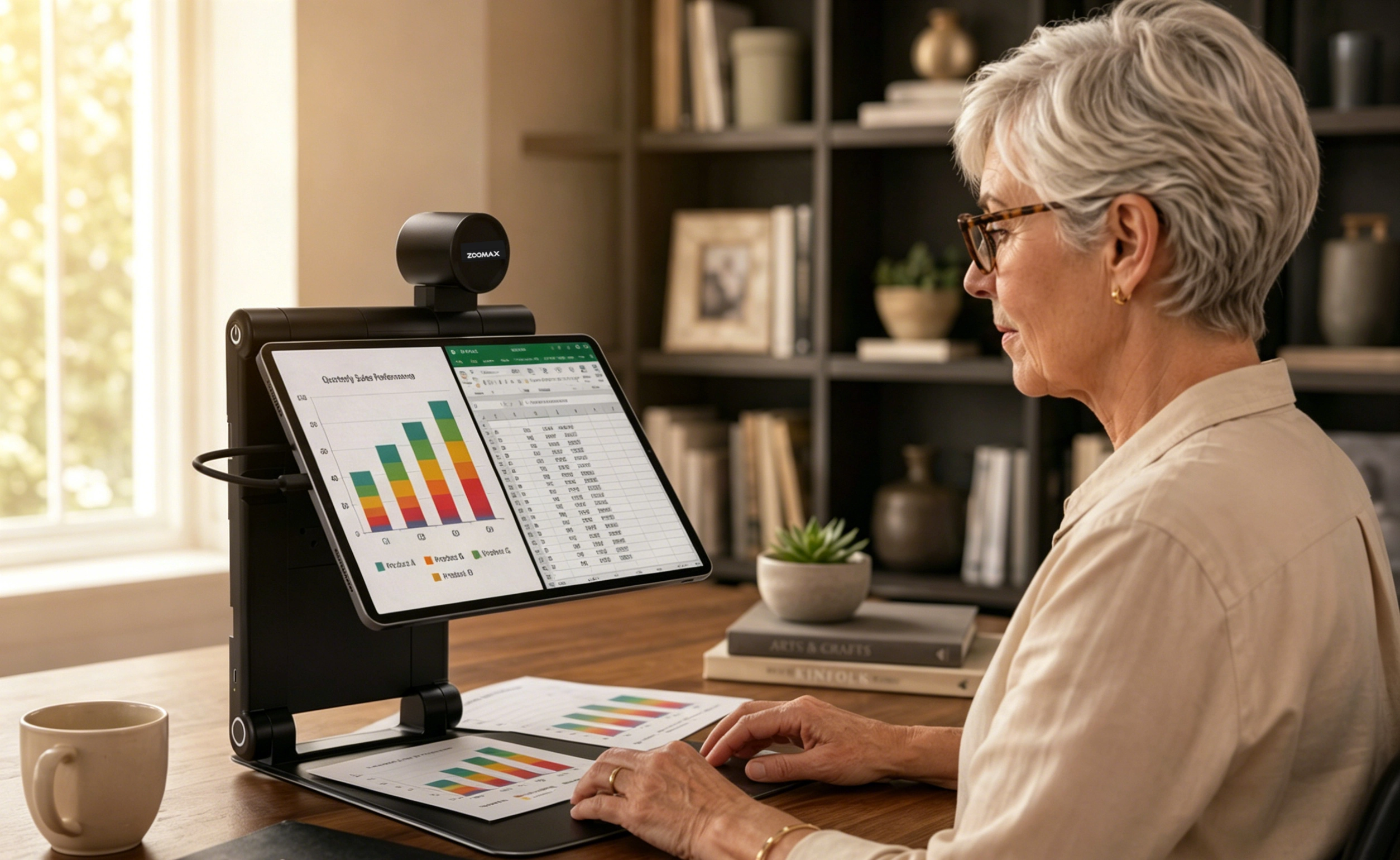
As a trans-formative tablet magnifier, Snow Pad is designed for tech-savvy, active adults who frequently travel and engage socially, yet its true value reveals itself most profoundly in the everyday moments of aging in place. Rather than requiring users to learn an entirely new operating system, it transforms the iPad or Android tablet they already own and understand into a powerful visual assistance platform, dramatically lowering adoption barriers and minimizing any sense of “otherness” often associated with specialized equipment.
Portability: Independence Unbound by Space
For seniors committed to aging in place home care, a device’s mobility directly determines how often it is used. Snow Pad is meticulously engineered with the fluidity of home life in mind—it moves effortlessly from study to kitchen, and from kitchen to living room, ready for use wherever the user goes. For users aged 50 to 60-plus who remain active in the workforce, the Snow Pad’s portability advantages extend seamlessly into professional settings. Whether heading to the office to handle paperwork, attending cross-departmental project meetings, or embarking on a short business trip to visit clients, users need only fold the Snow Pad and slip it into a briefcase or carry-on bag for effortless transport. Upon reaching their destination, they can simply unfold the device and immediately dive into work—reviewing printed reports, reading meeting materials, or processing ad-hoc documents in a hotel room—ensuring that their visual assistance remains uninterrupted, even when away from home.
Ease of Use: Eliminating Tech Intimidation to Preserve Confidence
The operational threshold is a critical psychological factor in determining whether older adults will consistently adopt assistive technology. Snow Pad’s interface is deeply attuned to the cognitive needs of low vision users: icons feature a high-contrast yellow-on-black color scheme that is particularly accommodating for individuals with Age-related Macular Degeneration. Gesture controls mirror the native iPad experience so intuitively that users achieve immediate proficiency upon first handling. Should a user occasionally forget how to operate a specific function, there is no need to disrupt working family members or seek outside assistance—simply open the Manual Video feature in the settings, where each function is paired with a dedicated demonstration video that provides instant clarity.
Efficient Tools, Poised Professionalism
For users who remain active in the workforce, the Snow Pad offers a similarly unique sense of seamless integration. Adopting the design language of mainstream tablets, its appearance is indistinguishable from standard smart devices; consequently, using it in an office or meeting setting never leaves the user feeling out of place or—worse—stigmatized. Instead, it functions as a modern tool designed to boost productivity, rather than fitting the stereotypical mold of an “assistive device for the elderly.” Of particular note is the Snow Pad’s “Split View” feature, which proves exceptionally practical in an office environment: users can display reference materials or data reports on one side of the screen while simultaneously jotting down key points or drafting responses on the other, eliminating the need for constant switching between applications and significantly enhancing the speed and accuracy of information processing. This fluid operational experience empowers seasoned professionals to effortlessly keep pace with the rhythm of the modern workplace, maintaining a poised and composed professional demeanor whether engaged in team collaboration or independent work.
Staying Social, Embracing Life
The alleviation of seniors mental health issues depends heavily on sustained social engagement. Snow Pad restores the confidence to participate in community activities and gatherings with friends. At a community center or during a group presentation, there is no need to ask a neighbor for help reading distant whiteboards or screens—simply opening Snow Pad brings PowerPoint slides and written content into crisp, clear view through the distance camera lens.
Psychological Benefits
Snow Pad empowers active older adults to maintain professional engagement, pursue hobbies (reading, crafts, travel), and participate fully in social and family life. By leveraging a device they already own, it minimizes the “othering” that can accompany specialized assistive equipment. For conditions including macular degeneration, diabetic retinopathy, glaucoma, cataracts, and retinitis pigmentosa, Snow Pad delivers consistent, high-quality visual support across home, workplace, and community settings.
Traditional Seniors (70s–80s+): Simplicity, Reliability, and Familiar Form Factors
For older seniors, particularly those less familiar with complex digital interfaces and whose daily activities center primarily around the home, priorities shift from multifunctionality to absolute reliability and effortless usability. Two Zoomax solutions are purpose-built to address the distinct needs of this demographic: the Zoomax Snow 12 for immersive, home-based reading and viewing, and the Zoomax Luna 6 for on-the-go independence outside the home.
Zoomax Snow 12: The Home Companion for Deep Engagement
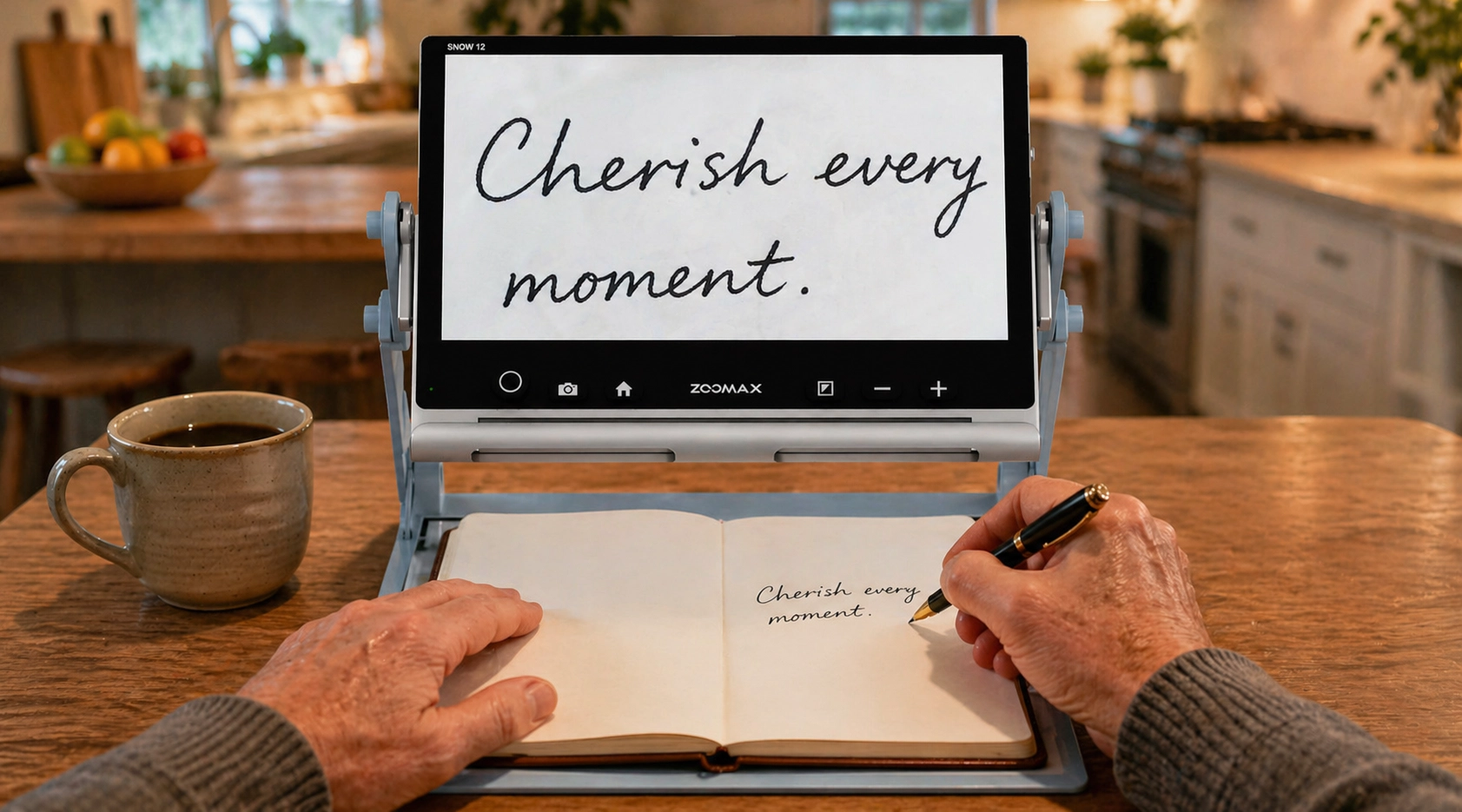
Zoomax Snow 12 delivers true visual independence in a dedicated, purpose-built device tailored for the home-centered senior. This user profile values simplicity and reliability above all else; they may be less comfortable navigating complex menus, but they deeply cherish the ability to read and write without frustration. Snow 12 meets these needs through a large, stable display and straightforward tactile controls that require minimal configuration.
Its built-in OCR text-to-speech feature offers a welcome alternative for days when visual focus feels fatiguing. A user can simply place a cherished letter or favorite novel beneath the camera, and Snow 12 will read the text aloud in a clear, natural voice—keeping them connected to the written word without strain. The integrated writing stand further supports independence, providing a stable platform for composing greeting cards or journaling. For a grandparent writing a birthday message to a grandchild, every stroke of the pen is magnified and clearly visible, transforming handwriting from a frustrating guess into a moment of genuine expression.
With CE and FDA certifications providing clinical reassurance, Snow 12 quietly restores self-reliance. Whether reading a private letter, listening to a book, or reviewing a bank statement independently, the user reclaims the dignity that vision loss too often erodes.
Zoomax Luna 6: Pocket-Sized Independence for Everyday Errands
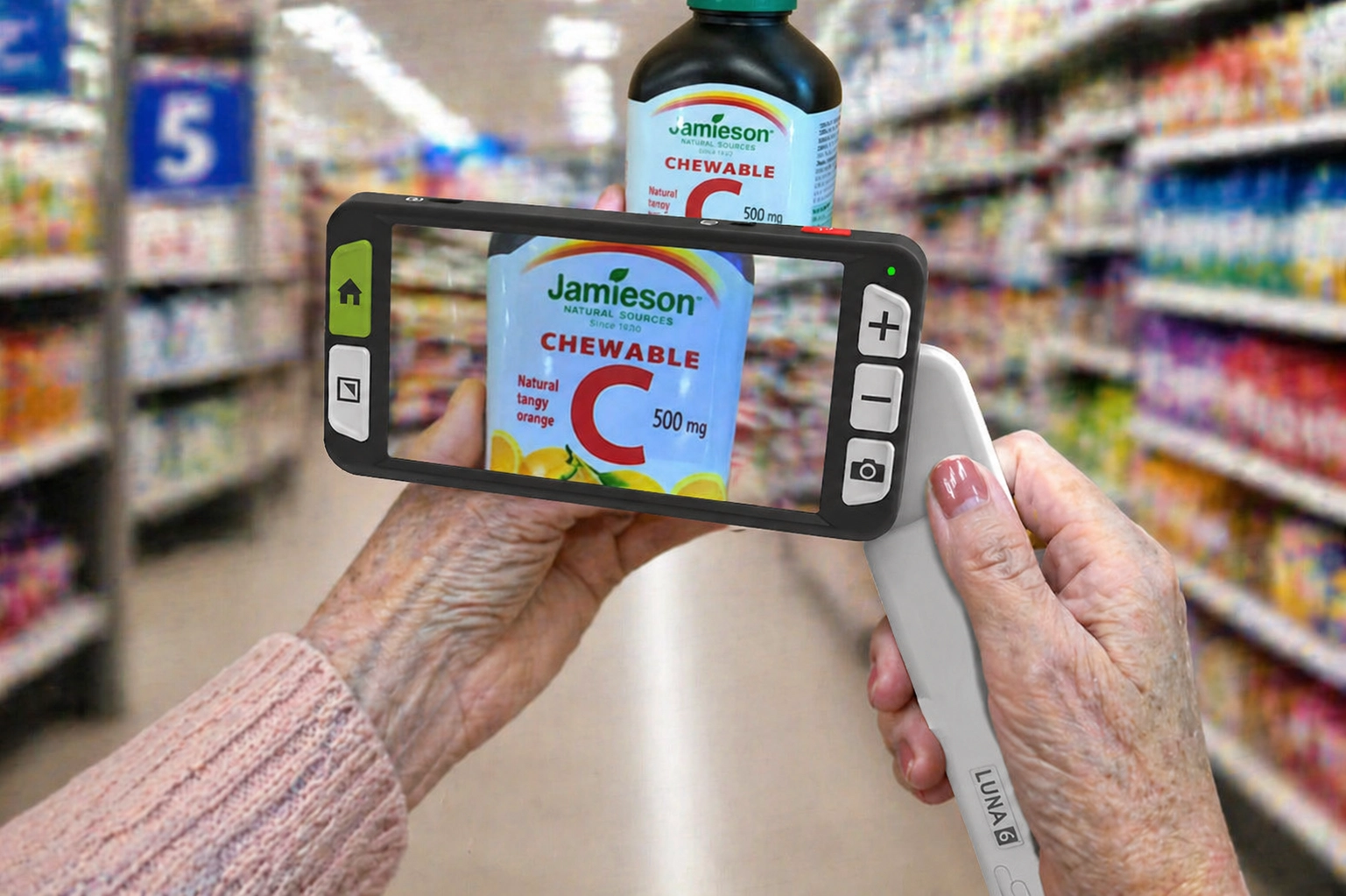
While Snow 12 anchors the home experience, the Zoomax Luna 6 handheld digital magnifier fulfills a complementary and equally vital need: spontaneous independence beyond the front door. Many seniors in their 70s and 80s continue to value personal errands—visiting the grocery store, stopping by the bank, or picking up a prescription at the pharmacy. The Luna 6 is designed precisely for this user profile: someone who values autonomy during outings and prefers a solution that is both discreet and effortlessly simple. With pocket-sized portability, high-contrast display modes optimized for a range of specific eye conditions, and one-touch operation, the Luna 6 requires no technical learning curve. Its long battery life and lightweight construction ensure it is ready whenever and wherever needed. The mental health impact of such a tool is measured in small yet significant moments: confidently reading a menu in a dimly lit restaurant, verifying a medication label in the pharmacy aisle, or signing a document in public without asking for assistance. By restoring these micro-moments of autonomy, the Luna 6 actively prevents the social withdrawal and anxiety that can otherwise accelerate decline in later years.
Psychological Benefits Across Both Solutions
Together, Snow 12 and Luna 6 deliver what older seniors value most: reliability and the preservation of dignity. The ability to manage personal affairs independently—whether reading mail at home or navigating a store down the street—sustains the sense of self-determination that is foundational to psychological well-being. For B2B partners, recommending this combination is a strategic approach to comprehensive aging in place home care. Snow 12 anchors the user in a secure, capable home environment, while the Luna 6 extends that confidence into the community, ensuring that vision loss does not dictate the boundaries of one’s world.
By precisely matching the Snow Pad to active users with a high receptiveness to technology—while recommending Snow 12 and Luna 6 to traditional seniors who prioritize stability and simplicity—our partners are doing more than merely selling hardware; they are delivering a comprehensive safety solution for “aging in place” that is specifically tailored to the psychological and age-related characteristics of their users. Whether addressing age-related macular degeneration, glaucoma, or cataracts, Zoomax’s entire product line—featuring high-contrast modes, adjustable magnification, and autofocus capabilities—effectively meets the diverse needs of individuals experiencing various stages of vision loss.
A Strategic Approach for Our Partners: Positioning Assistance as Care
For distributors, ophthalmology practices, senior care providers, and rehabilitation specialists, the commercial and clinical opportunity extends far beyond selling or prescribing a device. The most successful B2B partners understand that they are delivering care—and that the narrative they present to end users and their families must reflect this deeper value.
Beyond Hardware: The Emotional Value Proposition
When presenting low vision solutions to senior living facilities, home care agencies, or individual families, the conversation should not begin with magnification ratios or frame rates. Instead, frame the discussion around what matters most to older adults and their loved ones:
- Preserving Family Connection: “This device will help your mother read your children’s handwritten cards without frustration.”
- Maintaining Dignity: “With this tool, your patient can manage their own medication without relying on a caregiver for every label.”
- Reducing Caregiver Burden: “When residents can independently read menus and activity schedules, staff time is freed for higher-value interactions.”
A well-chosen portable video magnifier becomes, in this context, not just a tool for seeing—but a lifeline to confidence and connection.
Partnering with Zoomax: The B2B Advantage
Zoomax has served as a specialized manufacturer of electronic magnifiers for low vision since 2006, with distribution spanning over 100 countries worldwide. For B2B partners, this longevity translates into tangible business advantages:
- Complete Product Portfolio: From Snow Padtablet-based system to the Luna 6 handheld magnifier and Luna 24 HD Pro desktop CCTV, Zoomax offers solutions across every form factor and price point.
- Clinical Credibility: CE and FDA certifications ensure that partners can recommend Zoomax devices with confidence in clinical and care settings. Ophthalmologists can position these tools as serious extensions of patient care beyond the exam room.
- Dedicated Distributor Support: Zoomax provides training, technical support, and integrated solutions designed to help partners build their business in the rapidly growing assistive technology market.
Recommendations for Effective B2B Messaging
To maximize the impact of low vision solutions within aging in place home care and clinical settings, partners should consider the following strategic messaging approaches:
Audience | Primary Concern | Recommended Messaging | Supporting Zoomax Advantage |
Ophthalmologists | Clinical outcomes; patient adherence | “Prescribe independence—certified aids that extend your care beyond the exam room and address the mental health dimensions of vision loss.” | CE/FDA certification; documented benefits across AMD, glaucoma, diabetic retinopathy |
Senior Living / Home Care Providers | Resident/patient quality of life; staff efficiency | “Reduce caregiver burden while preserving resident dignity. These tools enable independent reading of menus, medication labels, and activity schedules.” | Ease of use; minimal training requirements; durability and reliability |
Rehabilitation Centers | Functional outcomes; therapy goals | “Integrate evidence-based assistive technology into your low vision rehabilitation programs.” | Full product portfolio for diverse needs; OCR/text-to-speech for severe vision loss |
Distributors / Resellers | Market differentiation; margin; support | “Partner with a certified manufacturer offering complete product lines, dedicated training, and global reach.” | 100+ country distribution network; comprehensive product portfolio; partner support programs |
Family Caregivers (via partners) | Peace of mind; loved one’s well-being | “Give your parent the gift of independence—and yourself the gift of knowing they can manage daily life with dignity.” | Intuitive interfaces; reliable performance; long battery life |
Conclusion: Seeing the Whole Person
The evidence is unequivocal: vision loss in older adults is a significant risk factor for depression, anxiety, and social isolation. Yet this same evidence points toward a clear and actionable solution—high-quality, intuitively designed aids for visually impaired seniors that restore not only functional vision but psychological agency.
By positioning Zoomax solutions as tools for preserving dignity, maintaining family connection, and enabling successful aging in place, partners become integral to a holistic model of care that addresses the whole person—not just their eyes.