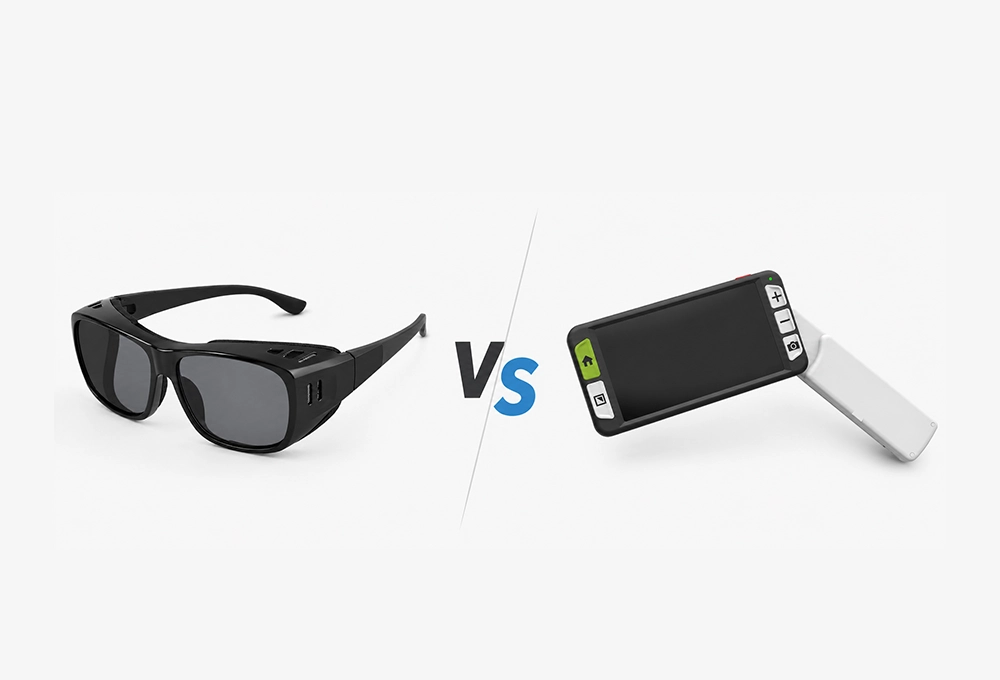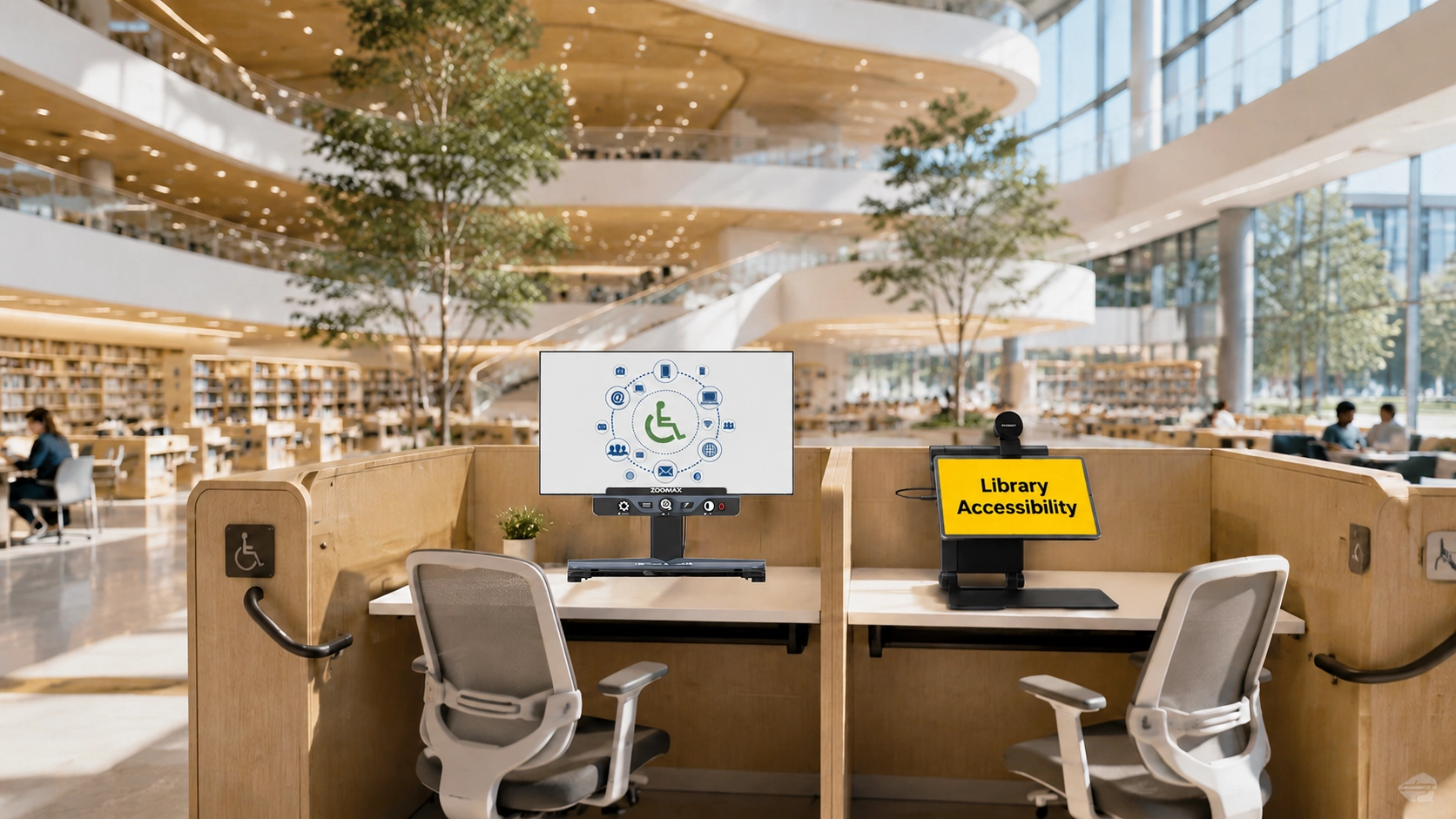











In the rapidly evolving landscape of assistive technology, there is a recurring aesthetic failure: the “Medicalization” of functional gear. For decades, devices for the visually impaired were designed with clinical coldness—bulky, plastic-heavy, and socially stigmatizing. They served a function, but they may not meet the human desire for dignity and style in some scenarios.
Almohadilla de nieve was born as a rebellion against this status quo. By adhering to a radical design philosophy—Technology should be invisible, yet empowering—Snow Pad has transitioned from a simple magnifier to a masterclass in Inclusive Design.
This article explores the deep-seated engineering choices, the user-centric interface logic, and the overarching philosophy that makes Snow Pad a benchmark for the future of accessibility.
Beyond the Hardware: The “Hardware-Agnostic” Open Tray Philosophy
The most striking feature of Snow Pad is what it omits. Most tablet-based assistive devices are “walled gardens”—they lock the user into a specific iPad model, a specific connector, or a proprietary screen. Snow Pad’s Open Tray Design is a philosophical stand against planned obsolescence.
A Masterclass in Universal Compatibility
By creating a high-stability tray that accommodates virtually any iPad size, Snow Pad champions the concept of Hardware Agnosticism.
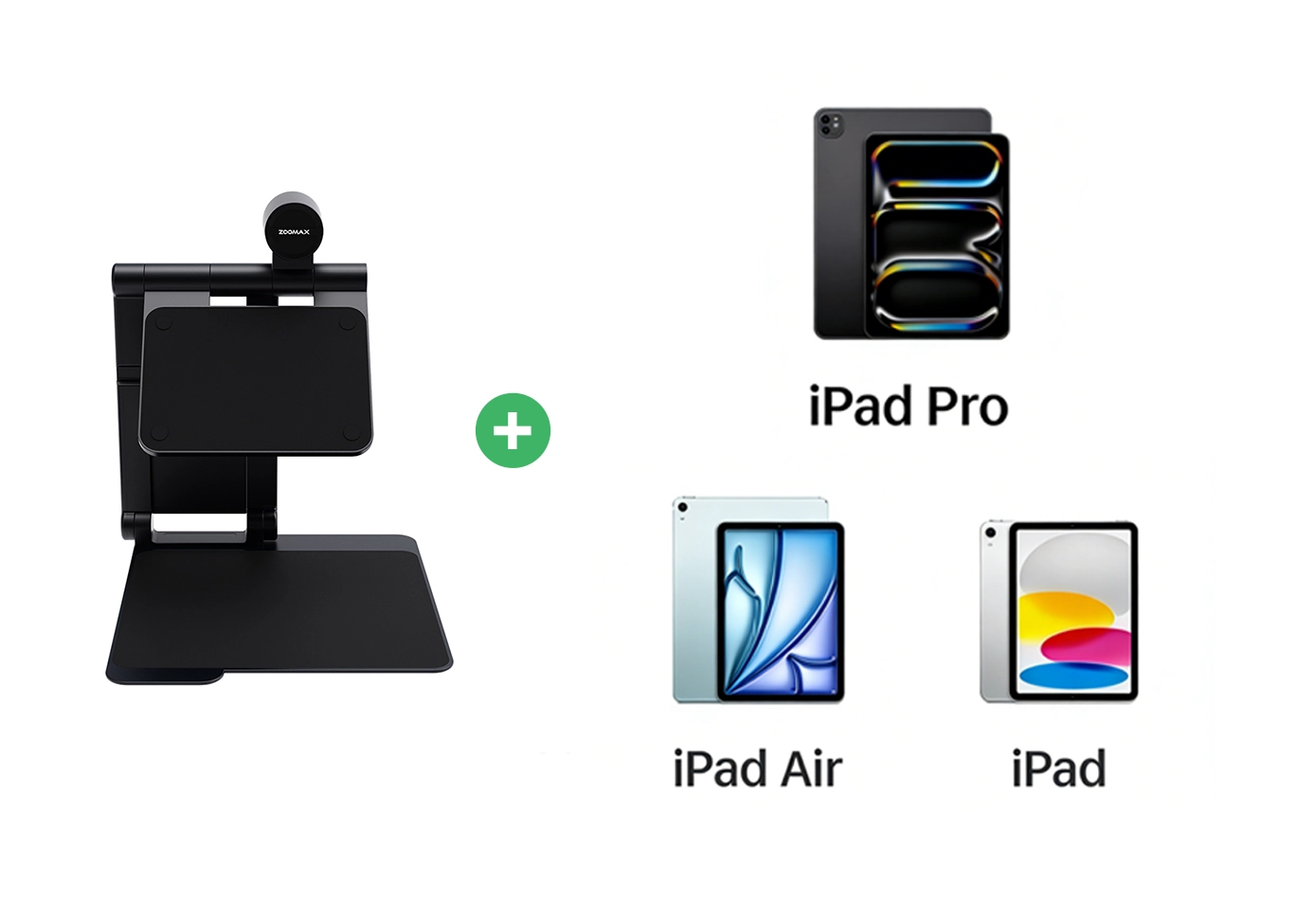
- Economic Inclusion:We recognize that an iPad is a significant investment. Snow Pad respects that investment by allowing users to use the hardware they already own. Whether it is an iPad for extreme portability or a 12.9-inch iPad Pro for a massive field of view, the tray adapts.
- The “Future-Proof” Guarantee:As Apple releases new generations of tablets, Snow Pad remains relevant. You upgrade the “brain” (the iPad), but the “vision workstation” (the Snow Pad) remains your constant companion. This sustainability is a core pillar of our design ethics.
Stability as a Foundation
In low-vision optics, even a millimeter of vibration can ruin a reading experience. The tray isn’t just a holder; it is an anti-vibration platform. It is engineered to neutralize the micro-movements of a busy classroom (See how this design philosophy transforms the learning experience in our [guide for students with low vision])or a moving train, providing the rock-steady image that handheld devices simply cannot match.
The UX of Empathy: Designing the “Frictionless” Interface
A beautiful exterior is meaningless if the digital interaction is frustrating. The Snow Pad App is where the “intellectual soul” of the product resides. Our UX (User Experience) team spent years observing the diverse ways different eyes perceive light, contrast, and spatial hierarchy.
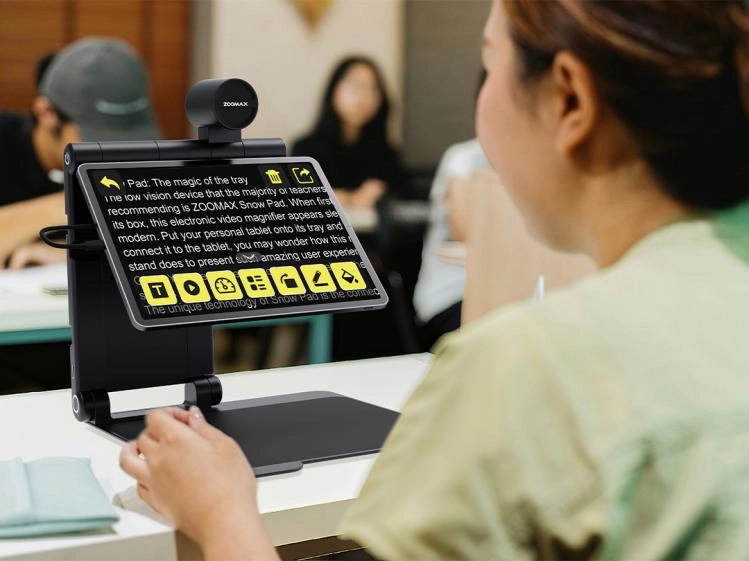
Tactile-Scale Icons and the “Golden Ratio” of Touch
Traditional app icons are designed for “standard” vision—they are small, crowded, and rely on subtle color cues. Snow Pad’s interface is built on Cognitive Simplicity:
- The “No-Miss” Targets:Every icon is scaled to be a “tactile target.” They are spaced to prevent accidental taps, even for users with tremors or significant peripheral vision loss.
- Semantic Coloring:We don’t just use colors for decoration. Each color choice—like the high-visibility yellow or cobalt blue—is selected based on clinical research into macular degeneration and color-blindness.
- Gesture Mirroring:One of the greatest barriers to technology is the “Learning Tax.” Snow Pad eliminates this by mirroring native iPadOS gestures. If you know how to pinch-to-zoom on a photo, you already know how to use Snow Pad. There is no mental friction, only intuitive flow.
Radical Independence: The “Self-Correction” Ecosystem
One of the deepest psychological burdens for low-vision users is the “Anxiety of Dependency”—the fear of being unable to use their equipment when no one is around to help.
The “Always-On” Educational Layer
We solved this by embedding a Micro-Learning Library directly into the interface.
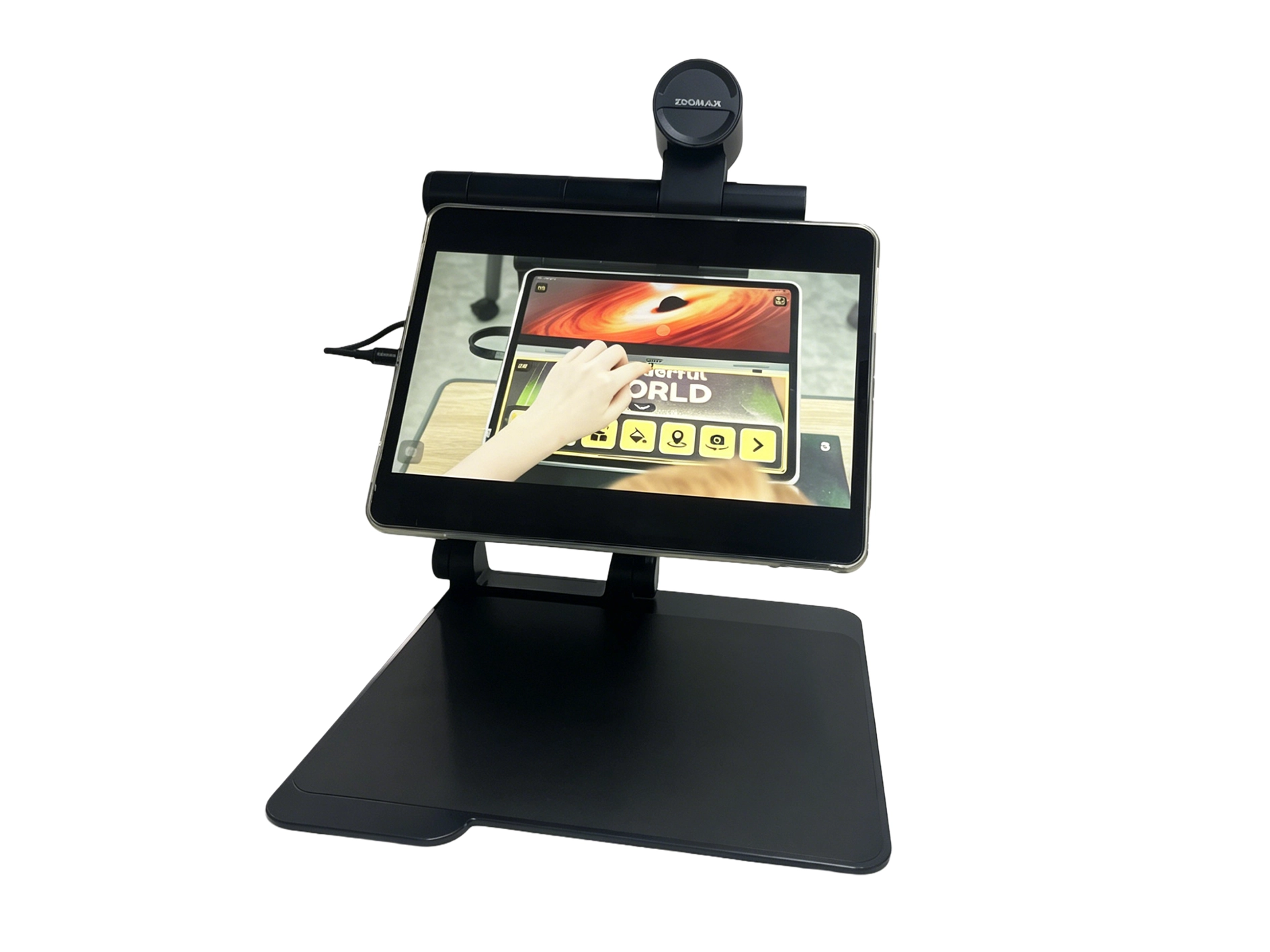
- The 15-Second Masterclass:Forget how to use the AirPlay Mirroring to share your screen with a TV? Don’t call tech support. Don’t wait for a family member. Just tap the “Setting” icon, find the videos and a 15-second, wordless video demonstration plays.
- Dignity in Solitude:This allows users to troubleshoot in private. Whether you are in a quiet library or a high-stakes business meeting, you have the tools to remain self-sufficient. This isn’t just a feature; it is a psychological safety net.
Privacy and the “Offline-First” Mandate
In 2026, data privacy is a human right, yet most “smart” devices require a constant tether to the cloud. Snow Pad takes a different stand. We believe your visual world—what you are reading, who you are dining with, or the confidential contract you are signing—should belong only to you.
Security Without Borders
Snow Pad is an Offline-First device. It performs its most complex magnification, stabilization, and color-filtering tasks without ever needing a Wi-Fi connection.
- Zero Latency:By processing images locally on the iPad’s powerful silicon, we eliminate the lag common in cloud-based tools.
- Unrestricted Living:You can use it in a remote park to sketch from a distance, on an international flight to read a book, or in a high-security office. Your data never leaves the device. This “dark-mode” privacy is the ultimate form of user protection.
Aesthetic Discretion: Sophistication Over Stigma
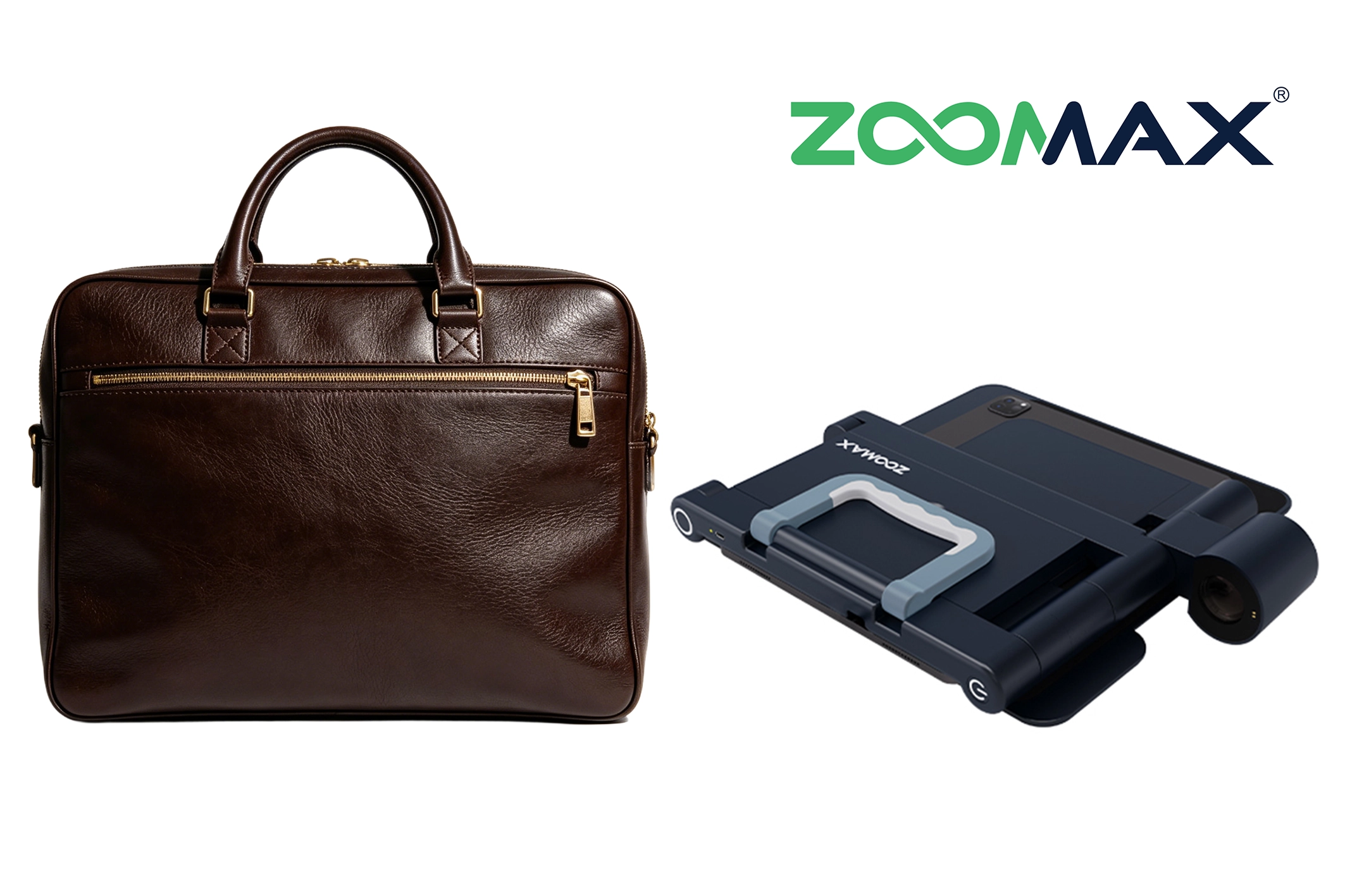
The most “inclusive” design is one that doesn’t scream for attention. Snow Pad follows a Low-Profile Aesthetic that bridges the gap between medical aid and luxury tech accessory.
The “Cool Factor” vs. The “Patient Factor”
When you use a Snow Pad in a Starbucks or a boardroom, you aren’t perceived as a “patient” using a “disability tool.” You are perceived as a power user with a sophisticated workstation.
- The Minimalist Slate:When folded, Snow Pad is a sleek, metallic object that slips into a professional briefcase or a designer bag. It is lightweight, weighing as some laptops, making it a “carry-everywhere” device.
- Warm Tech Materiality:We moved away from the “clinical white” and “medical grey” plastics of the past. Snow Pad uses premium materials that feel “warm” and premium to the touch, reinforcing the idea that high-quality vision deserves high-quality hardware.
Conclusion: Designing for the 100%
The philosophy of Snow Pad is a testament to the fact that when you design for the “edges” of human ability, you create a better experience for everyone. Its soul is rooted in Inclusive Living—a world where limits are broken, boundaries are removed, and good design empowers everyone to see the world on their own terms.
We don’t just provide a lens; we provide a lifestyle of Autonomy, Privacy, and Elegance. This is why Snow Pad is more than just a product; it is a vision of a future where technology truly belongs to everyone.