










In the landscape of modern inclusive education, a student’s success is often determined by their ability to engage with the world in real-time. For the majority of students, the chalkboard, the teacher’s gestures, and the digital whiteboards are the primary conduits of information. However, for many students with low vision or visual impairments, the classroom remains a place of “visual isolation.” When the distance between a student’s desk and the teacher’s presentation feels like an insurmountable gap, academic performance and, more importantly, self-esteem inevitably suffer.
This is where Almofada de neve has emerged as a transformative solution—not merely as a magnifier, but as a bridge to social and academic belonging.
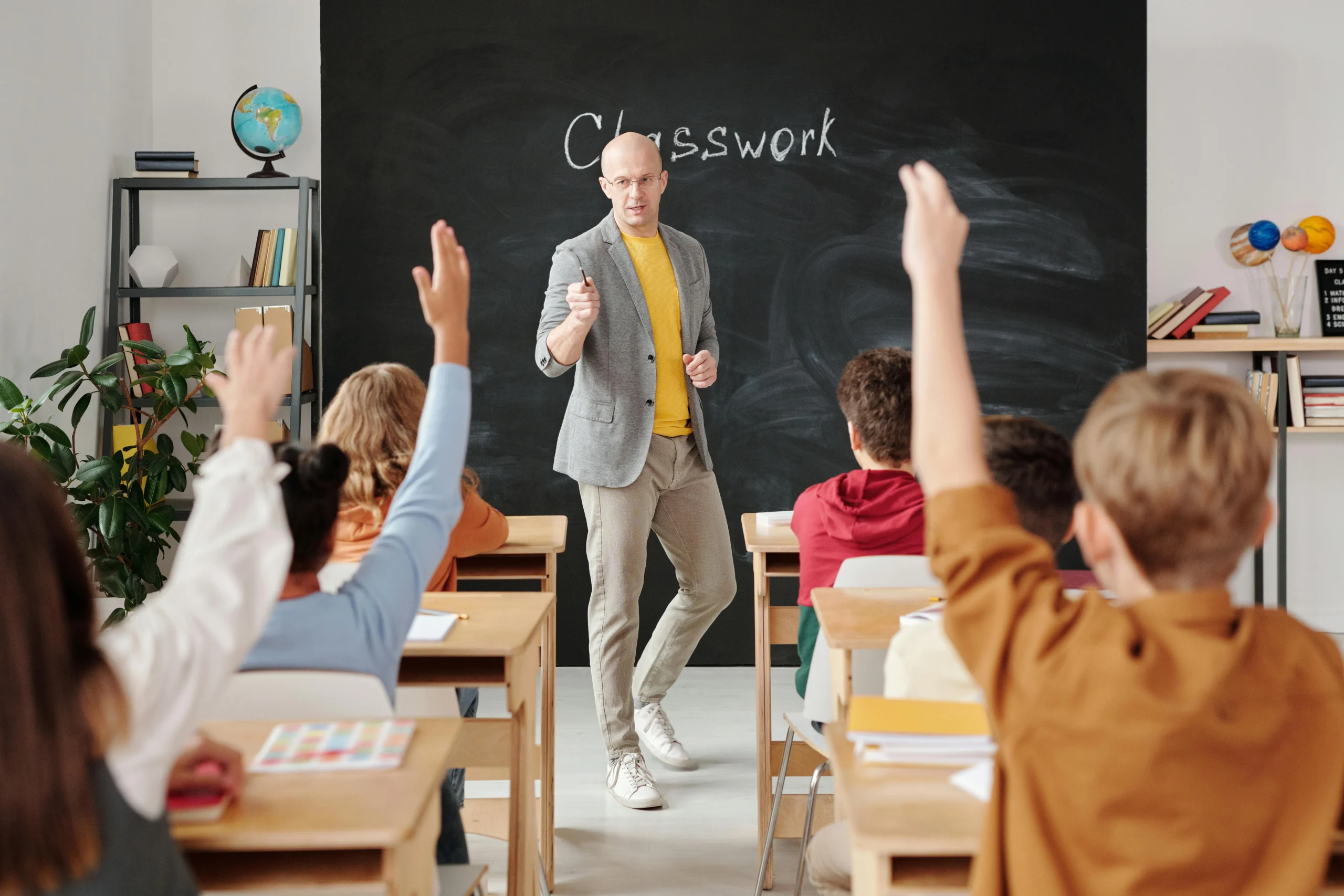
The Invisible Barriers: The Emotional and Physical Toll of Classroom Navigation
To understand the global popularity of Snow Pad at prestigious industry events like the Conferência de Tecnologia Assistiva da CSUN (USA) and SightCity (Germany), we must first dissect the daily frustrations of the modern low-vision student.
The Social Price of “Different” Gear
Human development studies show that during the formative school years, the desire to “fit in” is a primary psychological driver. Many students are prescribed bioptic telescopes or bulky, head-worn electronic glasses. While these devices provide functional sight, they carry a heavy social stigma.
For a teenager, the fear of being mocked or labeled as “the kid with the weird goggles” is often stronger than the desire to see the board. Many students choose to sit in silence, squinting at a blurred reality, rather than wear a device that feels like a medical label. This choice leads to a phenomenon known as “passive withdrawal,” where the student stops participating to avoid drawing attention to their disability.
The Physical Exhaustion of Handheld Devices
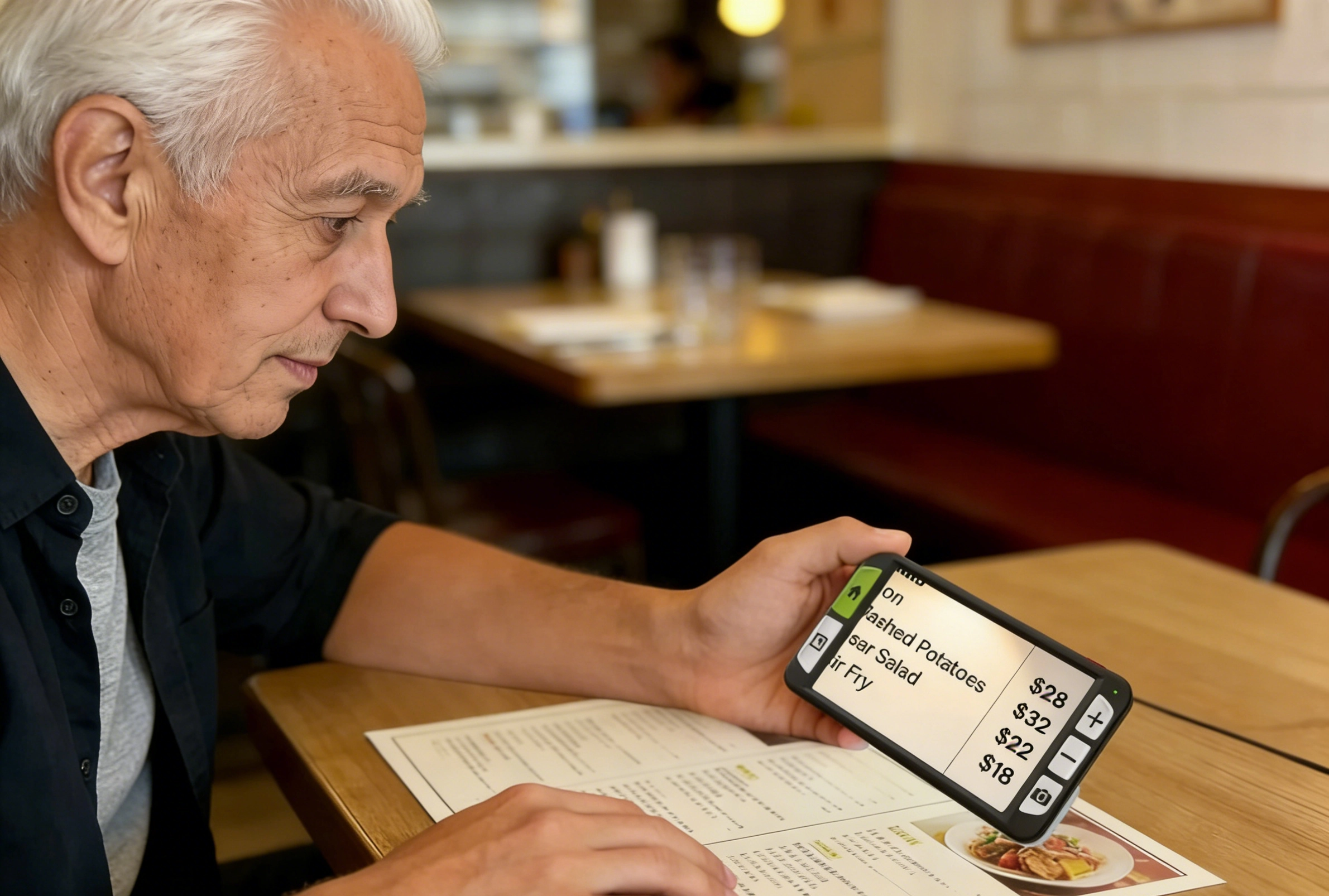
Handheld video magnifiers are a common alternative, but they present several massive obstacles to actual learning:
- The Shaky Image Fatigue:Any minor hand tremor is magnified exponentially on the screen. The constant micro-movements force the brain to work twice as hard to process the image, leading to “visual motion sickness,” severe eye strain, and headaches before the first recess begins.
- The Note-taking Dilemma:If a student is holding a magnifier with one hand to see the lesson, they cannot take notes with the other. This creates a “catch-up” cycle where the student is always five minutes behind the class, missing critical context while they fumbled with their equipment.
- Ergonomic Strain:Hunched over a small screen for hours leads to neck and back pain, further distracting the student from the curriculum.
Snow Pad: A New Era of Classroom Synchronicity
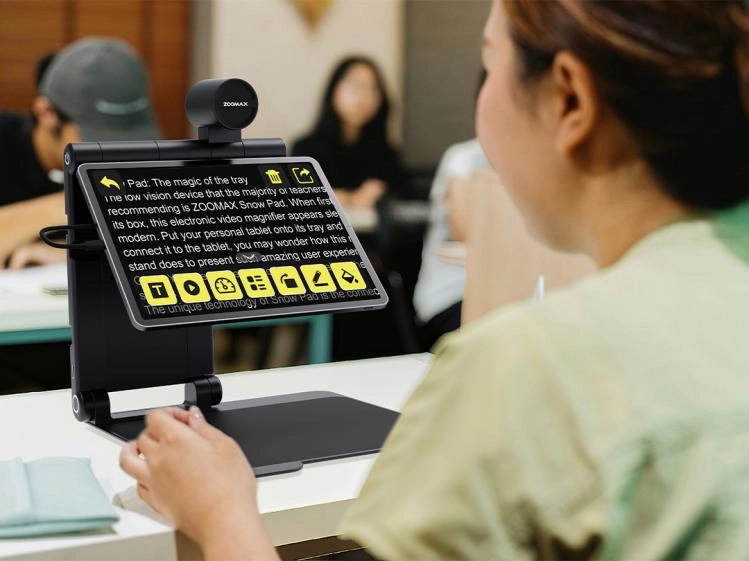
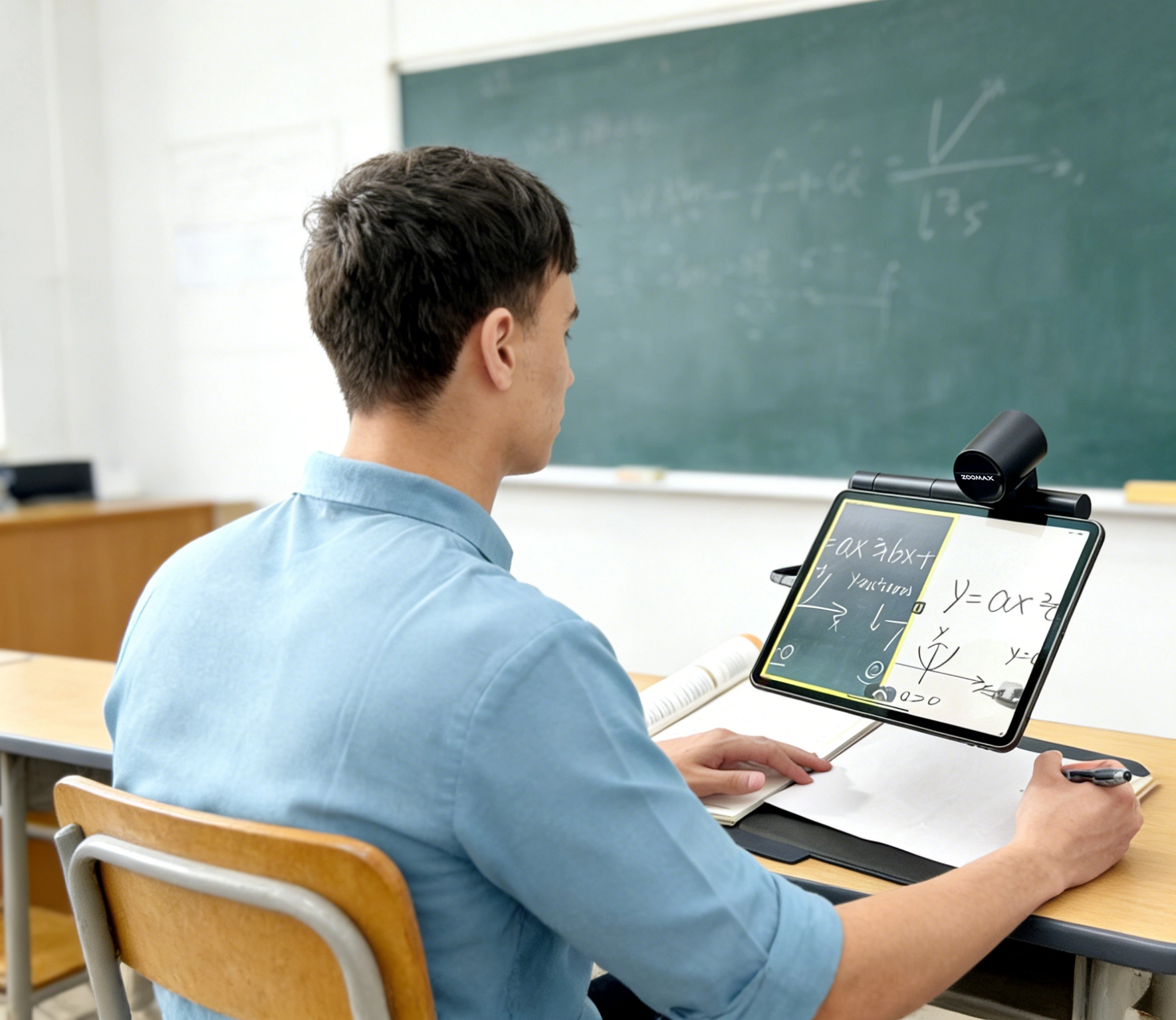
Snow Pad was engineered specifically to solve the “Note-taking vs. Seeing” conflict. By providing a stable, high-definition platform that integrates seamlessly with the iPad ecosystem, it creates a professional-grade workstation that fits on any standard school desk.
Achieving “Live” Learning
The core strength of Snow Pad is its stability. Because the iPad is held securely in a specialized, vibration-resistant stand, the image remains rock-steady. This allows for Synchronous Learning—the ability to watch the teacher and record information at the same time.
A. Total Hands-Free Independence
In a science lab or a math lecture, hands-free operation is not a luxury; it is a necessity. Snow Pad allows a student to:
- Use the camera to zoom in on a distant experiment.
- Keep their hands free to use a calculator, a pencil, or a keyboard.
- Split-screen helps whenlooking at the board and checking the textbook on their desk.
B. Discreet Empowerment: The “Cool Tech” Factor
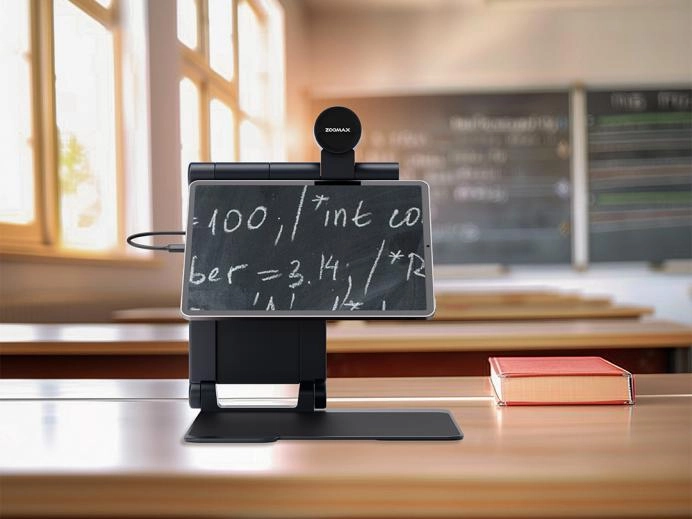
Snow Pad does not look like a medical device; it looks like a sleek, minimalist tech accessory. In a modern classroom filled with laptops, tablets, and high-tech gear, Snow Pad blends in perfectly. This “de-stigmatized” design is crucial for building a student’s confidence. It allows them to use the help they need without feeling like they are on display. It shifts the narrative from “I am using a medical tool” to “I am using a professional workstation.”
The Psychological Shift: From Observer to Participant
When a student regains their “visual footing,” the transformation is often more emotional than academic.
Restoring the Courage to Speak
Visual clarity leads directly to psychological confidence. When a student can clearly see the teacher’s facial expressions and the fine details of a PowerPoint presentation, they feel equipped to raise their hand. They no longer fear that they missed a crucial instruction. They can join group discussions because they aren’t guessing what their classmates are laughing at—they are experiencing the moment in real-time.
Breaking the Cycle of Frustration
Many low-vision students experience “academic fatigue”—the sheer exhaustion of trying to keep up. By reducing the physical and mental effort required to simply see, Snow Pad frees up cognitive energy for learning. Students report feeling more “present” and less drained at the end of the school day.
Case Studies and Global Feedback
At the CSUN Conference, educators from across the globe noted that Snow Pad fills a critical gap in the “Inclusive Education” toolkit.
- O UK Perspective: At the Sight Village, dealers highlighted how Snow Pad helps students in remote learning environments, where they need to bridge the gap between physical textbooks and digital interfaces.
- The European Standards:At SightCity Germany, users praised the low vision aids device for its “low-profile” existence. It provides high-intensity magnification without being a “loud” presence on the desk.
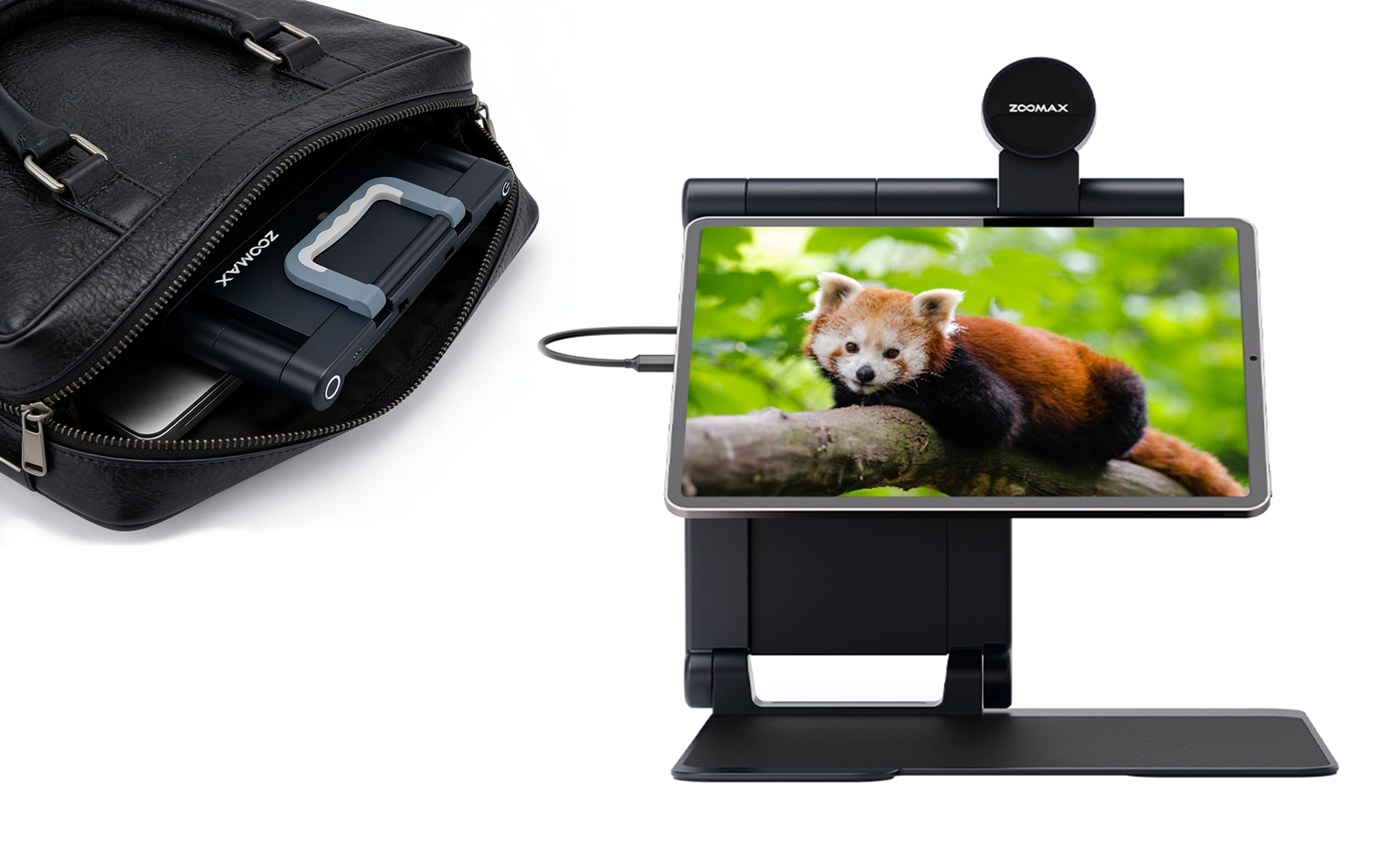
One recurring theme from teachers is the “Speed of Setup.” In a busy classroom where transitions happen every 50 minutes, a student cannot spend 10 minutes calibrating equipment. Snow Pad’s “unfold-and-go” design ensures the student is ready to learn the moment the bell rings.
FAQ: Implementing Snow Pad in a School Setting
To help parents and IT departments understand the integration of Snow Pad, we have compiled the most frequent inquiries from the educational sector.