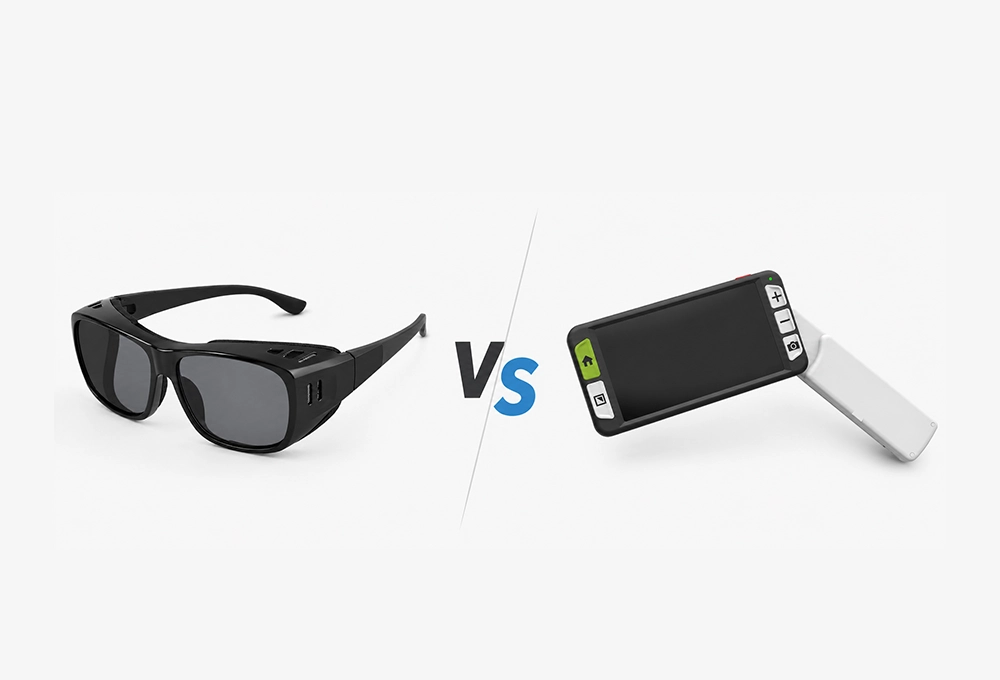











Age-related macular degeneration (AMD) stands as a leading cause of irreversible vision loss worldwide, affecting over 200 million people globally—and that number is projected to rise as populations age. For decades, AMD patients, particularly those with the dry form that accounts for 85-90% of cases, faced a bleak prognosis: gradual central vision loss leading to low vision or even legal blindness, with limited treatment options to halt or reverse the damage. However, 2025 has marked a transformative year in AMD care, with breakthroughs in dry macular degeneration treatment and innovations in AMD disease treatment, emerging alongside advanced 低视力辅助器 for macular degeneration like Zoomax LUNA 6, SNOW 12, and LUNA EYE. These devices are bridging the gap between medical progress and daily functionality.
了解老年痴呆症和低视力危机
要了解新疗法的影响,首先必须认识到老年黄斑变性与低视力之间的联系。低视力被定义为无法通过眼镜、隐形眼镜、手术或药物矫正的永久性视力障碍,但仍有一些残余视力可以通过辅助工具来增强。对于老年性黄斑变性患者来说,这表现为中心视力的逐渐丧失--视野中心出现模糊或扭曲的 “空白点”,而周边视力通常保持不变。其结果是丧失阅读、辨认面孔、驾驶或执行烹饪或理财等日常任务的能力--大多数人认为这些活动是理所当然的。.
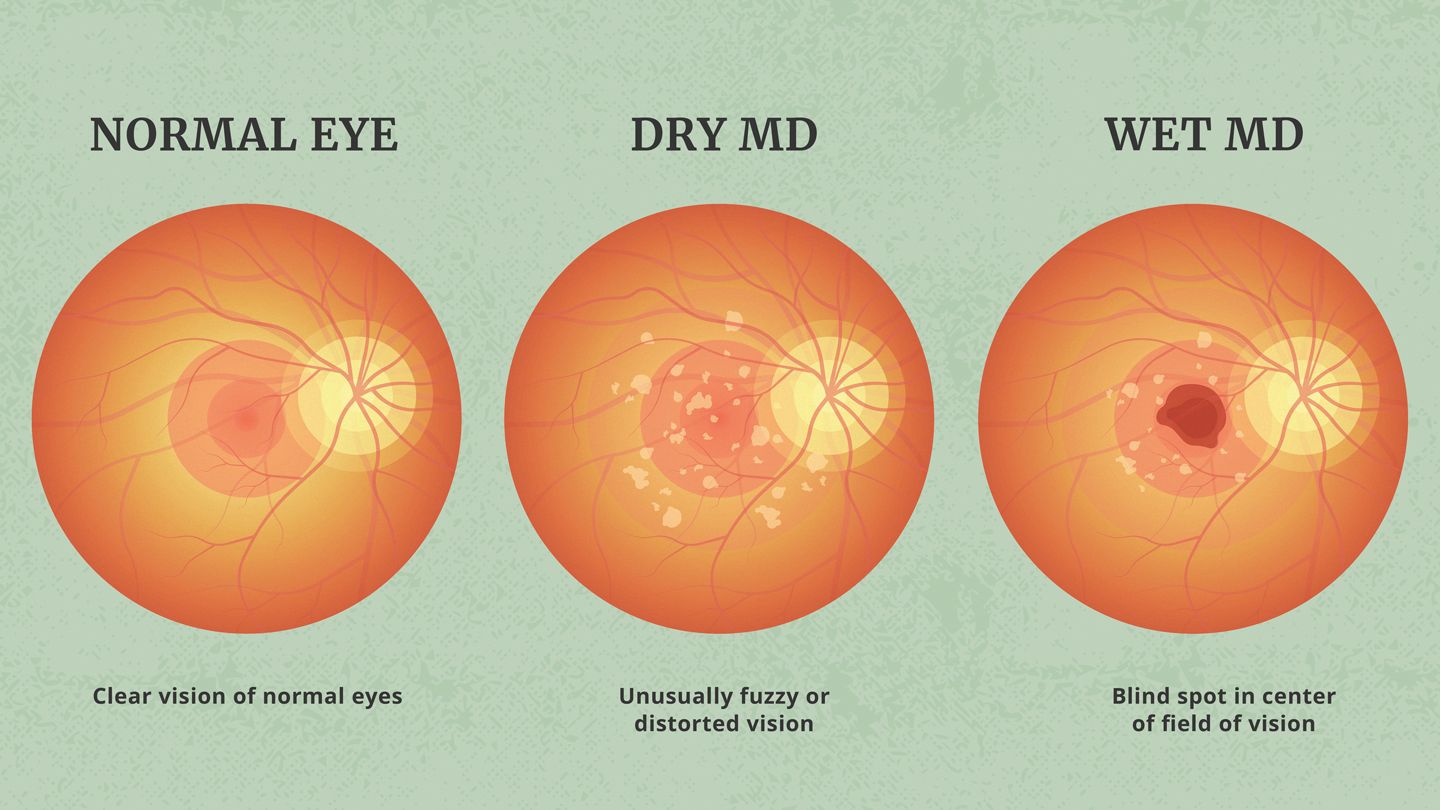
Dry AMD, the more common subtype, involves the slow degeneration of retinal photoreceptor cells in the macula, the part of the eye responsible for sharp central vision. Until recently, treatments focused on slowing progression rather than restoring function, leaving millions reliant on macular degeneration low vision aids to navigate life. Wet AMD, though less prevalent, progresses faster due to abnormal blood vessel growth under the retina, but has seen more treatment options with wet macular degeneration treatment breakthroughs using anti-VEGF medications.
危机不仅仅局限于身体上的限制:老年性视力减退症导致的低视力与抑郁、社会孤立和生活质量下降的比例增加有关。这就是为什么新的老年性视力减退症治疗方法和先进的电子低视力助视器的结合是如此具有革命性--它既解决了视力减退的根本原因,又满足了患者的直接功能需求,创造了一种更加全面的护理方法。对于那些已经面临视力衰退的人来说,了解 法力黄斑变性导致的低视力成为他们人生旅途中的一个重要组成部分,医疗干预与实用工具相结合,将日常挑战转化为可以应付的任务。.
2025 年改变游戏规则的 AMD 治疗技术
After years of research, 2025 has witnessed multiple macular degeneration treatment breakthroughs, moving from “managing decline” to “restoring function.” These macular degeneration new treatment 2025 technologies target different stages of AMD, offering hope for both early and advanced cases.
PRIMA 视网膜植入体:恢复晚期干性老年黄斑变性患者的视力
2025 年 10 月,发表在《新英格兰医学杂志》上的一项研究公布了 PRIMA(光电视网膜植入微阵列)系统,这是针对晚期干性老年性视网膜病变和地理萎缩患者的一项突破。该系统由一个放置在视网膜下的 2 毫米×2 毫米的微小无线植入物、专用眼镜和便携式处理器组成。与传统的视网膜植入物不同,PRIMA 由光驱动,无需电池或有线连接。.
 In a clinical trial of 38 patients, 81% experienced clinically significant vision improvement after 12 months—equivalent to reading two more lines on a standard eye chart. Most patients regained the ability to read words, recognize faces, and perform daily tasks they had abandoned due to low vision. While 81% of participants reported temporary severe adverse events (mostly within the first two months post-surgery), 95% of these resolved quickly, and the implant did not harm peripheral vision. The PRIMA retinal implant success rate underscores its potential as a viable option for those with end-stage dry AMD, making it one of the most notable new treatments for dry macular degeneration 2025.
对于从高度低视力过渡到部分视力恢复的患者来说,PRIMA 代表着一种模式的转变。然而,该系统需要经过数月的培训才能掌握,在适应期内,患者可能会出现一些问题、, macular degeneration low vision aids like Zoomax LUNA 6 在执行需要精确近距离视觉的任务时,如阅读小字或填写表格,而在执行更广泛的视觉任务时,则需要依靠植入体。.
芬兰热疗:早期干性黄斑变性的微创选择
2025 年 11 月,芬兰阿尔托大学(Aalto University)的研究人员宣布了一种治疗早期干性黄斑变性的新型热疗法,为减缓或逆转细胞损伤提供了一种非手术替代方法。这种疗法利用近红外线温和地加热视网膜组织,激活热休克蛋白和细胞自噬--人体修复受损细胞的自然过程。与侵入性手术不同,这种疗法非接触、无痛,只针对受影响的区域,保留了健康的视网膜组织。.
Validated in animal models, the thermal therapy has shown promise in halting photoreceptor cell loss and even restoring some function. Clinical trials in humans are set to launch in spring 2026, with expectations of FDA approval within three years. This dry macular degeneration treatment breakthrough offers a minimally invasive option, reducing the risk of low vision progression for those in the early stages. For patients already experiencing mild low vision, combining thermal therapy with devices like
Zoomax SNOW 12-这种先进的 12 英寸电子放大镜具有定制的用户友好功能,有助于在治疗生效期间保持生活质量。.
IPS 细胞视网膜移植:再生健康组织
2025年9月,日本神户的外科医生利用诱导多能干细胞(IPS)成功实施了世界上首例视网膜移植手术,这对晚期老年性视网膜病变患者来说具有里程碑意义。IPS细胞来自患者自身的皮肤或血液,经过重新编程后可发育成健康的视网膜色素上皮(RPE)细胞,然后移植到眼球中以替代黄斑中受损的细胞。.
 The first patient, a woman with advanced AMD, experienced stable vision improvement within months of the surgery, regaining the ability to navigate independently and read with minimal assistance. This macular degeneration treatment breakthrough offers a regenerative approach, addressing the root cause of vision loss rather than just managing symptoms. For patients who have lived with severe low vision for years, IPS cell therapy could reduce dependence on macular degeneration aids, though many may still use Zoomax 卢娜之眼-台式视频放大镜,具有灵活的观看模式,适合需要持续近距离观看的任务,如阅读书籍或使用电脑。.
5G 驱动的机器人手术:精准治疗湿性黄斑变性和黄斑出血
While dry AMD has dominated recent breakthroughs, wet AMD and related conditions like macular hemorrhage have seen their own wet macular degeneration treatment breakthroughs. In November 2025, a team from Sun Yat-sen University’s Zhongshan Ophthalmic Center performed the world’s first remote robotic subretinal injection using a domestically developed 5G ophthalmic robot. This procedure is critical for treating wet AMD, macular edema, and macular hemorrhage—conditions that can cause rapid low vision if not treated promptly.

The robot’s 5G connection ensures zero latency, allowing surgeons to perform precise injections from miles away, expanding access to specialized care for patients in rural or underserved areas. For patients recovering from robotic surgery, macular degeneration medical devices like The Zoomax SNOW 12, with its high-contrast display and compatibility with distance-viewing camera 雪眼, 这有助于患者适应视力的改善,同时减轻恢复期间的眼睛疲劳。.
低视力辅助设备在老年痴呆症护理中不可或缺的作用
While new therapies offer unprecedented hope, macular degeneration low vision aids and electronic magnifiers remain essential components of AMD care—for three key reasons:
- First, many patients with advanced AMD will not be eligible for the latest treatments (e.g., due to health conditions or severity of retinal damage) and rely entirely on assistive devices.
- Second, even patients undergoing breakthrough therapies often need low vision tools during treatment, recovery, or adaptation periods.
- Third, assistive technology enhances the benefits of medical treatments, allowing patients to maximize their restored vision for daily tasks.
有效低视力电子辅助工具的主要特点
现代电子低视力设备的发展已远远超出了基本的放大镜,它们采用了先进的摄像头、高分辨率显示屏和用户友好型设计,以满足 AMD 患者的独特需求。主要功能包括
- 可调节放大倍数(从 1 倍到 32 倍或更高),以适应不同程度的低视力需求
- 高对比度和可定制的色彩模式(如白底黑字、黑底白字)可减少眩光,提高光敏感患者的可读性
- 便携式或台式设计,适合不同的环境(家庭、工作、旅行)
- 电池寿命长,可使用半天甚至一整天
- 直观的控制,尤其适合可能难以使用复杂技术的老年人
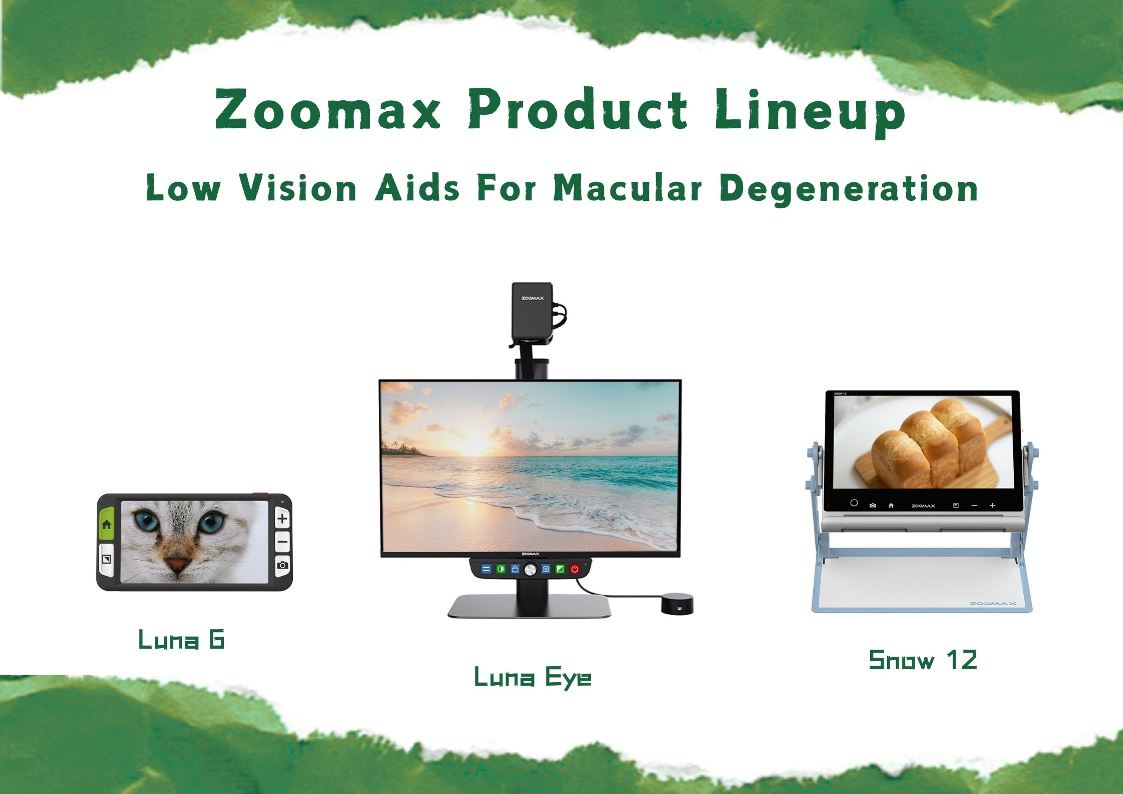
Many patients ask, “What’s the best portable electronic magnifier for AMD?” The answer often lies in devices like Zoomax LUNA 6 that balance portability and magnification, while portable options like the SNOW 12 cater to extended use. Zoomax, a leader in macular degeneration aids, has engineered products that align perfectly with AMD patients’ needs, with three standout devices:
Zoomax LUNA 6:便携式动力装置
 LUNA 6 是一款袖珍型手持电子放大镜,集便携性和高性能于一身,是外出就诊的 AMD 患者的理想之选。它拥有 6 英寸高清屏幕、1300 万像素摄像头和高达 19 倍的放大倍率,即使是中度至重度低视力患者也能获得清晰锐利的图像。内置手柄可为手部抖动的用户提供稳定性(这是老年 AMD 患者的常见问题),而无线充电功能则消除了对准微小充电端口的烦恼。LUNA 6 的电池续航时间为 4 小时,非常适合在餐厅阅读菜单、查看药物标签或浏览家庭照片--这些任务在低视力未矫正的情况下往往是不可能完成的。.
Zoomax SNOW 12:多功能便携式解决方案
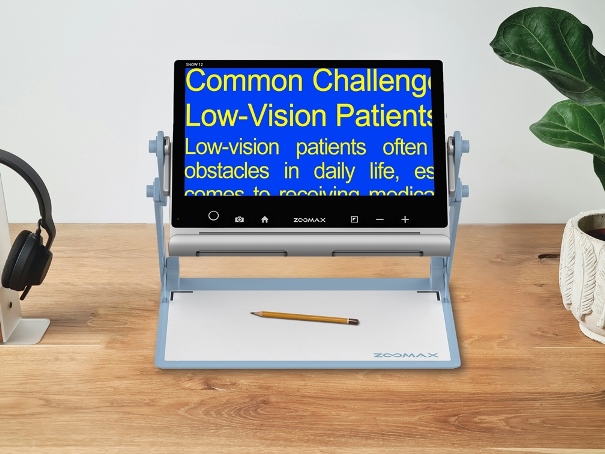 对于家庭或办公室使用,SNOW 12 提供 12 英寸高分辨率显示屏,具有双重查看模式(连接远距离摄像头时,可查看近处和远处)。AMD 患者可以用它来近距离阅读书籍、杂志或文档,也可以连接可选的 Snow Eye 远距离观察镜头来观看黑板、白板或远处的物体,因此它非常适合视力低下的学生或职业人士使用。SNOW 12 的简单控制和高对比度色彩选项可减少眼睛疲劳,其紧凑的设计还可节省桌面空间。对于从 PRIMA 植入术或 IPS 细胞疗法中恢复过来的患者,SNOW 12 的可调节放大倍率可以帮助他们逐渐适应视力的改善,而不会给眼睛造成负担。.
Zoomax LUNA EYE:多功能灵活放大镜
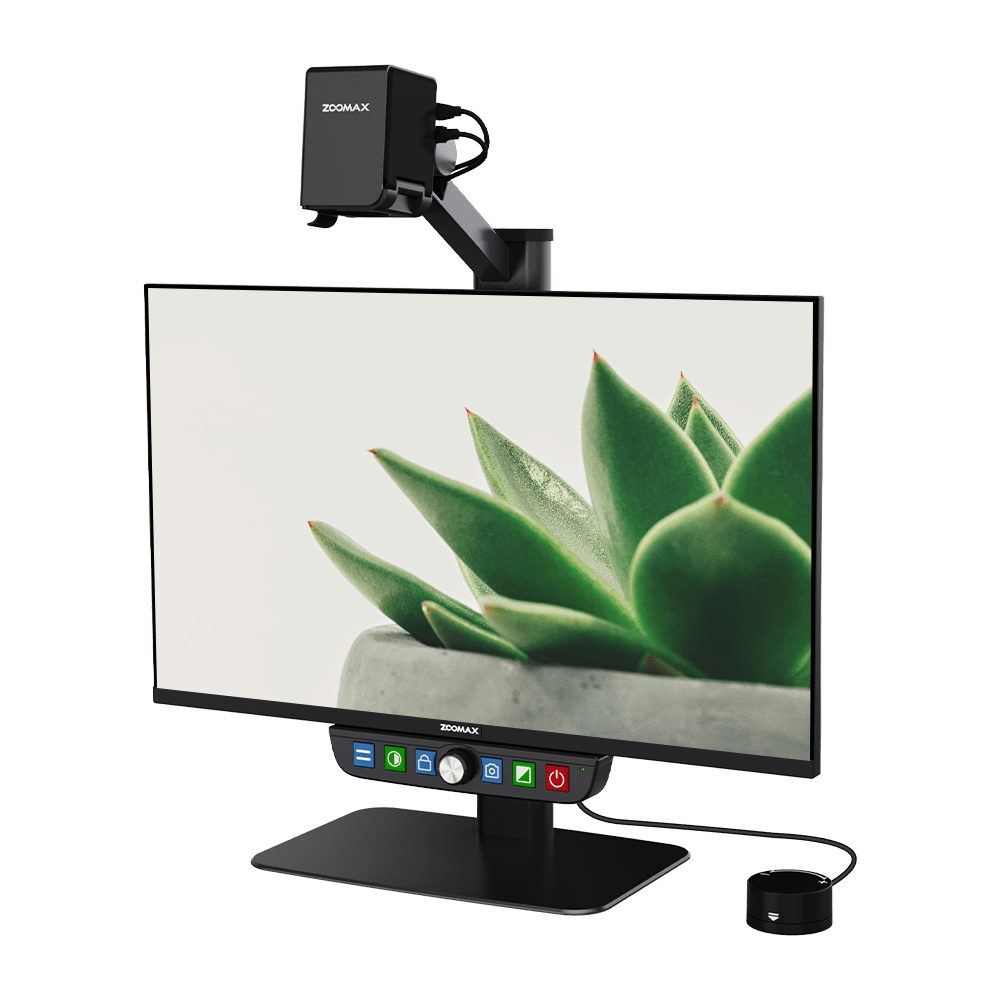 LUNA EYE 是一款台式视频放大镜,具有三种观察模式:近视角(用于阅读/书写)、远视角(用于观察整个房间)和自视角(用于梳妆或化妆),可实现最大程度的多功能性。LUNA EYE 的设计轻巧小巧,便于在房间之间移动,自动对焦摄像头即使在设备重新定位时也能确保图像清晰。LUNA EYE 尤其受到老年 AMD 患者和严重弱视患者的青睐,因为它的大屏幕和直观的控制方式只需要很少的培训。许多眼科护理专家建议需要用一台设备处理所有日常视觉任务的患者使用该设备。.
老年痴呆症护理的未来:整合疗法和辅助技术
The future of AMD care lies in seamless integration of breakthrough medical treatments and advanced low vision solutions. As therapies like PRIMA implants and IPS cell transplants become more widely available, eye care providers will increasingly adopt a “treatment-plus-assistive-technology” model, tailoring both medical interventions and macular degeneration aids to each patient’s unique needs.
For example, a patient with early dry AMD might start with Finnish thermal therapy to halt progression, paired with a portable device like the Zoomax LUNA 6 for occasional low vision needs. A patient with advanced dry AMD could undergo PRIMA implantation and use the Zoomax SNOW 12 during training to maximize the implant’s benefits. For frequent travelers with AMD, Zoomax LUNA 6 remains the top choice for on-the-go reading, while Zoomax LUNA EYE suits home-based daily tasks like cooking or paying bills. A patient with wet AMD might receive 5G robotic surgery and rely on the Zoomax LUNA EYE during recovery to reduce eye strain.
This integrated approach improves visual outcomes and enhances quality of life, empowering AMD patients to maintain independence, social connection, and emotional well-being. As research continues—with ongoing trials for gene therapy, light-based treatments, and next-generation implants—the role of macular degeneration aids will evolve but remain indispensable: they are the bridge between medical potential and daily reality.
结论
2025 has been a watershed year for age-related macular degeneration, with macular degeneration treatment breakthroughs that offer hope for restoring vision where there was once only decline. From PRIMA retinal implants and IPS cell transplants to minimally invasive thermal therapy and 5G robotic surgery, these innovations are redefining what’s possible for AMD patients. Yet, amid these medical leaps, macular degeneration low vision aids and electronic magnifiers remain essential, providing critical support for patients at every stage of their journey.
Products like Zoomax’s LUNA 6, SNOW 12, and LUNA EYE exemplify how assistive technology complements medical treatments, turning partial vision restoration into meaningful daily function. As AMD care continues to advance, integrating breakthrough therapies with macular degeneration aids will be key to ensuring every AMD patient can live a full, independent life. For those affected by AMD, the future is no longer defined by vision loss, but by the promise of renewed sight and endless possibilities.