
Age-related macular degeneration (AMD) stands as a leading cause of irreversible vision loss worldwide, affecting over 200 million people globally—and that number is projected to rise as populations age. For decades, AMD patients, particularly those with the dry form that accounts for 85-90% of cases, faced a bleak prognosis: gradual central vision loss leading to low vision or even legal blindness, with limited treatment options to halt or reverse the damage. However, 2025 has marked a transformative year in AMD care, with breakthroughs in dry macular degeneration treatment and innovations in AMD disease treatment, emerging alongside advanced low vision aids for macular degeneration like Zoomax LUNA 6, SNOW 12, and LUNA EYE. These devices are bridging the gap between medical progress and daily functionality.
Understanding AMD and the Low Vision Crisis
To grasp the impact of new treatments, it’s essential to first recognize the link between AMD and low vision. Low vision is defined as a permanent visual impairment that cannot be corrected by glasses, contact lenses, surgery, or medication, yet leaves some residual sight that can be enhanced with assistive tools. For AMD patients, this manifests as progressive central vision loss—blurry or distorted “blank spots” in the center of their field of view—while peripheral vision often remains intact. The result is a loss of ability to read, recognize faces, drive, or perform daily tasks like cooking or managing finances—activities most people take for granted.
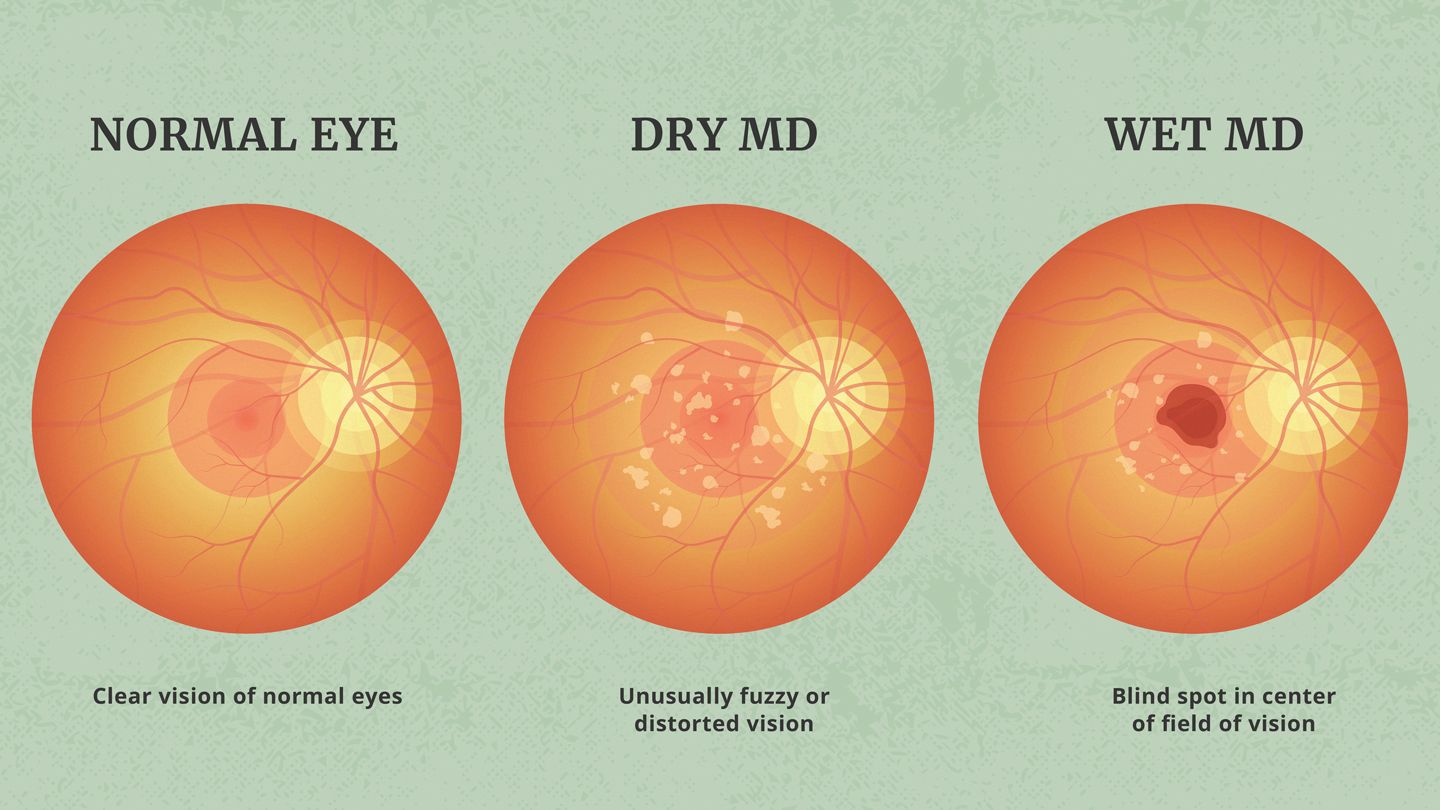
Dry AMD, the more common subtype, involves the slow degeneration of retinal photoreceptor cells in the macula, the part of the eye responsible for sharp central vision. Until recently, treatments focused on slowing progression rather than restoring function, leaving millions reliant on macular degeneration low vision aids to navigate life. Wet AMD, though less prevalent, progresses faster due to abnormal blood vessel growth under the retina, but has seen more treatment options with wet macular degeneration treatment breakthroughs using anti-VEGF medications.
The crisis extends beyond physical limitations: low vision from AMD is associated with increased rates of depression, social isolation, and loss of quality of life. This is why the convergence of new AMD treatments and advanced electronic low vision aids is so revolutionary—it addresses both the root cause of vision loss and the immediate functional needs of patients, creating a more holistic approach to care. For those already grappling with vision decline, understanding how to manage low vision from macular degeneration becomes a critical part of their journey, blending medical intervention with practical tools that turn daily challenges into manageable tasks.
2025’s Game-Changing AMD Treatment Technologies
After years of research, 2025 has witnessed multiple macular degeneration treatment breakthroughs, moving from “managing decline” to “restoring function.” These macular degeneration new treatment 2025 technologies target different stages of AMD, offering hope for both early and advanced cases.
PRIMA Retinal Implants: Restoring Vision for Advanced Dry AMD
In October 2025, a study published in The New England Journal of Medicine unveiled the PRIMA (Photovoltaic Retinal Implant Microarray) system, a breakthrough for patients with advanced dry AMD and geographic atrophy. The system consists of a tiny 2mm×2mm wireless implant placed under the retina, paired with specialized glasses and a portable processor. Unlike traditional retinal implants, PRIMA is powered by light, eliminating the need for batteries or wired connections.
 In a clinical trial of 38 patients, 81% experienced clinically significant vision improvement after 12 months—equivalent to reading two more lines on a standard eye chart. Most patients regained the ability to read words, recognize faces, and perform daily tasks they had abandoned due to low vision. While 81% of participants reported temporary severe adverse events (mostly within the first two months post-surgery), 95% of these resolved quickly, and the implant did not harm peripheral vision. The PRIMA retinal implant success rate underscores its potential as a viable option for those with end-stage dry AMD, making it one of the most notable new treatments for dry macular degeneration 2025.
For patients transitioning from advanced low vision to partial vision restoration, PRIMA represents a paradigm shift. However, the system requires months of training to master, and during this adaptation period, macular degeneration low vision aids like Zoomax LUNA 6 for tasks requiring precise close-up vision, such as reading small print or filling out forms, while relying on the implant for broader visual tasks.
Finnish Thermal Therapy: A Minimally Invasive Option for Early Dry AMD
In November 2025, Finnish researchers at Aalto University announced a novel thermal therapy for early-stage dry AMD, offering a non-surgical alternative to slow or reverse cell damage. The therapy uses near-infrared light to gently heat retinal tissue, activating heat shock proteins and cellular autophagy—the body’s natural process for repairing damaged cells. Unlike invasive surgeries, this treatment is non-contact, painless, and targets only affected areas, preserving healthy retinal tissue.
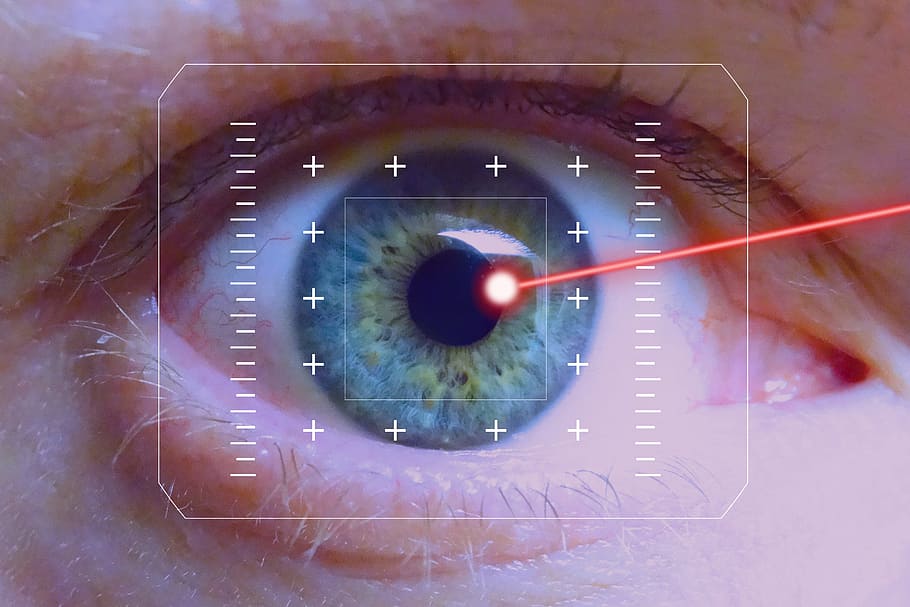
Validated in animal models, the thermal therapy has shown promise in halting photoreceptor cell loss and even restoring some function. Clinical trials in humans are set to launch in spring 2026, with expectations of FDA approval within three years. This dry macular degeneration treatment breakthrough offers a minimally invasive option, reducing the risk of low vision progression for those in the early stages. For patients already experiencing mild low vision, combining thermal therapy with devices like
Zoomax SNOW 12-an advanced 12-inch electronic magnifier with customized user-friendly features-can help maintain quality of life while the treatment takes effect.
IPS Cell Retinal Transplants: Regenerating Healthy Tissue
In September 2025, Japanese surgeons in Kobe performed the world’s first successful retinal transplant using induced pluripotent stem (IPS) cells, a milestone for late-stage AMD patients. IPS cells—derived from the patient’s own skin or blood-are reprogrammed to develop into healthy retinal pigment epithelial (RPE) cells, which are then transplanted into the eye to replace damaged cells in the macula.
 The first patient, a woman with advanced AMD, experienced stable vision improvement within months of the surgery, regaining the ability to navigate independently and read with minimal assistance. This macular degeneration treatment breakthrough offers a regenerative approach, addressing the root cause of vision loss rather than just managing symptoms. For patients who have lived with severe low vision for years, IPS cell therapy could reduce dependence on macular degeneration aids, though many may still use Zoomax LUNA EYE—a desktop video magnifier with flexible viewing modes-for tasks requiring sustained close-up vision, such as reading books or working on a computer.
5G-Powered Robotic Surgery: Precision for Wet AMD and Macular Hemorrhage
While dry AMD has dominated recent breakthroughs, wet AMD and related conditions like macular hemorrhage have seen their own wet macular degeneration treatment breakthroughs. In November 2025, a team from Sun Yat-sen University’s Zhongshan Ophthalmic Center performed the world’s first remote robotic subretinal injection using a domestically developed 5G ophthalmic robot. This procedure is critical for treating wet AMD, macular edema, and macular hemorrhage—conditions that can cause rapid low vision if not treated promptly.

The robot’s 5G connection ensures zero latency, allowing surgeons to perform precise injections from miles away, expanding access to specialized care for patients in rural or underserved areas. For patients recovering from robotic surgery, macular degeneration medical devices like The Zoomax SNOW 12, with its high-contrast display and compatibility with distance-viewing camera Snow Eye, helps patients adjust to improved vision while reducing eye strain during recovery.
The Indispensable Role of Low Vision Aids in AMD Care
While new therapies offer unprecedented hope, macular degeneration low vision aids and electronic magnifiers remain essential components of AMD care—for three key reasons:
- First, many patients with advanced AMD will not be eligible for the latest treatments (e.g., due to health conditions or severity of retinal damage) and rely entirely on assistive devices.
- Second, even patients undergoing breakthrough therapies often need low vision tools during treatment, recovery, or adaptation periods.
- Third, assistive technology enhances the benefits of medical treatments, allowing patients to maximize their restored vision for daily tasks.
Key Features of Effective Low Vision Electronic Aids
Modern electronic low vision devices have evolved far beyond basic magnifying glasses, incorporating advanced cameras, high-resolution displays, and user-friendly designs to meet the unique needs of AMD patients. Critical features include:
- Adjustable magnification (from 1x to 32x or higher) to accommodate varying degrees of low vision
- High-contrast and customizable color modes (e.g., black-on-white, white-on-black) to reduce glare and improve readability for patients with light sensitivity
- Portable or desktop designs to suit different environments (home, work, travel)
- Long battery life for half of a day or even all-day use
- Intuitive controls, especially for older adults who may struggle with complex technology
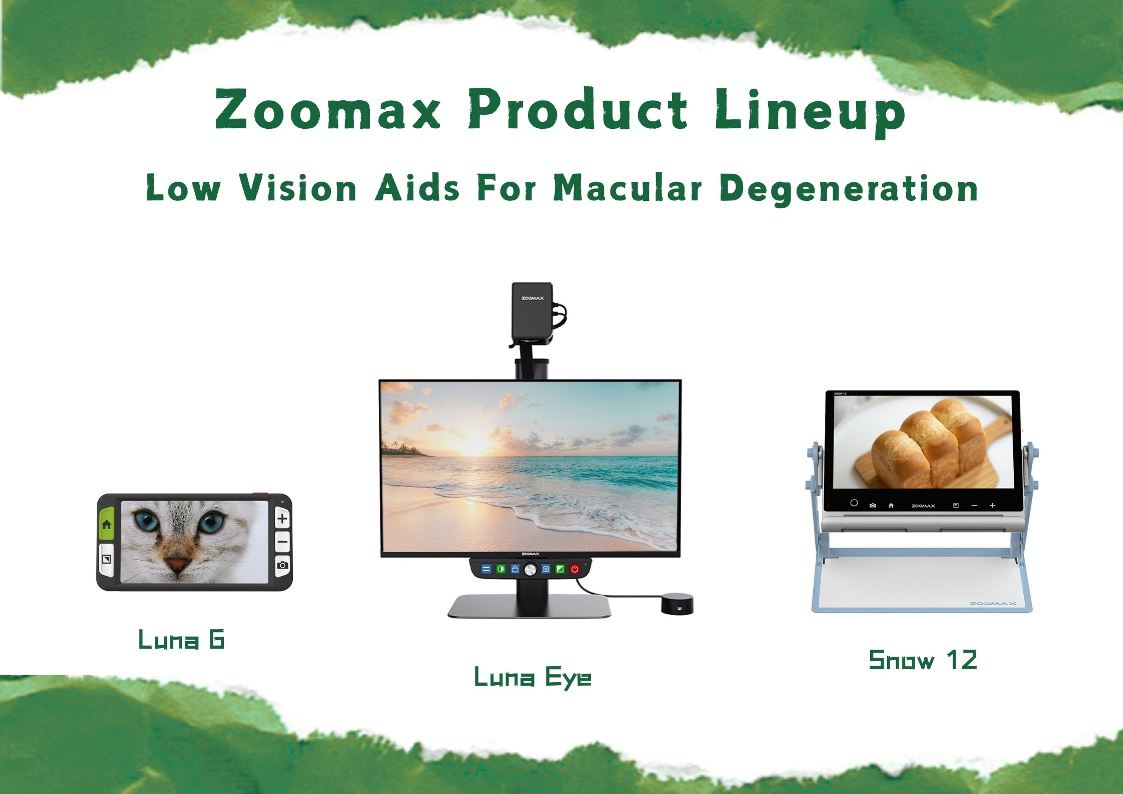
Many patients ask, “What’s the best portable electronic magnifier for AMD?” The answer often lies in devices like Zoomax LUNA 6 that balance portability and magnification, while portable options like the SNOW 12 cater to extended use. Zoomax, a leader in macular degeneration aids, has engineered products that align perfectly with AMD patients’ needs, with three standout devices:
Zoomax LUNA 6: The Portable Powerhouse
 The LUNA 6 is a pocket-sized handheld electronic magnifier that combines portability with performance-ideal for AMD patients on the go . Its 6-inch HD screen, 13-megapixel camera, and up to 19x magnification deliver sharp, clear images, even for patients with moderate to severe low vision. The built-in handle provides stability for users with shaky hands (a common issue among older AMD patients), and the wireless charging feature eliminates the frustration of aligning tiny charging ports. With a 4-hour battery life, the LUNA 6 is perfect for reading menus at restaurants, checking medication labels, or browsing family photos-tasks that often become impossible with uncorrected low vision.
Zoomax SNOW 12: The Versatile Portable Solution
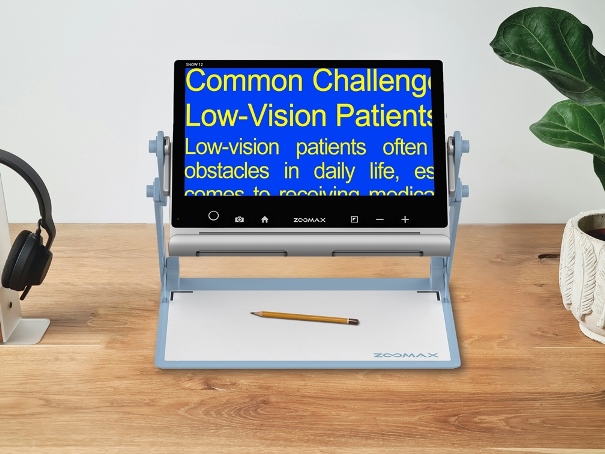 For home or office use, the SNOW 12 offers a 12-inch high-resolution display with dual viewing modes (near and far when connecting with distance camera). AMD patients can use it to read books, magazines, or documents up close, or connect the optional Snow Eye distance-viewing lens to see blackboards, whiteboards, or distant objects-making it ideal for students or working professionals with low vision . The SNOW 12’s simple controls and high-contrast color options reduce eye fatigue, while its compact design saves desk space. For patients recovering from PRIMA implantation or IPS cell therapy, the SNOW 12’s adjustable magnification helps them gradually adapt to improved vision without straining their eyes.
Zoomax LUNA EYE: The All-in-One Flexible Magnifier
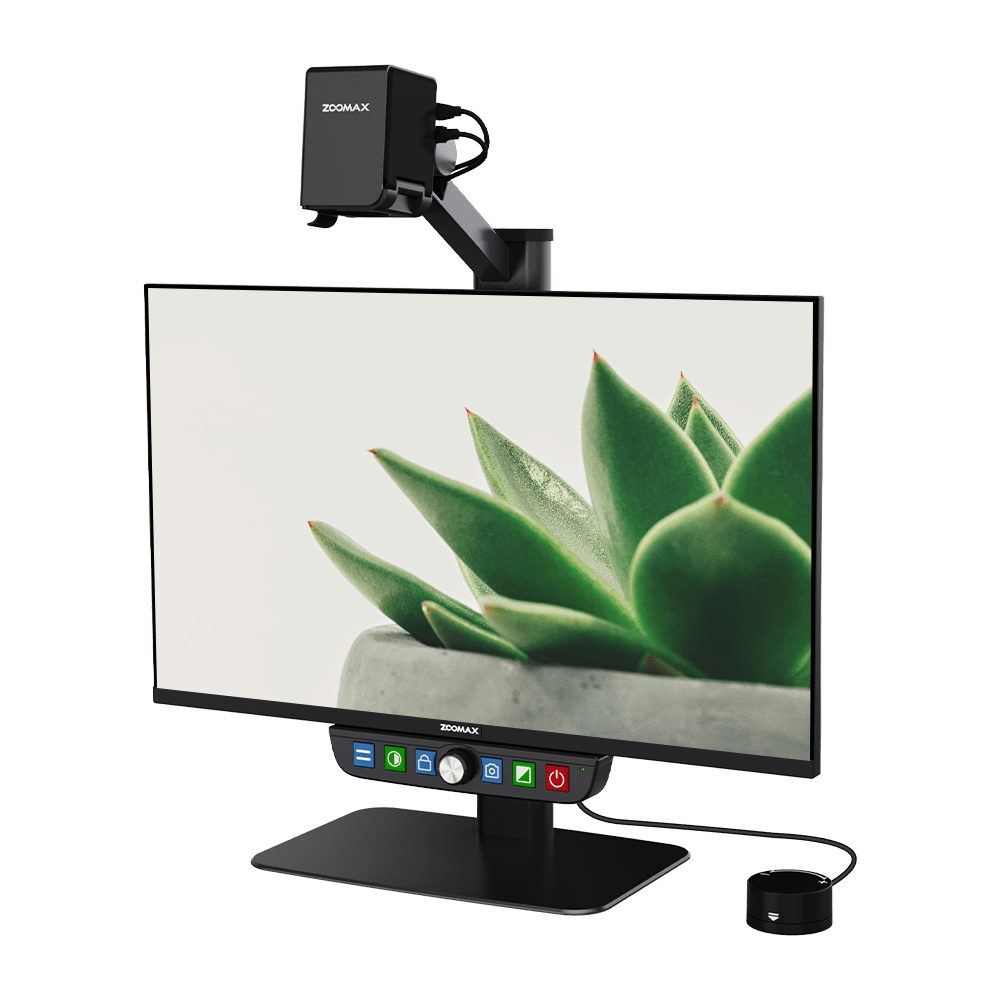 The LUNA EYE is a desktop video magnifier designed for maximum versatility, with three viewing modes: near-view (for reading/writing), distance-view (for seeing across a room), and self-view (for grooming or applying makeup) . Its lightweight, compact design makes it easy to move between rooms, and the auto-focus camera ensures sharp images even when the device is repositioned. The LUNA EYE is particularly popular among older AMD patients and those with severe low vision, as its large screen and intuitive controls require minimal training. Many eye care professionals recommend it for patients who need a single device to handle all daily visual tasks.
The Future of AMD Care: Integrating Therapies and Assistive Technology
The future of AMD care lies in seamless integration of breakthrough medical treatments and advanced low vision solutions. As therapies like PRIMA implants and IPS cell transplants become more widely available, eye care providers will increasingly adopt a “treatment-plus-assistive-technology” model, tailoring both medical interventions and macular degeneration aids to each patient’s unique needs.
For example, a patient with early dry AMD might start with Finnish thermal therapy to halt progression, paired with a portable device like the Zoomax LUNA 6 for occasional low vision needs. A patient with advanced dry AMD could undergo PRIMA implantation and use the Zoomax SNOW 12 during training to maximize the implant’s benefits. For frequent travelers with AMD, Zoomax LUNA 6 remains the top choice for on-the-go reading, while Zoomax LUNA EYE suits home-based daily tasks like cooking or paying bills. A patient with wet AMD might receive 5G robotic surgery and rely on the Zoomax LUNA EYE during recovery to reduce eye strain.
This integrated approach improves visual outcomes and enhances quality of life, empowering AMD patients to maintain independence, social connection, and emotional well-being. As research continues—with ongoing trials for gene therapy, light-based treatments, and next-generation implants—the role of macular degeneration aids will evolve but remain indispensable: they are the bridge between medical potential and daily reality.
Conclusion
2025 has been a watershed year for age-related macular degeneration, with macular degeneration treatment breakthroughs that offer hope for restoring vision where there was once only decline. From PRIMA retinal implants and IPS cell transplants to minimally invasive thermal therapy and 5G robotic surgery, these innovations are redefining what’s possible for AMD patients. Yet, amid these medical leaps, macular degeneration low vision aids and electronic magnifiers remain essential, providing critical support for patients at every stage of their journey.
Products like Zoomax’s LUNA 6, SNOW 12, and LUNA EYE exemplify how assistive technology complements medical treatments, turning partial vision restoration into meaningful daily function. As AMD care continues to advance, integrating breakthrough therapies with macular degeneration aids will be key to ensuring every AMD patient can live a full, independent life. For those affected by AMD, the future is no longer defined by vision loss, but by the promise of renewed sight and endless possibilities.