According to the World Health Organization (WHO) and the International Agency for the Prevention of Blindness (IAPB), age-related macular degeneration (AMD) affects an estimated 200 million people globally, making it a leading cause of irreversible vision loss among older adults. Wet AMD, the more aggressive form of the condition, accounts for only 10–15% of all AMD cases but is responsible for around 90% of severe AMD-related vision impairment. Left untreated, it can cause severe and permanent central vision loss in a matter of months. As a standard treatment for wet AMD, anti-VEGF injections help control abnormal blood vessel growth and leakage in the retina. For many patients, treatment can stabilize vision or improve it, although ongoing monitoring and repeat injections are often needed.
Yet while anti-VEGF therapy is highly effective at controlling wet AMD, it cannot reverse permanent damage already done to the macula. This is why a common source of frustration and confusion exists for many patients: there is often a gap between what treatment can achieve and what it takes to live well day to day. Many people assume wet AMD treatment will fully restore their vision, only to find that daily tasks still feel challenging even when the disease is stable.
This article breaks down what anti-VEGF injections can and cannot do, explains why vision challenges may persist after successful treatment, and explores how low vision rehabilitation and assistive technology can help people maintain independence and continue doing the things they love.
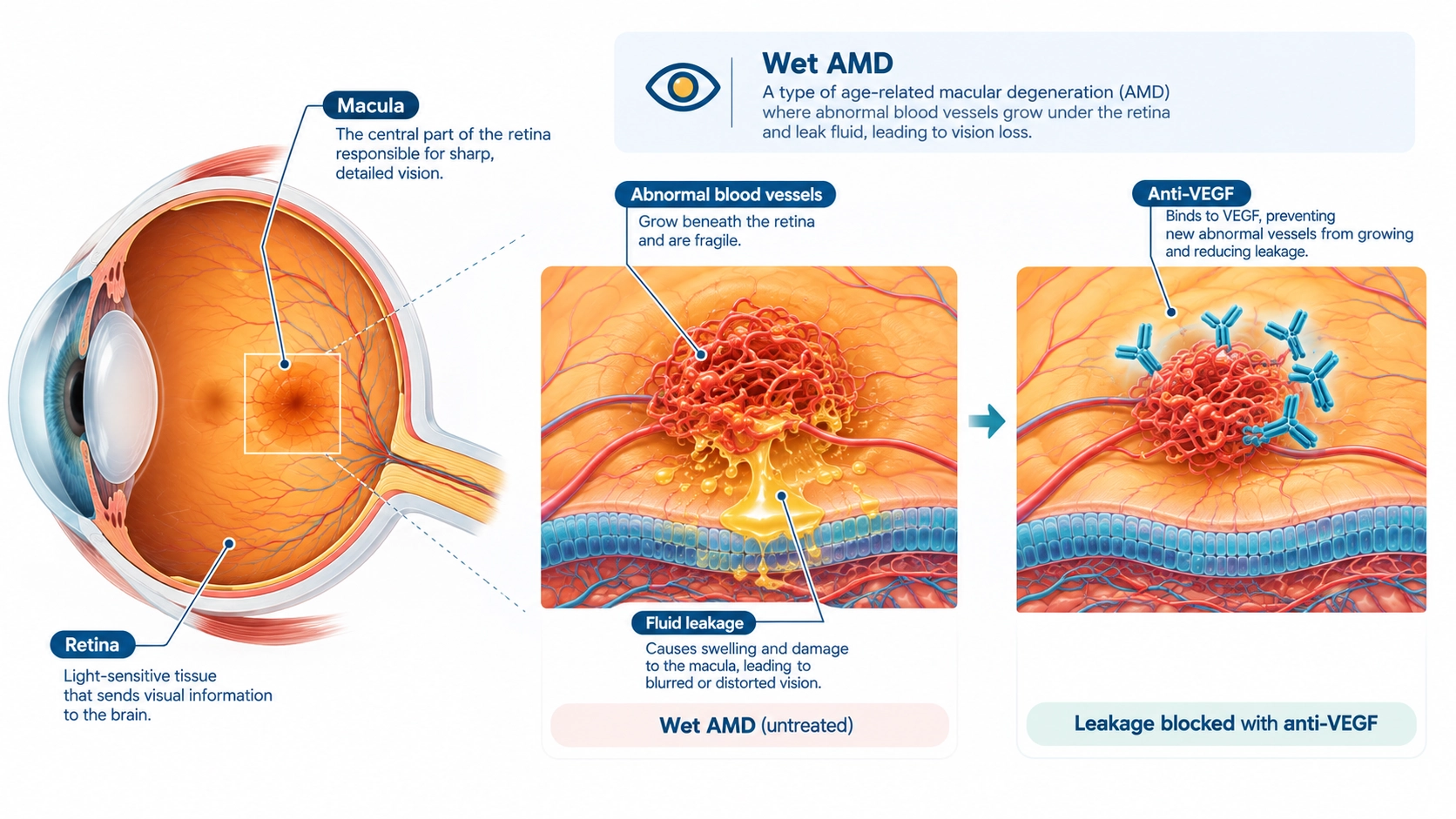
Wet AMD develops when abnormal blood vessels grow underneath the macula—the part of the eye responsible for sharp, central vision. These vessels leak fluid and blood, damaging delicate retinal tissue and distorting central sight. As the gold-standard wet macular degeneration treatment recommended by international ophthalmology guidelines, wet AMD injections work by blocking vascular endothelial growth factor (VEGF), a protein that drives abnormal blood vessel growth.
When administered on a regular schedule, anti-VEGF injections are highly effective at:
- Stopping the growth of leaky, abnormal blood vessels in the retina
- Reducing fluid buildup and swelling in the macula
- Helping prevent further vision loss
- Stabilizing vision over the long term for most patients
However, it is critical to understand what this treatment cannot do. The American Academy of Ophthalmology emphasizes that anti-VEGF therapy cannot reverse permanent macular tissue damage. Once retinal cells are lost, they cannot be regenerated. This means that even with successful disease control, some degree of visual change may remain.
Setting realistic expectations is one of the most important steps in adjusting to life with the condition. When patients understand that the primary goal of wet AMD treatment is to preserve remaining vision and prevent worsening, they can shift their focus from “getting their old vision back” to making the most of the sight they still have.
Once patients grasp what treatment can realistically achieve, many begin to ask a follow-up question: If the disease is under control, why do daily tasks still feel so challenging?
Why Vision Challenges May Continue After Successful Wet AMD Treatment
Even when wet AMD responds well to treatment, some people continue to experience visual difficulties because of damage that occurred before or during treatment. The extent of these difficulties varies from person to person, and stable disease does not necessarily mean normal vision has returned.
For many people, these residual challenges can include:
- Central vision loss and blind spots: Because the macula controls detailed central vision, damage to this area can cause blurriness, dark spots, or empty patches in the center of the visual field. Objects directly in front of you may appear distorted or incomplete, even while your side (peripheral) vision remains intact.
- Reduced contrast sensitivity: Damage to the retina can weaken the eye’s ability to distinguish between light and dark, or between similar shades of color. This makes it hard to read text on low-contrast backgrounds, pick out objects against busy surfaces, or navigate in dim lighting.
- Difficulty with detailed tasks: Activities that require sharp, precise vision—such as reading small print, recognizing faces, threading a needle, or writing neatly—become much harder, even with glasses.
These difficulties do not automatically mean treatment has failed. However, new or worsening vision changes should be reported promptly to an eye care professional, as they may indicate a change in the condition that needs assessment.
This is why the conversation around macular degeneration treatment cannot stop at injections alone. To truly support daily independence, we need to look beyond medical management and toward low vision rehabilitation.
Beyond Eye Injections: Why Low Vision Rehabilitation Matters After Wet AMD Treatment
Wet AMD treatment addresses the disease itself—it protects your remaining vision from further damage. Low vision rehabilitation addresses the practical challenges of daily life by helping you use your remaining vision as effectively as possible. These approaches complement one another: medical treatment manages the condition, while rehabilitation helps you adapt to changes in vision and maintain independence.
A common misconception is that low vision rehabilitation is just “getting a magnifier.” In fact, it is a personalized, multidisciplinary process that typically includes three core components:
- Visual skills training: Working with a low vision specialist to learn strategies like using peripheral vision for detailed tasks, improving eye movement control, and adapting scanning techniques.
- Environmental modifications: Adjusting your home and daily spaces to improve lighting, increase contrast, and reduce visual clutter.
- Assistive technology: Using specialized devices designed to magnify, enhance contrast, or otherwise adapt visual information to match your remaining vision.
Each component serves a distinct purpose, and together they support daily life—assistive technology, for its part, can add a bit more convenience to routine tasks. Support ranges from everyday adaptive household products and built-in smartphone accessibility apps, to specialized tools like an electronic magnifier for macular degeneration, all working together with skill training and environmental changes. The most helpful combination of strategies depends on each person’s visual needs, daily activities, and rehabilitation goals. For many people, an appropriate assistive tool can make everyday tasks more manageable and support greater independence.
To understand how rehabilitation works in practice, it helps to look at the everyday activities that often become difficult after wet AMD—and the simple, actionable ways to adapt.
Everyday Activities That May Become Difficult After Wet AMD—and Practical Ways to Adapt
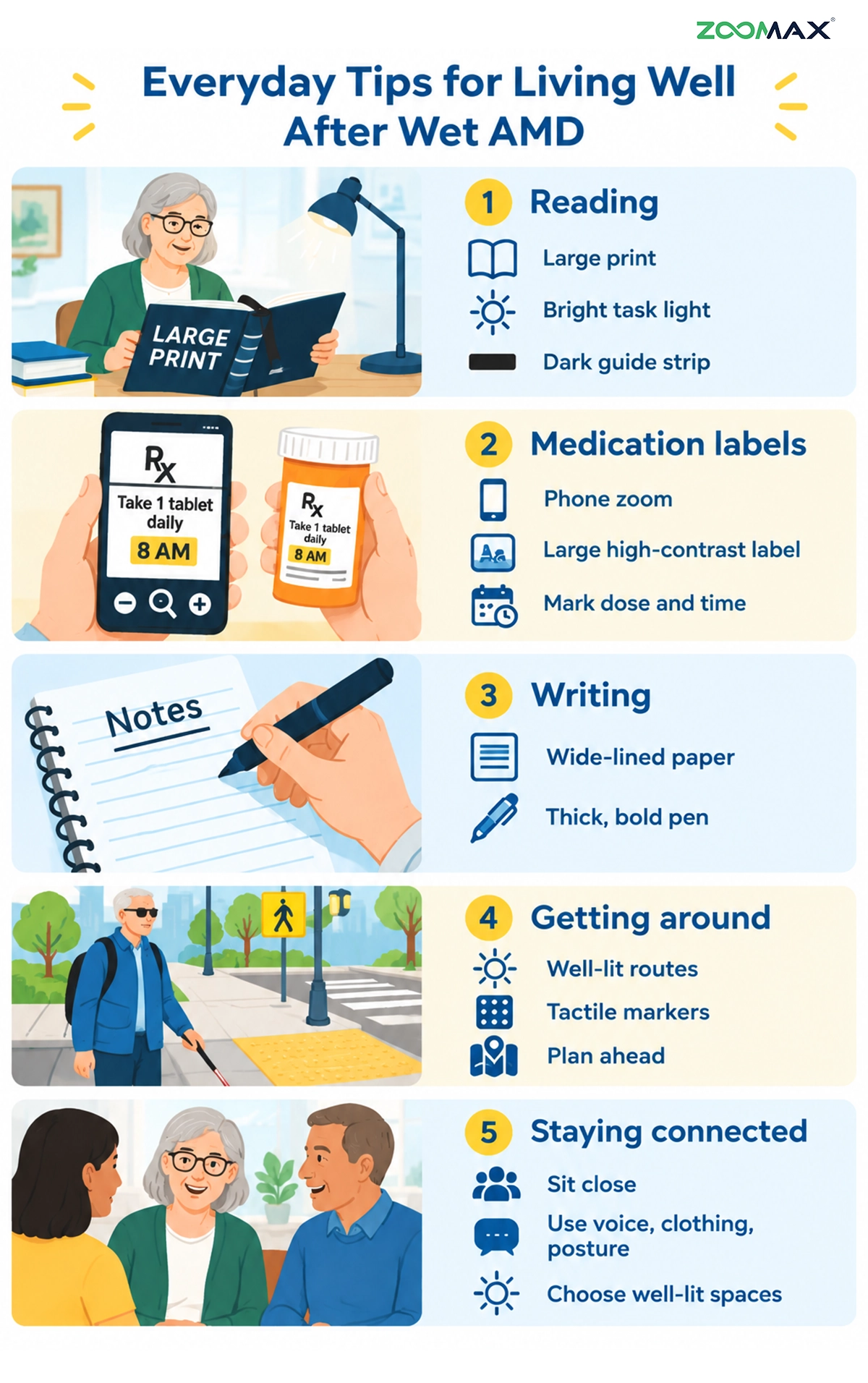
For people living with macular degeneration, most daily challenges stem not from total blindness, but from difficulty with detail, small print, and low contrast. Many tasks can be made significantly easier with simple, low-cost adjustments before turning to specialized devices.
Common Daily Challenge | Practical Adaptation Tip |
Reading books, newspapers, and mail | Switch to large-print editions, use a bright direct task light over reading material, and use a dark guide strip to keep your place on the line. |
Checking medication labels | Small print on medication packaging can make it difficult to verify important instructions. Try using your phone’s magnification features or a suitable low vision aid, and ask a pharmacist about accessible labeling options when needed. |
Writing notes and completing forms | Use wide-lined paper and thick, bold-tip pens to make writing easier to see and keep lines straight. |
Getting around outside and running errands | Plan familiar routes in advance, allow extra time at intersections and unfamiliar locations, and use accessible navigation tools when helpful. If you have difficulty moving around safely, a low vision or orientation and mobility specialist can recommend strategies suited to your needs. |
Staying socially connected | Recognizing faces from a distance can become hard. Identify people by voice, clothing, or posture, and sit close to conversation partners in well-lit spaces. |
These home adaptations are excellent starting points and work well for mild to moderate challenges. But when simple adjustments are not enough to keep up with daily tasks, a tailored low vision aid can bridge the gap between remaining vision and independent living.
For people navigating vision changes from wet AMD, the right assistive tool can offer more than enlarged images: it can provide another way to access visual information independently. Being able to read text, identify familiar objects, and look at personal photos without always asking for help can be an important part of daily life. Visual aids can complement audio tools and other forms of assistance, giving people more choices in how they manage everyday tasks.
How to Choose the Right Low Vision Aid After Wet AMD Treatment

Low vision rehabilitation is a comprehensive journey that includes lifestyle adjustments, skill building, and assistive technology. Within that last area, professional low vision aids play a central role in helping people navigate a wide range of daily visual challenges and maintain their independence. Choosing the right device starts with understanding your unique residual vision profile after treatment.
What to Consider When Choosing a Low Vision Aid for Wet AMD
Choosing the right low vision aid is not simply a matter of buying the strongest magnifier. It should be a personalized decision based on your remaining vision, the tasks you want to do, your comfort, your budget, and the support available to you. A low vision specialist can help you evaluate options and avoid a one-size-fits-all solution.
Start with your residual vision profile and the daily tasks that matter most. For people with wet AMD, central vision loss and blind spots, reduced contrast sensitivity, and visual tracking difficulties or fatigue can affect daily life in different ways. The best aid is the one that matches your priorities—whether that means reading mail, checking medication labels, writing, viewing photos, cooking, crafts, or navigating outside.
From there, consider how much magnification and contrast enhancement you need. For wet AMD, magnification alone may not be enough. Adjustable contrast enhancement, image stabilization, and the ability to shift the viewing area may also be useful, depending on your needs. These features can make visual information easier to access, but their usefulness varies according to each person’s remaining vision and the task at hand.
It also helps to test a device before buying whenever possible, and to pay attention to comfort. Try it with your own reading materials, medication bottles, and everyday objects. A trial can reveal whether the screen size, camera position, controls, and viewing angle are comfortable for you, especially during longer reading or detailed tasks.
Beyond the device itself, review your budget, available subsidies, and the training or after-sales support included. Low vision aids range from low-cost smartphone apps to specialized electronic devices, and funding programs, insurance, vocational rehabilitation, or low vision subsidies may help cover the cost. A good device is more useful when you know how to use it well, so look for clear instructions, training, warranty, repair options, and ongoing support.
Once you have worked through these considerations, you will be in a better position to compare specific devices and focus on the features that matter most for your daily life. For people who find small print or low-contrast details difficult to see, a desktop electronic magnifier may be one option worth exploring. The Zoomax Luna Eye is an example of a device whose features may support some of the everyday visual tasks that remain challenging after wet AMD treatment.
Zoomax Luna Eye: Targeted Visual Support for Wet AMD-Related Vision Changes
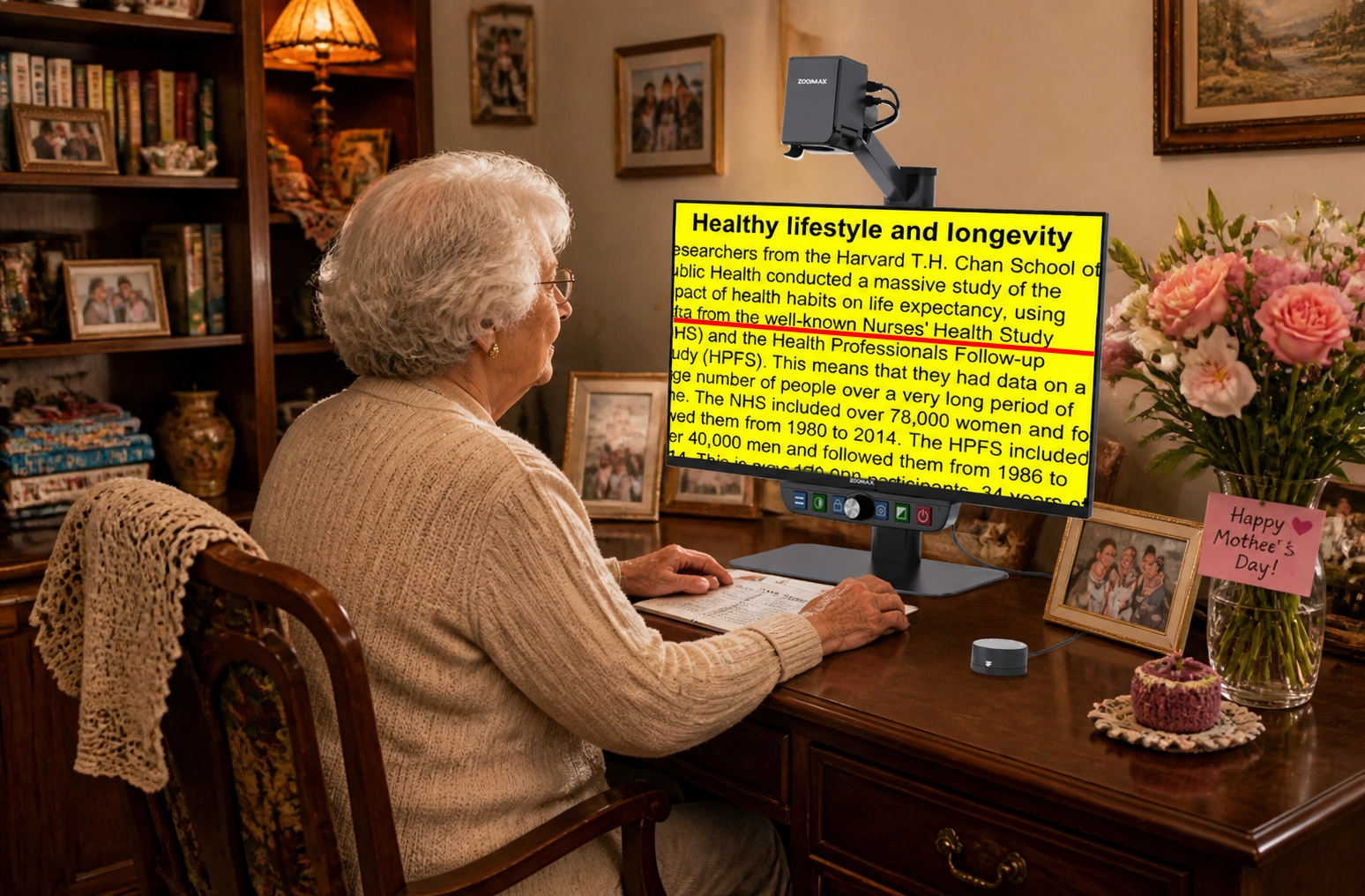
The Zoomax Luna Eye is a large desktop magnifier designed to support people with low vision during reading and other everyday visual tasks. Its large 24-inch screen, adjustable HD camera, magnification options, and contrast modes may be helpful for some people with AMD-related vision changes. The benefits depend on each person’s remaining vision, preferred activities, and comfort.
- For central vision loss and blind spots:The flexible camera mount can be tilted up or down to suit different viewing tasks, while the panning function lets users shift the enlarged image across a page or object using the control knob. This means they can explore visual details without repeatedly repositioning the material itself. The large, stable 24-inch screen provides an expanded view for reading and other close-up activities.
- For reduced contrast sensitivity:Built-in contrast enhancement modes allow users to change how text and backgrounds appear. These settings may make some text and object edges easier to distinguish, depending on the user’s vision and the material being viewed.
- For keeping your place while reading:Built-in reading guides and line-masking features help users follow lines of text and maintain their place on a page. These functions may make reading more manageable for people who have difficulty following text visually.
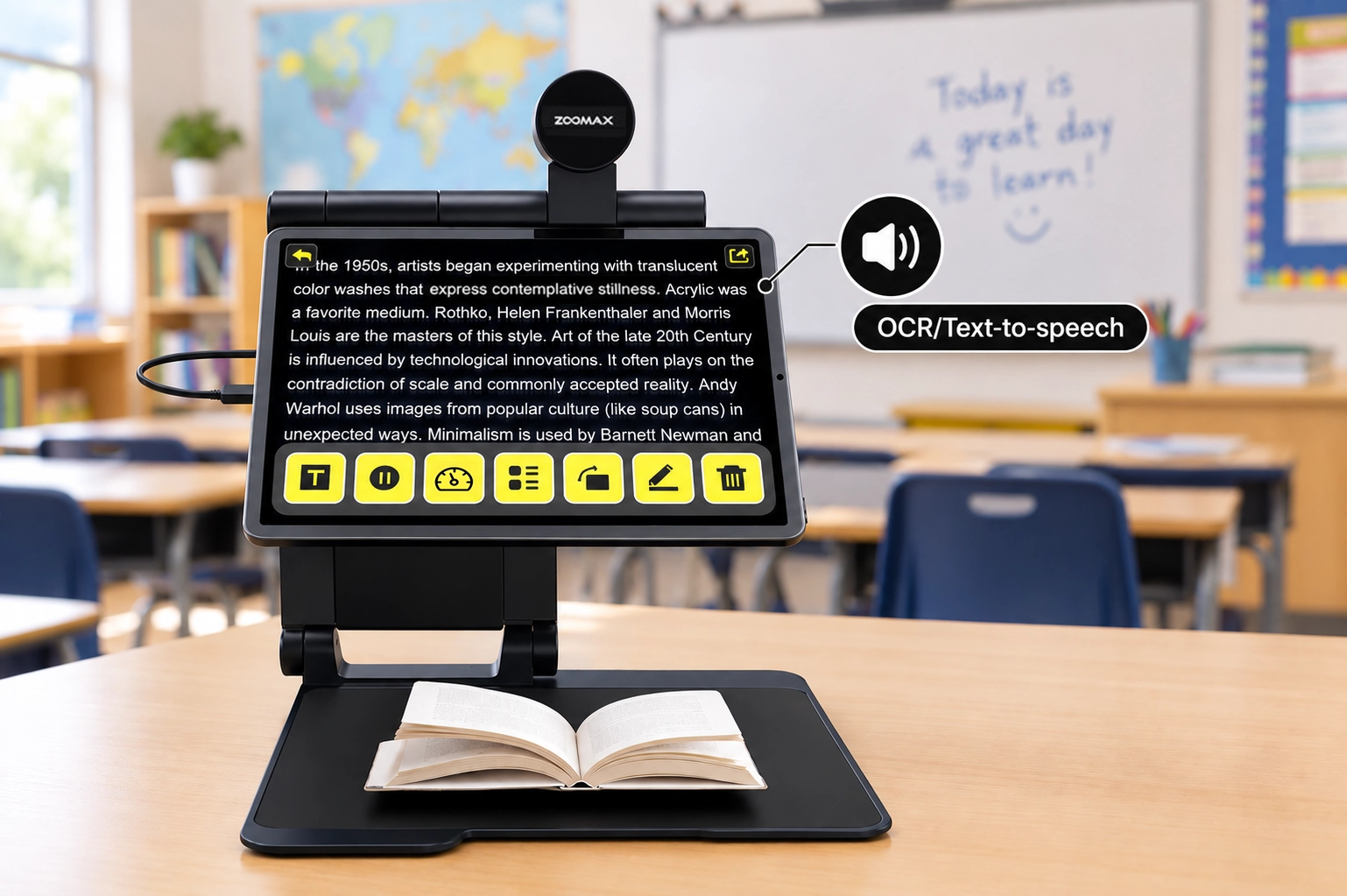
Beyond these features, Luna Eye can be used for a range of everyday activities. Whether you’re reading books and medication labels, writing notes, viewing family photos, working on crafts, following recipes, or grooming yourself, its adjustable magnification and flexible viewing options can support different close-up tasks. Also, thanks to its all-in-one design, the unit weighs approximately 6.8 kg (14.9 lbs) and avoids the need for a complex setup. Being plug-and-play, the unit can be easily moved and set up from room to room, making it convenient to use in different areas of the home.
For anyone learning to live life after wet AMD treatment, a tool built around your real day-to-day vision needs does more than just make words and objects bigger. A suitable video magnifier eases those small, frequent frustrations that come with changed vision, and lets you handle everyday tasks on your own terms, without having to rely on help from others. For instance, Luna Eye is particularly suited to those who need a large screen for extended desktop activities, such as reading, writing, or pursuing hobbies at home. However, because everyone’s vision and daily routines vary, it is just one option among many. It fits into a bigger, long-term plan for caring for your vision — one that combines regular medical check-ins, practical coping skills, and the right tools to help you stay in charge of your daily life. Finding the best fit, therefore, depends on your specific needs and professional guidance.
Building a New Vision Routine After Wet AMD Treatment
Wet AMD treatment is not the end of your vision journey—it is one important part of a longer-term approach to living well with the condition. Managing your vision health over time is an ongoing process that combines medical care, adaptive strategies, and the right tools.
To build a sustainable new vision routine:
- Keep up with all scheduled ophthalmology appointments to monitor your condition and adjust treatment as needed.
- Pay attention to changes in your day-to-day vision and share them with your eye care team.
- Work with a low vision specialist to learn personalized coping strategies and get recommendations tailored to your needs.
- Explore assistive technology options that match your daily activities and visual profile.
Although treatment cannot always restore vision lost to retinal damage, appropriate rehabilitation and assistive technology may help you continue reading, connecting with loved ones, pursuing hobbies, and participating in everyday life with greater independence.
At Zoomax, we are committed to walking this journey alongside you. Our accessible visual technology supports over 1 million people across more than 80 countries worldwide, helping individuals with low vision reclaim independence, confidence, and connection to the lives they value.
Whether you have questions about choosing the right low vision aid for macular degeneration, need guidance on applying for low vision subsidies and benefits, or seek personalized advice matched to your daily visual needs, our team of low vision specialists is ready to assist you.