Introduction: The Low Vision Industry Is Moving Beyond the Desktop
For many years, desktop electronic magnifiers dominated the low vision industry. They were widely used in rehabilitation centers, schools, libraries, and clinical environments because they provided stable magnification and large viewing areas. However, the modern visual impairment market is changing rapidly.
Today’s users no longer want visual assistance that only works at a desk. People with low vision increasingly need support throughout the day — in classrooms, offices, grocery stores, airports, churches, restaurants, and outdoor environments. This shift is driving strong demand for the portable electronic magnifier for low vision category.

Recent studies also show that older adults with vision impairment are becoming more active users of digital technology and mobile assistive devices, especially solutions that improve independence and daily participation. Research published in JAMA Ophthalmology in 2024 highlighted the growing importance of accessible digital tools for older adults with vision impairment. Meanwhile, multiple assistive technology studies published in 2023–2024 emphasized mobility, portability, and real-world usability as key future directions for low vision technology.
For distributors, rehabilitation centers, and low vision aid suppliers, this trend is changing purchasing priorities. Portability is no longer viewed as a secondary feature — it is becoming one of the defining factors in product selection.
Why Mobility Matters in Today’s Low Vision Aid Market
Lifestyle Changes Are Expanding Usage Scenarios
Modern low vision users move constantly between environments. Students and working professionals frequently travel between home, school, and workplaces, needing reliable magnification for lectures, meetings, and study materials on the go. Many active seniors, benefiting from improved living standards and greater disposable income, are traveling more, participating in social activities, and enjoying outings such as dining out, shopping, or taking public transportation.
Daily mobility scenarios further highlight the need: reading bus or train schedules while commuting, checking menus in restaurants, examining product labels in stores, or reviewing receipts and documents while out and about. Additionally, many retirees moving into senior living facilities with limited table space prefer compact, portable devices that do not occupy permanent desk area.
This shift has accelerated demand for the portable video magnifier segment because users now expect continuous visual assistance rather than single-location reading support.
Orientation and Mobility for Low Vision Is Becoming More Important
The concept of orientation and mobility for low vision is also evolving. Traditionally, orientation and mobility training focused on navigation and environmental awareness. Today, assistive technology is becoming part of that ecosystem.
Recent academic research on wayfinding tools and mobility assistance for visually impaired users shows that portable digital devices are increasingly integrated into everyday navigation and task completion. Researchers have also highlighted that users prefer technologies that are easy to learn, adaptable to different environments, and supportive of independent movement.
For many low-vision users, mobility-related visual tasks now include:
- Reading signs in public spaces
- Identifying transportation information
- Viewing classroom presentations
- Recognizing product labels while shopping
- Reading printed menus and documents outside the home
These scenarios favor lightweight and portable solutions over traditional desktop systems.
Aging Populations Are Driving Demand for Simpler Devices
The global aging population is another major driver behind portable low vision technology adoption. As more older adults maintain independent living arrangements, they face an increased frequency of managing daily tasks on their own — from reading labels and bills to navigating local services. At the same time, the rising incidence of age-related eye conditions further amplifies the need for convenient, always-available visual support that fits seamlessly into mobile lifestyles rather than being confined to a fixed location.
Research published in The Gerontologist in 2024 discussed how older adults with vision impairment face daily challenges that increasingly require accessible and user-friendly technology solutions.
A complicated device may reduce long-term usage compliance, especially among first-time users of assistive technology.
The Evolution of Portable Digital Magnifier Technology
The early generation of portable magnifiers focused primarily on compact size. However, modern devices now combine mobility with larger displays, enhanced image processing, and multifunctional viewing modes. This mobility has been made possible by technological progress. Just a decade ago, hardware limitations made truly lightweight, high-performance models difficult to achieve. Today’s advanced components allow manufacturers to deliver larger screens, longer battery life, and powerful processing in slim, lightweight designs. As technology evolves, user expectations evolve alongside it — people now seek and enjoy more convenient, higher-quality portable solutions.
From Small Screens to Large Portable Displays
One of the most important industry trends is the combination of portability and larger screens. Users increasingly want the comfort of desktop-style viewing without sacrificing mobility.
This has created demand for products such as:
- Portable digital magnifiers with around 8-12 inches screen
- Foldable or hybrid portable systems
- Multi-purpose reading and distance viewing devices
According to recent market reports, digital magnifiers with larger high-definition displays and rechargeable portable designs have seen continued growth in the global low vision aid market.
Modern Portable Devices Offer More Than Magnification
Today’s electronic magnifiers for visually impaired users often include:
- HD camera systems
- Adjustable magnification levels
- Multiple color contrast modes
- Image freeze functions
- Reading line and masking tools
- Distance viewing capability
- HDMI or tablet connectivity
- OCR and text-to-speech support on selected models
These features allow one device to support reading, classroom learning, workplace productivity, and daily living activities.
How Portable Electronic Magnifiers Support Different Low Vision Conditions
Different eye conditions require different visual support strategies. This is why flexible image enhancement and adaptable viewing modes are increasingly important in modern portable devices.
Macular Degeneration
Users with age-related macular degeneration often benefit from:
- High contrast viewing modes
- Large display sizes
- Adjustable brightness
- Smooth magnification transitions
Portable systems with larger screens can reduce visual fatigue during prolonged reading.
Glaucoma and Peripheral Vision Loss
Users with glaucoma may require:
- Wider viewing areas
- Better environmental awareness
- Flexible distance viewing
Portable devices with adjustable camera positioning can help users transition between reading and environmental observation.
Diabetic Retinopathy
People with diabetic retinopathy may experience fluctuating visual clarity. Devices with customizable contrast settings and autofocus systems can improve reading consistency.
Students and Working Professionals
For younger users, portability is especially important. Students and professionals increasingly prefer devices that resemble mainstream technology products rather than bulky medical equipment.
This is one reason why the tablet-size magnifier category has become more popular in education and workplace environments.
Technical Specification Overview: What Buyers Should Evaluate
Professional Tip for Distributors and Rehabilitation Buyers
When selecting a portable electronic magnifier for low vision, purchasing decisions should consider more than screen size alone. Important evaluation factors include:
- Camera clarity and image stability
- Battery performance
- Weight and portability
- User interface simplicity
- Color mode customization
- Distance viewing support
- After-sales technical support
- Regulatory certifications
Comparison of Common Portable Low Vision Device Categories
Feature | Handheld Portable Magnifier | Mid-Size Portable Magnifier | Large Portable Magnifier |
Typical Screen Size | 5–8 inch | 10–12 inch | 12+ inch |
Primary Use | Quick reading | School/work/home | Long reading sessions |
Portability | Very high | High | Moderate |
Viewing Comfort | Moderate | High | Very high |
Distance Viewing | Limited | Available on some models | Common |
Recommended Users | Active daily users | Students & professionals | Elderly users & rehab |
Typical Usage Scenarios | Shopping, menus | Classroom, office | Home reading, therapy |
Distributor Inventory Recommendation | Low unit price, ideal for C-end traffic generation and entry-level trials | High margin, well-suited for government rehab tenders and institutional bulk purchases | Balanced margin with strong appeal for long-term home/rehab use |
How Zoomax Is Supporting the Future of Portable Low Vision Technology
Zoomax Snow Pad: Expanding What a Portable Magnifier Can Do
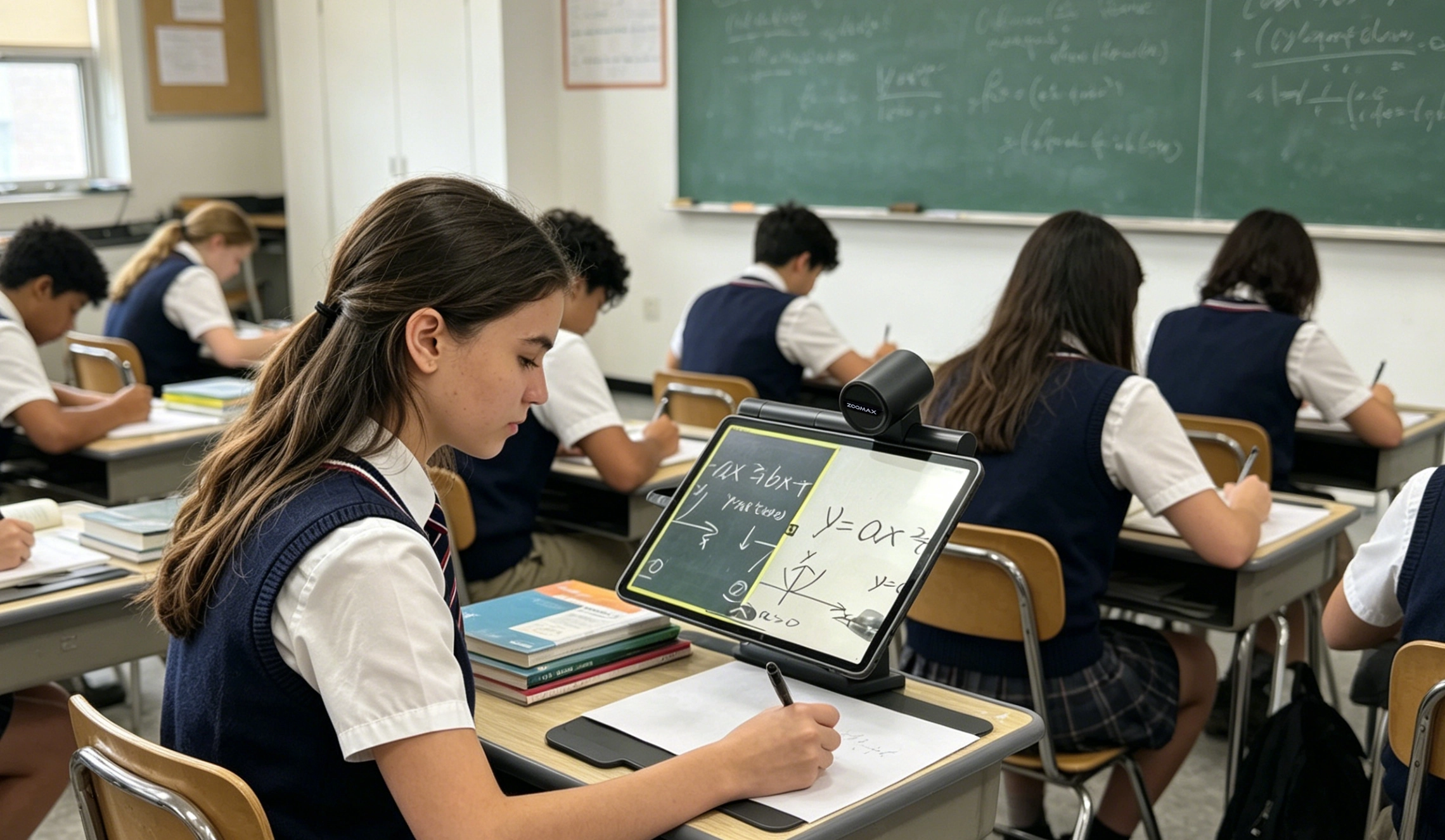
Snow Pad combines video magnification with the flexibility of a modern tablet ecosystem. It is ideally suited for tech-savvy digital natives — particularly students and working professionals who frequently handle multiple digital tasks and need seamless integration with their daily workflows. Users can either connect the magnifier to their own tablet or choose a version with a built-in tablet. Through the split-screen function of Snow Pad App, magnification becomes part of a broader digital workflow that includes note-taking, online learning, document viewing, video calls, and other everyday applications.
The foldable stand of the tablet screen magnifier allows users to quickly switch between reading at a desk, viewing printed materials in a classroom, or following recipes in the kitchen. For many students and professionals with low vision, one common frustration is having to switch between multiple devices throughout the day. By integrating magnification with a familiar tablet environment, Snow Pad helps reduce that disruption while supporting a more connected and productive experience.
Zoomax Snow 12: Portable Simplicity for On-the-Go Vision Support
Snow 12 is designed for users who prefer straightforward, plug-and-play operation without complex setups — particularly traditional users and high-age seniors who may feel less comfortable with app-based systems or multi-device integration. While Snow Pad extends magnification into a tablet-based workflow, this 12.0 inch portable digital video magnifier focuses on standalone portability—delivering fast, reliable access to magnification wherever it is needed.
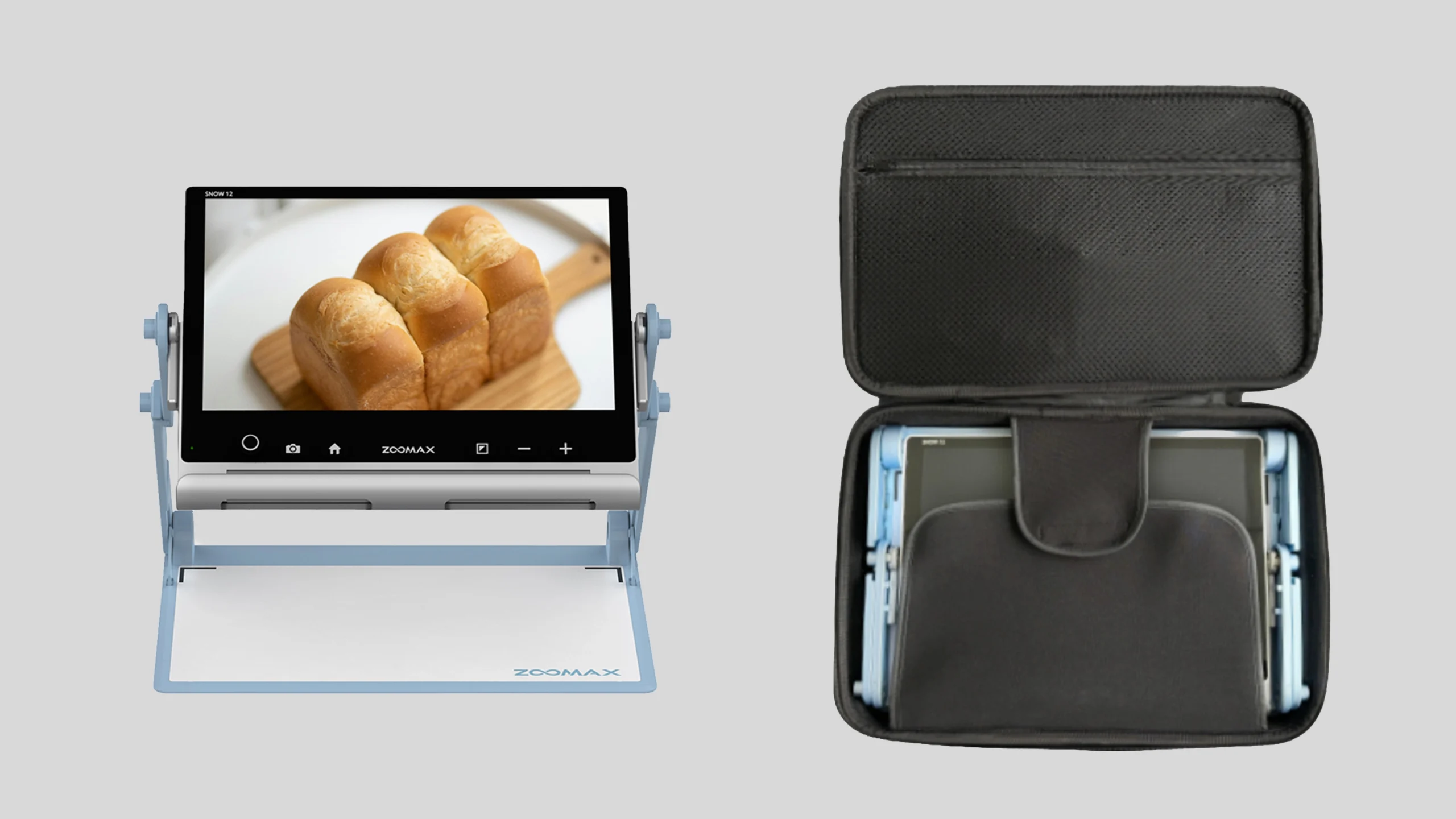
ts foldable, all-in-one structure allows users to carry and deploy the device quickly in real-world scenarios such as reading menus, handling documents, or navigating unfamiliar environments. There is no app setup or device pairing required, making it particularly suited for situations where immediacy matters.
A key part of its appeal for this user group is the intuitive physical button interface. The large, tactile controls are easy to operate on the move, allowing users to adjust magnification and viewing modes without looking away from the content. This is especially valuable in dynamic environments like travel, commuting, or temporary workspaces where touch navigation or multi-step interactions can be inconvenient.
Zoomx Snow Eye: Compact Distance Viewing Solution for Low Vision Users
Snow Eye is a lightweight, portable distance viewing video camera magnifier designed for low vision users who require fast and reliable visual access in educational, workplace, and everyday environments. Connecting with user’s own device, it helps address common accessibility challenges such as viewing classroom whiteboards, reading presentation slides, or clearly seeing speakers during large meetings.

As a practical assistive technology for low vision, Snow Eye offers a simple plug-and-play experience with a rotating design that can be placed on any desk or flat surface. It pairs seamlessly with laptops, external displays, and Zoomax Snow 12, making it suitable for flexible use across classrooms, offices, and hybrid learning or working setups. Its ultra-compact form factor supports true portability, allowing users to carry it easily in a bag without adding bulk. With a 4.5-hour battery life, Snow Eye provides reliable all-day distance viewing support without dependency on fixed installations or complex setup processes.
By solving key pain points—limited access to distant visual information, heavy or non-portable assistive devices, and time-consuming setup—Snow Eye delivers a cost-effective and mobile solution for institutions and individual users. Zoomax is also preparing the next-generation Snow Eye Pro, offering enhanced performance and expanded functionality for more demanding professional and educational use cases.
Quality Standards and Commercial Value for Global Partners
For distributors and institutional buyers, product reliability and long-term support are increasingly important in the competitive low vision aid market.
Zoomax emphasizes several areas that are important for global partners:
- International certifications including CE, FDA, and RoHS
- More than 20 years of experience in the low vision industry
- Distribution experience across more than 80 countries
- Ongoing research and patented technologies
- Localized technical and after-sales support
- Two-year warranty support
- Distributor training and marketing support
- Experience working with rehabilitation centers and specialized dealers
For many partners, choosing a supplier today is not only about hardware specifications. Long-term product stability, technical support, training resources, and market adaptability are becoming equally important purchasing considerations.
As the demand for mobile visual assistance continues to grow, suppliers that can combine innovation, usability, and long-term partnership support are likely to play an increasingly important role in the future of low vision care.