Many people carry a quiet, unspoken question: if a parent or grandparent has glaucoma, will I get it too?
If you’re asking this, you may feel a quiet weight of worry. Maybe you’ve watched an older family member navigate the condition, and wonder what it means for your own future. Maybe you’ve just received a diagnosis yourself, and your first thought is for your children.
For most people, the word “hereditary” brings to mind simple, yes-or-no inheritance — like eye color or blood type. But glaucoma doesn’t work that way. Its relationship to genetics is far more nuanced, and understanding that nuance is the first step from fear to action.
In this guide, we break down what we know about the genetic links to glaucoma, who is at elevated risk, when you should start screening, and what you can do at every stage — from proactive prevention for those concerned about family history, to daily adaptation strategies and assistive tools like portable electronic magnifiers for those already living with the condition.
The Genetics of Glaucoma: Unraveling the “Is It Hereditary?” Question
Let’s start with a clear conclusion: glaucoma does have a hereditary tendency, but having a parent with glaucoma does not mean you will definitely develop it.
According to the U.S. National Eye Institute (NEI), the most common form — primary open-angle glaucoma (POAG) — is not caused by one faulty gene passed down from either parent. Instead, POAG is polygenic: dozens of variants across the genome each add a small amount to overall risk, interacting with one another and with environmental factors. Among the different types of glaucoma, POAG also shows the strongest genetic link — genetic factors account for roughly 60% of its variance.
Closed-angle glaucoma also runs in families, though the eye’s physical anatomy plays a larger role in its development. Genetic factors explain only about 19% of its variance.
This is the most important clarification when asking is glaucoma hereditary: risk does not come exclusively from your mother or your father. Your full family history of glaucoma — across grandparents, aunts, uncles, and siblings — builds what experts call a “risk score” for you. The American Academy of Ophthalmology (AAO) confirms that having a first-degree relative (parent, brother, or sister) with glaucoma raises your risk by 4 to 9 times compared to the general population.
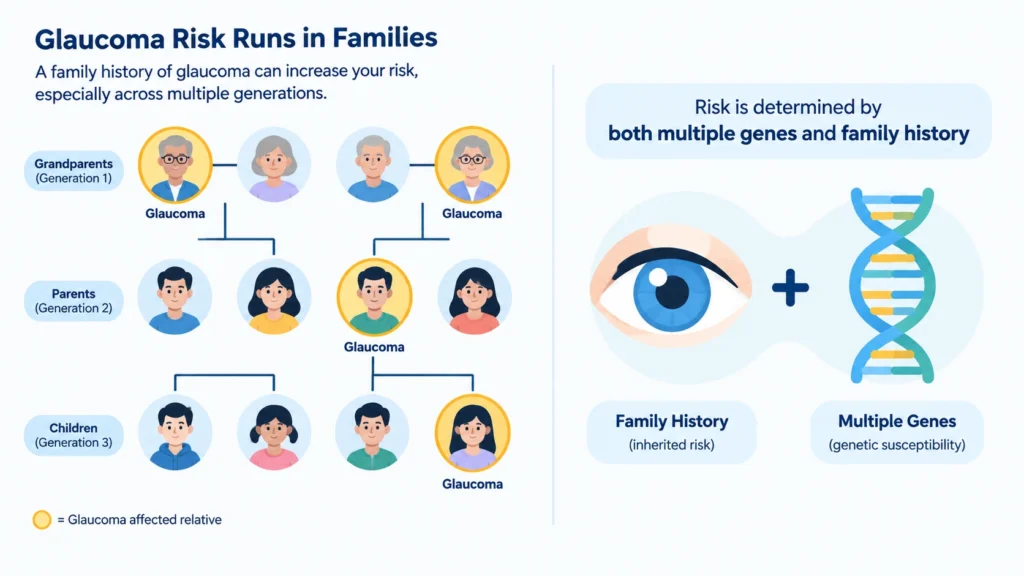
In other words, genetics only give you a predisposition — a body that is more susceptible. Lifestyle and environmental factors matter just as much. The causes of glaucoma are multifactorial: elevated IOP, high myopia, diabetes, hypertension, and long-term steroid use all act as glaucoma risk factors that can trigger or speed up disease progression — even in people with no known family history.
Put simply: genetics load the gun, but environment and lifestyle pull the trigger.
When Age and Genetics Intersect: Rethinking the Right Time to Screen
If genes set your baseline risk, age is the factor that amplifies it. And while “average age of onset” statistics can give a general sense of timing, they often lull people with family history into a false sense of security.
You may also wonder: if my eyes don’t hurt and my vision feels fine, why should I get checked?
Glaucoma is often called the “silent thief of sight” because it causes no obvious pain or symptoms in its early stages. With open-angle glaucoma in particular, central vision stays perfectly clear early on, while peripheral vision slowly narrows without you noticing. By the time you become aware of gaps in your field of view, significant and irreversible damage has already occurred to the optic nerve.
For the general population, the AAO recommends a comprehensive baseline eye examination for glaucoma around age 40, followed by regular screenings based on individual risk. But for people with a family history of glaucoma or other elevated risk factors, that timeline is too late.
When genetic predisposition and aging combine, risk rises steadily over time. That’s why experts advise people in high-risk groups — including those with a strong family history, individuals with high myopia, people of African or Hispanic/Latino descent, and those with diabetes — to schedule their first full glaucoma screening by age 35, or even earlier if recommended by an ophthalmologist.
A complete screening includes IOP measurement, fundus photography, optical coherence tomography (OCT), and visual field testing. All are non-invasive and painless, and they can detect early changes years before symptoms appear.
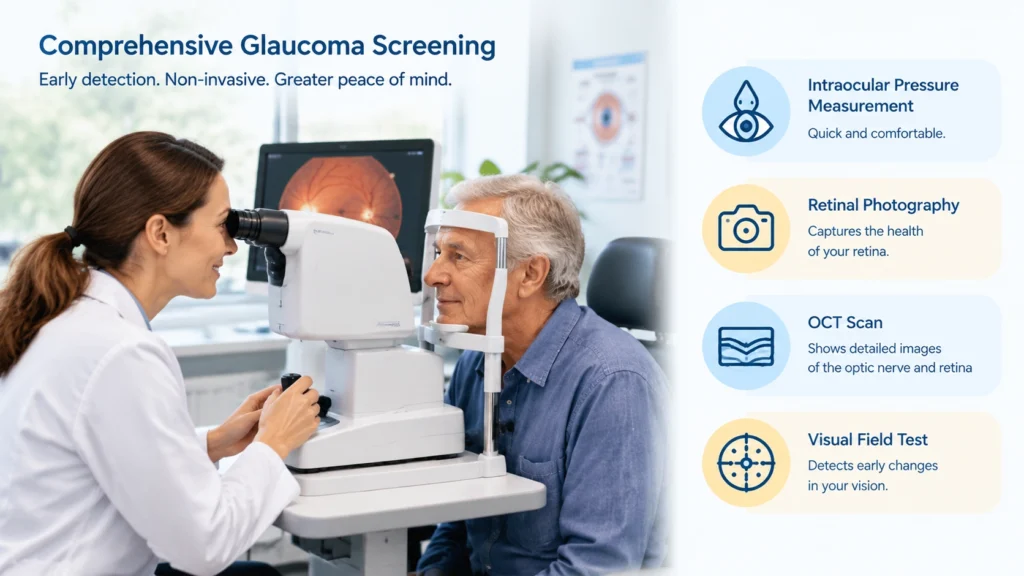
This early baseline exam does more than just check for current disease. It creates a reference point for future comparisons, so doctors can spot even tiny changes in optic nerve structure years before you would notice them yourself. For people with genetic risk, early screening is not an overreaction — it’s the first and most powerful form of proactive care.
Genetic Risk Isn’t Destiny: Moving from Fear to Proactive Eye Care
For many people, learning they need earlier screening brings up a difficult thought: if I’m at higher risk because of my genes, is there any point in checking? Won’t it happen no matter what?
This is the most common — and most damaging — misconception about genetic risk for glaucoma.
It’s normal to feel anxious when you learn you carry a higher genetic risk of eye disease. It can feel like receiving a future diagnosis — something you can’t change, only wait for.
But that’s not the reality.
Research from the World Glaucoma Association confirms that regular monitoring and early intervention can dramatically slow disease progression, and in many cases, delay or even prevent the onset of symptomatic glaucoma in at-risk groups. Controlling intraocular pressure — the only modifiable root cause of glaucoma damage — remains the gold standard of care, and it works.
There’s a simple truth about glaucoma genetic risk: having a family history is not the scary part. The scary part is not knowing, not getting screened, and not taking action. Knowing you are at risk is actually an advantage — it gives you the chance to act early, long before damage begins.
Think of it this way: if you learned you had a family history of heart disease, you wouldn’t sit back and wait for a heart attack. You’d check your blood pressure earlier, adjust your diet, and stay active. Glaucoma genetic risk works the same way. It is not a sentence — it is a heads-up.
Reframing family history as an action plan rather than a fate is the most important mindset shift you can make. And what that action plan includes depends entirely on whether you are at risk but undiagnosed, or already living with glaucoma.
Targeted Actions: What to Do If You’re At-Risk vs. Diagnosed
There is no one-size-fits-all plan for glaucoma risk. Your next steps depend on where you are in your health journey, and matching your actions to your stage helps avoid unnecessary anxiety.
For Those at Higher Genetic Risk (Not Yet Diagnosed)
If you haven’t been diagnosed with glaucoma, your goal is simple: keep your eyes as healthy as possible, catch any changes as early as possible, and lower your odds of developing vision-impacting disease. This is the core of how to prevent glaucoma from taking over your future, and none of it requires adapting to life with vision loss — far from it.
Key steps include:
- Stick to a personalized screening schedule. Get your baseline comprehensive eye exam by age 35, then return every 1–2 years (or as advised by your ophthalmologist) for ongoing monitoring. Even if results are normal for two or three years in a row, keep up with follow-ups — optic nerve tolerance decreases with age, and risk changes over time.
- Manage modifiable glaucoma risk factors. Work with your doctor to keep intraocular pressure within a healthy range. Manage underlying conditions like diabetes and hypertension. In daily life, avoid prolonged eye use in dark environments (such as scrolling on your phone in bed with the lights off), avoid drinking large amounts of fluid in a short time, maintain regular sleep routines, and avoid extreme emotional stress — all of which can help prevent acute IOP spikes.
- Don’t dismiss early warning signs. Occasional eye strain is normal, but persistent eye pressure, blurry night vision, or rainbow halos around lights should never be ignored — especially if you have a family history. Check in with an eye doctor promptly.
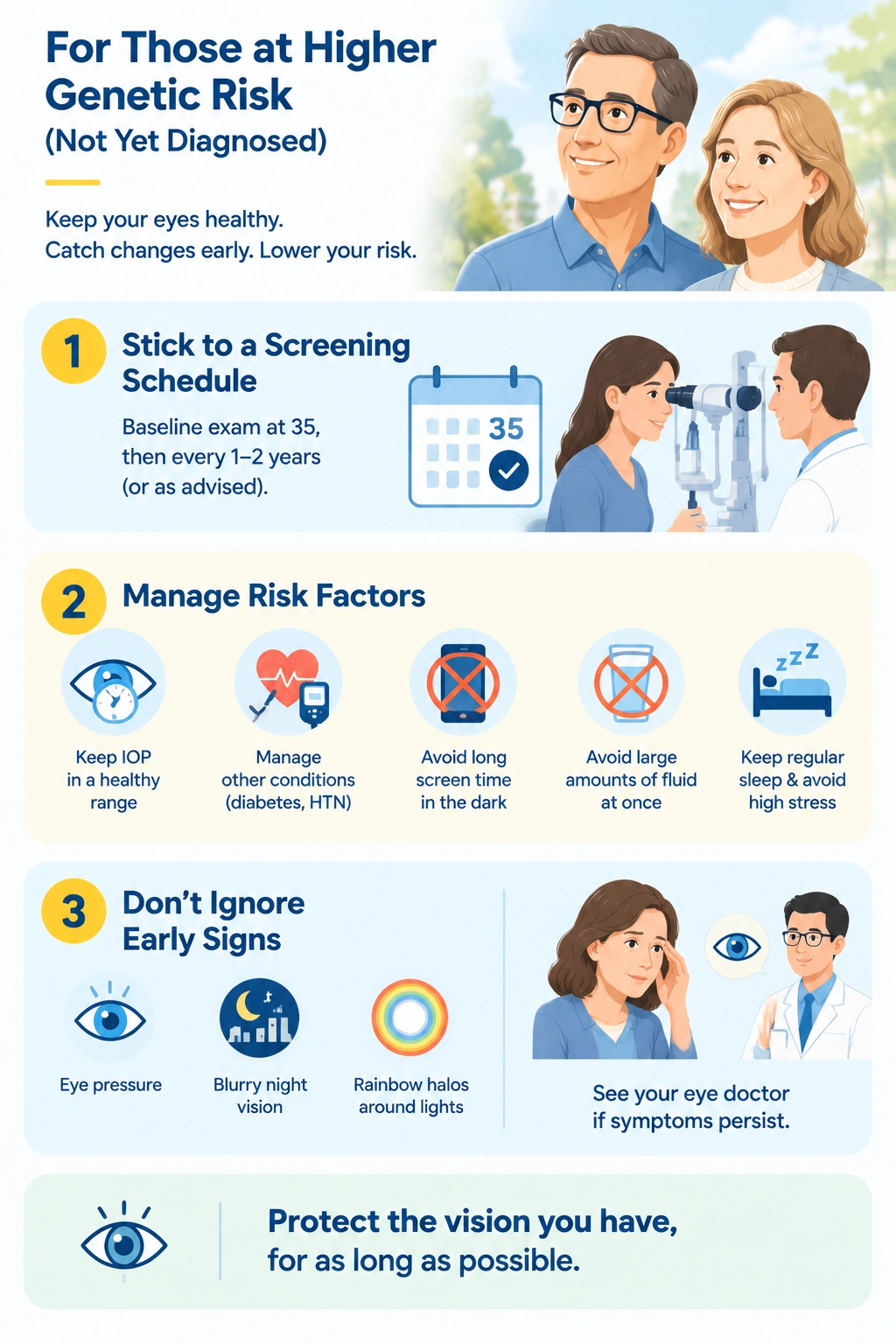
At this stage, your job is not to “prepare for blindness.” It’s to protect the vision you have, for as long as possible.
For Those Living With a Glaucoma Diagnosis
If you’ve already received a glaucoma diagnosis, you already know the importance of following your treatment plan: taking prescribed eye drops, attending regular follow-ups, and working with your doctor to keep IOP controlled.
But there’s a second equally important part of care that is often overlooked: building an early adaptation mindset.
Many people push back against making changes, thinking “adapting means giving up.” But the opposite is true. The earlier you proactively adjust your environment, habits, and tools, the more smoothly you can maintain your independence, routines, and quality of life. You don’t have to wait until vision loss interferes with daily life to make changes — in fact, making them early means you never have to experience that disruption in the first place.
Living with glaucoma does not mean losing the life you know. It means finding new, sustainable ways to keep living it.
Early Adaptation Mindset: Living Well After a Glaucoma Diagnosis
Early adaptation starts with small, everyday changes: better lighting, high-contrast home markers, built-in phone accessibility features. But when it comes to the fine, meaningful details of daily life, those adjustments often aren’t enough.
Glaucoma most commonly causes gradual peripheral vision loss and reduced contrast sensitivity. These changes happen slowly, which means many people adapt unconsciously at first — squinting to read, turning on extra lights, or avoiding unfamiliar places.
But intentional early adaptation is different. It means taking control instead of letting vision change dictate your choices.
Practical daily strategies include:
- Optimize your home for contrast and safety. Add bright, high-contrast tape to light switches, stair edges, and cabinet handles. Reduce clutter in walkways to lower fall risk. Small visual cues make a huge difference in independent navigation.
- Upgrade task lighting. General overhead lighting is rarely enough. Add adjustable desk lamps, under-cabinet lights in the kitchen, and reading lights next to your favorite chair. Bright, even lighting cuts down on glare and makes text and objects easier to distinguish.
- Use built-in smartphone accessibility tools. Every major smartphone includes free magnification, high-contrast display modes, and screen-reading features, which work well for checking messages and notifications. Instead of struggling with tiny keyboard keys that are hard to target with narrow vision, use voice-to-text and voice call features to stay connected easily.
- Learn orientation and mobility skills if needed. Working with a low vision rehabilitation specialist can help you use your remaining vision more effectively, along with sound and touch cues, to move confidently both at home and in public.
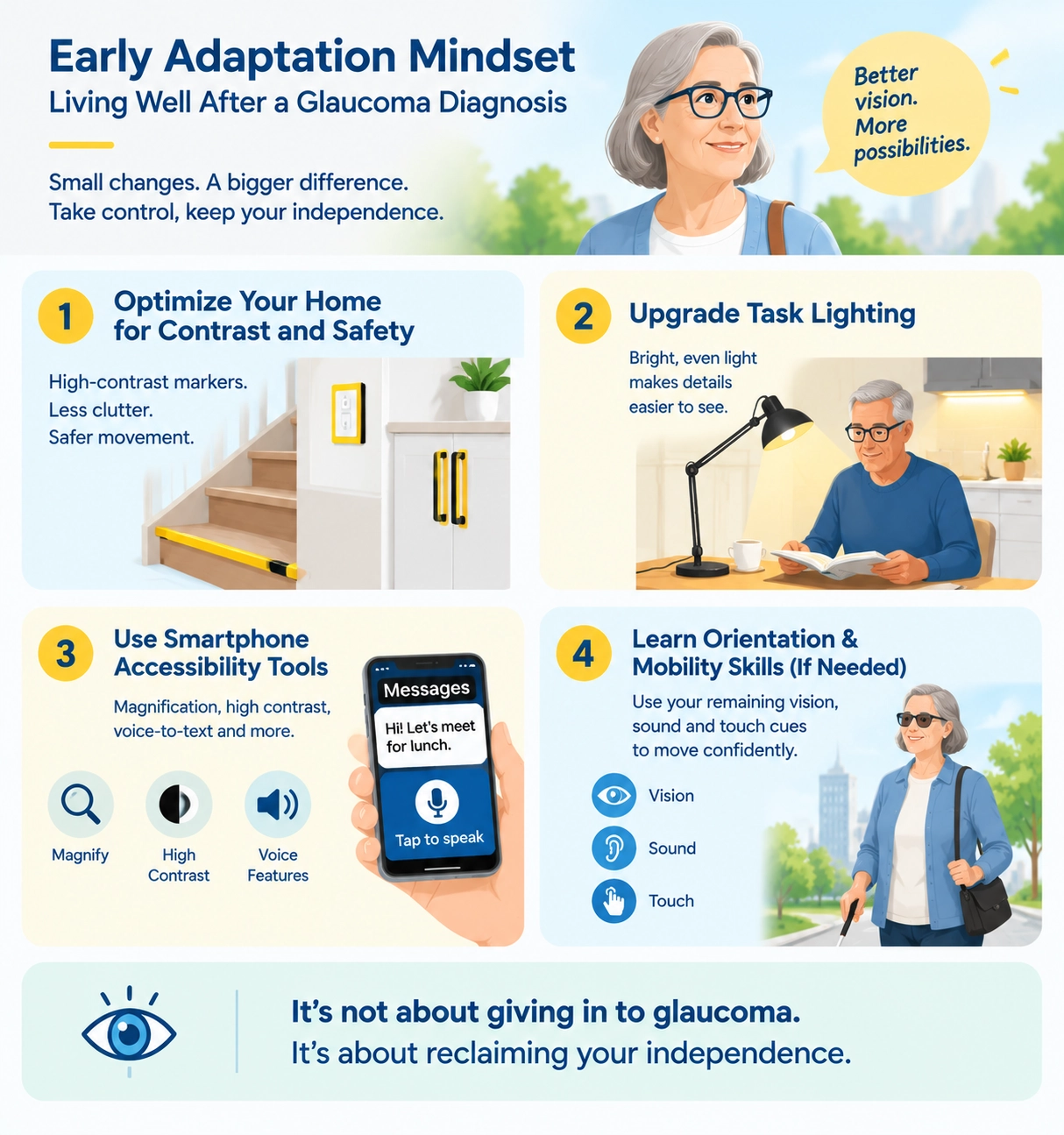
None of these changes are about “giving in” to glaucoma. They’re about reclaiming your independence and making sure you can keep doing the things that matter most.
Reclaiming Daily Details: How Electronic Magnifiers Support Glaucoma Vision
For all their value, home adjustments and phone features have limits. When you need to read the fine print on a pill bottle, verify the total on a restaurant bill, or study the details of an old family photo, many people turn to traditional magnifiers — only to find they create more frustration than help.
Traditional optical magnifying glasses have major drawbacks for people living with glaucoma. Their small viewing area means people with narrow visual fields have to constantly move the magnifier back and forth to read a single line of text, leading to rapid eye fatigue and frustration. Their fixed focal length also forces users into stiff, uncomfortable positions that are hard to maintain for more than a few minutes.
This is where modern vision aids for glaucoma make a transformative difference. Portable electronic magnifiers address every one of these pain points, with features designed specifically for how low vision actually works:
- Adjustable magnification lets you switch between low power for larger objects and high power for fine print, depending on the task.
- High-contrast color modes (such as yellow text on a black background) boost visibility for people with reduced contrast sensitivity, making text sharper and easier to read.
- Built-in reading guide lines help anchor your place on the page, preventing the line-skipping that is so common with peripheral vision loss.
- Freeze-frame functionality lets you capture an image and view it comfortably, without holding the device steady the entire time.
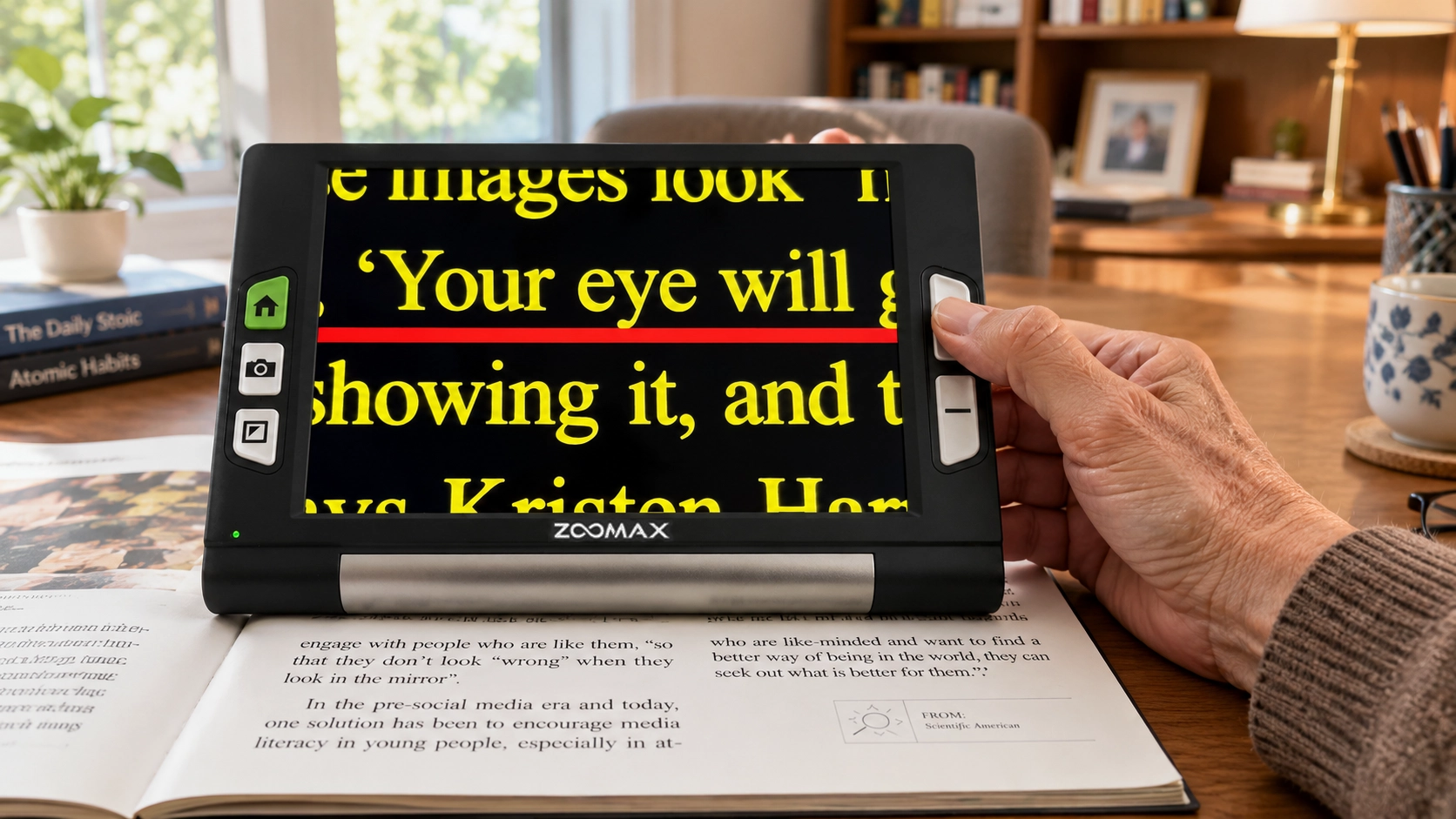
For people with glaucoma-related field loss, screen size matters a great deal. An 8.0 inch portable electronic magnifier with a wide display fits more text or imagery within your usable field of view. This greatly reduces how often you need to reposition the device, keeps your line of sight steady, and cuts down on visual fatigue during longer reading sessions.
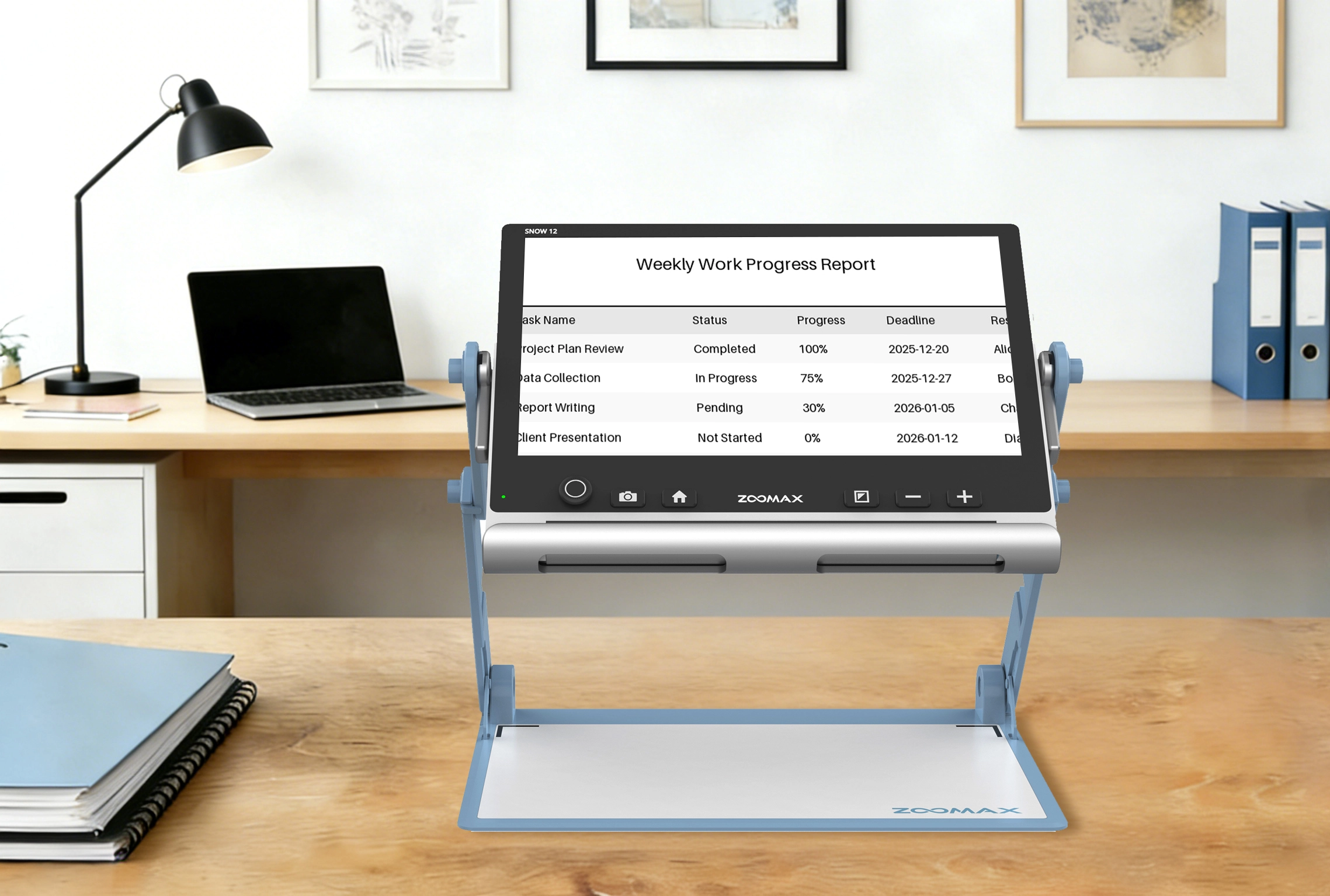
That same design logic is what you’ll find in a device called the Luna 8, from Zoomax — engineered specifically around the daily needs of people living with narrow visual fields and reduced contrast sensitivity.
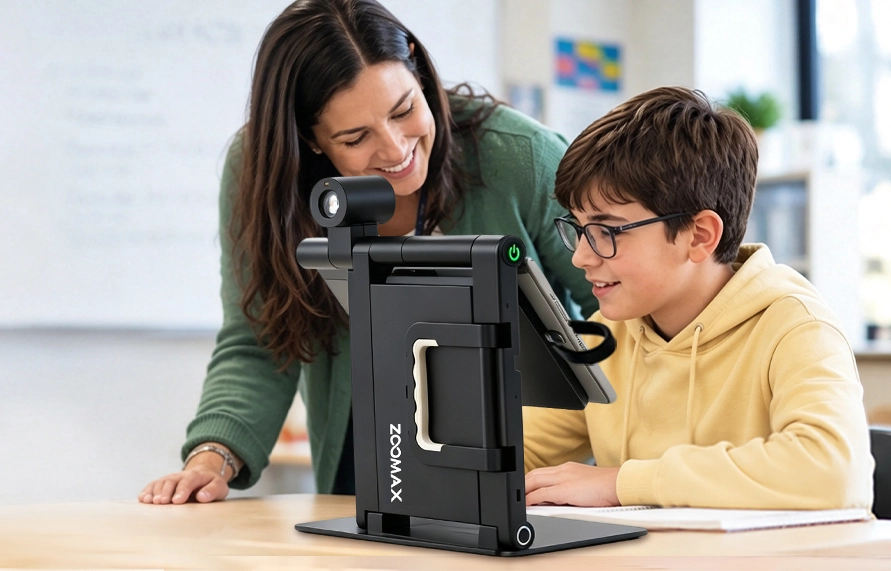
Ease of use is built into every detail, especially for older adults who may not feel comfortable with complex technology. It features large, simple physical buttons that require almost no learning curve — you can pick it up and use it the same day. Its integrated fold-out stand props it steadily on any tabletop, making it ideal for reading menus at dinner, reviewing and signing receipts at checkout, following along with printed letters at a café, or even helping guide your hand for writing tasks.
8-hour long battery life supports full days out — whether you’re ordering at a coffee shop, picking up prescriptions at the pharmacy, browsing books at the library, or visiting family.
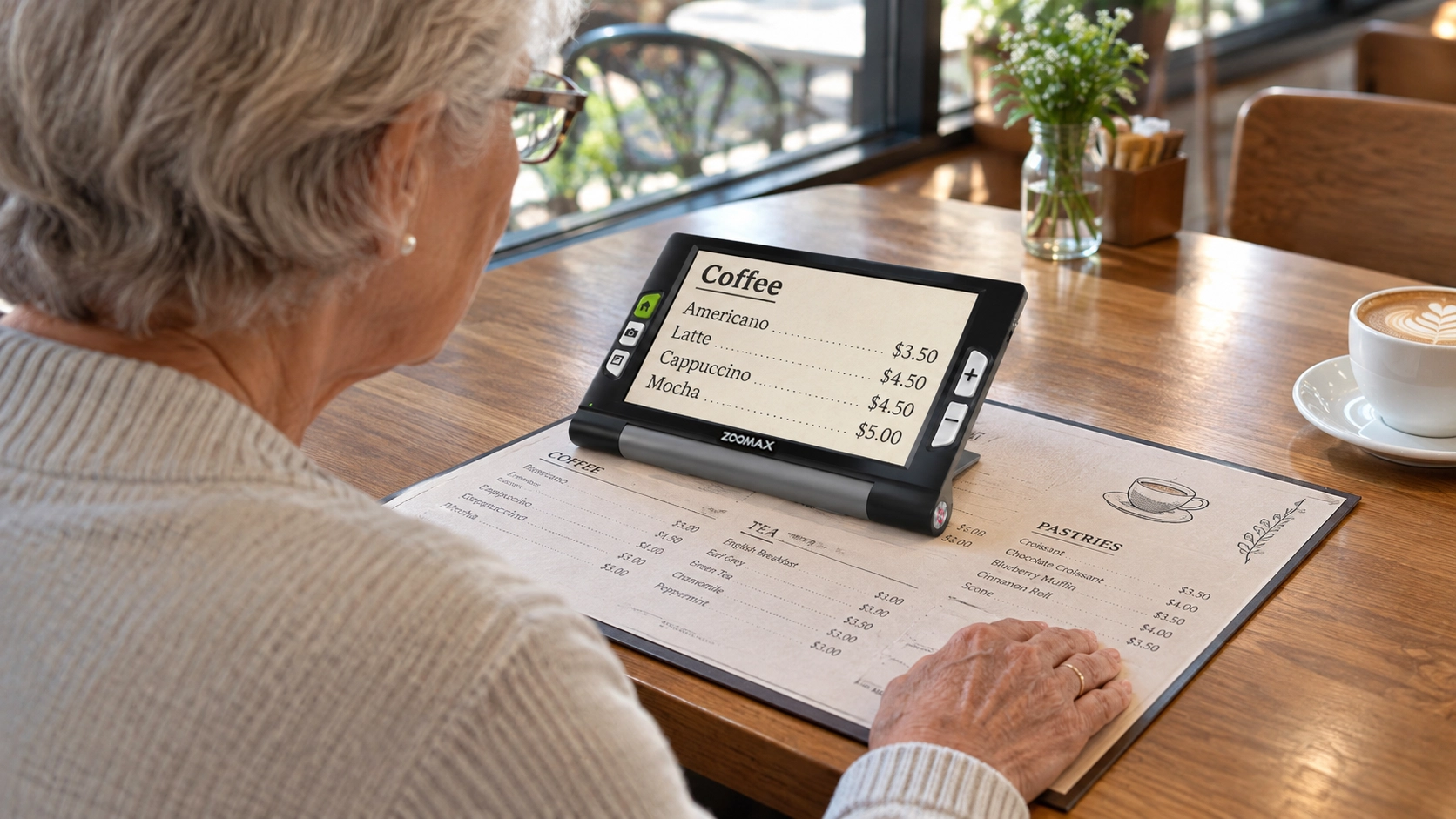
As one of the most affordable solutions for visual impairment that deliver clinical-grade functionality in a consumer-friendly package, the Luna 8 is far more than a magnifying tool. It is not a “crutch” — it is a daily companion that lets you hold onto the small, precious details of life: the dosage on a medicine bottle, the handwriting on a birthday card, the face of a grandchild in a photo.
Building Your Vision Support Circle: Resources, Community, and Next Steps
The right tool can make daily tasks feel manageable again. But navigating vision change is not a journey you have to take alone. Building a strong support network is one of the most powerful steps you can take for your long-term well-being.
It’s common for people adjusting to glaucoma to withdraw from activities they once enjoyed, or to try to handle everything on their own. But isolation only makes the journey harder.
A strong vision support circle brings together people and resources to help you stay independent, connected, and confident. It typically includes:
- Your eye care team.Ophthalmologists and low vision rehabilitation specialists are your primary guides for medical care and practical life strategies. They can help you tailor screening plans, manage symptoms, and find the right assistive tools for your needs.
- Peer support communities.Connecting with other people living with glaucoma can reduce anxiety and provide practical, real-world tips you won’t find in a pamphlet. Many global and national organizations offer both in-person and online support groups for people at all stages of the condition.
- Family and friends.Open, honest communication about what you need — better lighting, a slower pace when walking, help with small tasks when you ask for it — helps your loved ones support you in meaningful, respectful ways.
- Trusted assistive technology providers.Companies that specialize in low vision aids do more than sell products. They offer demos, training, and ongoing support to make sure you get the most out of your device.
At Zoomax, we see ourselves as exactly this kind of trusted provider — and an active part of your support circle. We create assistive devices designed to empower people living with low vision to live fully and independently, with dignity.
If you have questions about selecting an electronic magnifier, adapting your daily routine, or finding the right vision aids for your lifestyle, our team of low vision specialists is here to help.