











The landscape of electronic travel aids for visually impaired individuals is undergoing a fundamental transformation. For decades, the assistive technology industry has focused primarily on compensation—magnifying what remains of a user’s residual vision to bridge the gap between impairment and function.

However, we are now witnessing a decisive pivot toward perception: devices that do not merely enlarge the world but actively interpret, understand, and guide users through it. This shift represents a new frontier in low vision assistive technology news, moving from static magnification to dynamic environmental awareness.
From Static Magnification to Dynamic Awareness: The New Frontier in Assistive Tech
For most of the past three decades, electronic travel aids for distance viewing have centered on a straightforward premise: capture an image and enlarge it. Optical zoom and digital magnification allowed users with conditions such as age-related macular degeneration (AMD), diabetic retinopathy, or Stargardt disease to read signs, recognize faces, and navigate unfamiliar spaces. These tools—pocket video magnifiers and wearable magnification systems—delivered essential functionality, but their utility was inherently bounded by the user’s residual vision.
Today, artificial intelligence is dismantling those boundaries. The integration of large language models, advanced computer vision architectures, and sensor fusion technologies is enabling a fundamentally different class of mobility assistance. Research published in 2025 demonstrates systems that integrate YOLOv11 object detection with simultaneous localization and mapping (SLAM) architectures to provide real-time semantic understanding of dynamic environments, achieving localization accuracy of 98.9% in highly dynamic settings. Another recent framework, SELM-SLAM3, integrates deep learning-enhanced visual SLAM to maintain robust performance even under low-texture scenes and fast motion—conditions that traditionally cause catastrophic tracking failures.
What distinguishes this new generation of technological aids for visually impaired users is not merely improved hardware, but a conceptual reorientation. Instead of asking “What can the user see?” these systems ask what users need to know. A multi-platform electronic travel aid integrating ultrasonic, LiDAR, and vision-based sensing across head-, torso-, and cane-mounted nodes—published in late 2025—exemplifies this approach, achieving millimeter-level detection accuracy and sub-30 ms proximity-to-feedback latency across all sensing nodes.
This convergence of AI reasoning, robust localization, and multi-modal feedback is moving the industry from laboratory prototypes to clinically relevant tools. Yet, as these technologies advance, a critical question emerges: are they reliable enough for real-world adoption?
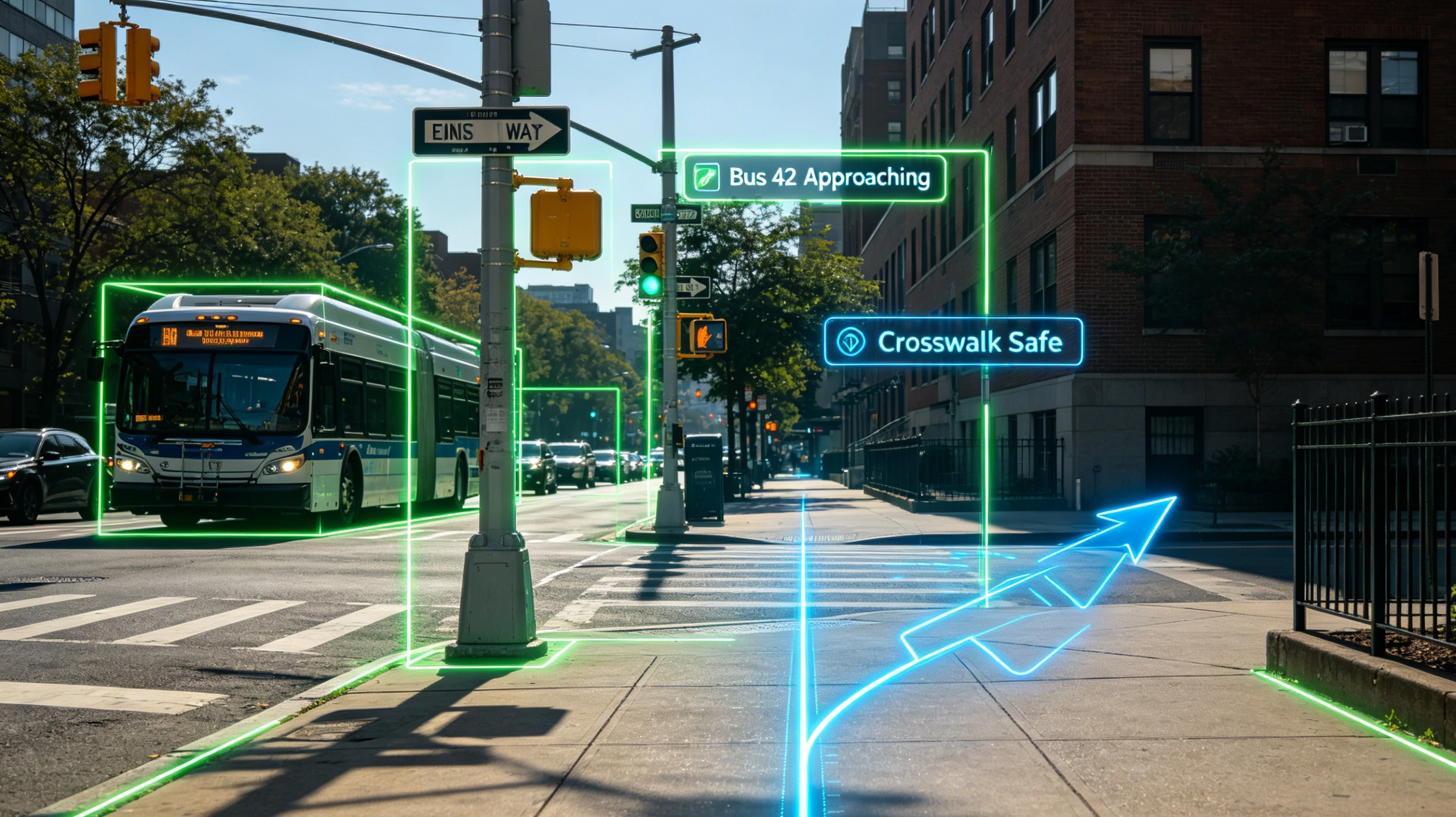
Solving the Reliability Paradox: Why Stability and Ergonomics Are Key to Clinical Adoption
The assistive technology sector faces a persistent “reliability paradox”: the most algorithmically sophisticated solutions often fail to achieve clinical adoption because they neglect the foundational requirements of stability, battery endurance, and ergonomic design.
This paradox is well-documented. A 2025 clinical trial investigating a wearable electronic vision enhancement system for individuals with AMD found that while participants reported initial optimism, the device ultimately failed to fit effortlessly into their lives. Users cited setup time, charging requirements, response latency, and weight as the primary hurdles. Some even reported adverse events including headache and nausea. The study’s conclusion was unambiguous: “recognition of the limitations of performance and practicality quickly followed, significantly restricting their usefulness.”
This is not an isolated finding. A cross-sectional survey of Australians with inherited retinal disease revealed that while 51% of respondents had used electronic travelling aids, their adoption decisions hinged on usability, portability, and minimally intrusive form factors rather than technical specifications alone. The researchers emphasized that assessments of low vision assistive technology news and products must include “participant-reported assessments regarding usability and portability, as these aspects dictate integration of the device into regular use.”
For clinicians and procurement decision-makers, these findings translate into concrete evaluation criteria:
- Battery Life: Devices with sub-8-hour runtime force users into constant charge anxiety. Industry best practice now targets 10+ hours of continuous use with hot-swappable or fast-charge capabilities.
- Latency: The difference between “assistive” and “disorienting” often comes down to milliseconds. Sub-30 ms feedback latency, as demonstrated in recent multi-sensor ETA research, represents the emerging benchmark for real-time usability.
- Form Factor and Weight: Head-mounted systems exceeding 100 grams frequently induce fatigue during extended wear. Ergonomic weight distribution and off-ear audio solutions significantly improve long-term tolerability.
- Certification and Standards Compliance: Medical-grade certifications (ISO 13485, CE marking as Class I medical device, FDA registration) serve as proxy indicators of reliability and safety. Devices lacking these credentials introduce clinical and legal exposure.
- Condition-Specific Adaptability: The same device that serves a user with peripheral vision loss from retinitis pigmentosa may be unsuitable for someone with central scotoma from AMD. Products that offer customizable display modes, adjustable contrast mapping, and configurable feedback channels demonstrate genuine clinical utility.
The market trajectory reinforces the importance of getting reliability right. According to market research published in early 2026, the global low vision and blind aids products market is projected to grow from $3.32 billion in 2025 to $3.68 billion in 2026, representing a compound annual growth rate (CAGR) of 10.8%. The electronic visual assistive devices segment specifically is expanding from $1.25 billion to $1.35 billion (CAGR 8.0%). However, this growth will disproportionately favor manufacturers who solve the reliability paradox—delivering devices that combine cutting-edge perception with clinical-grade stability.
The AI Wearable Revolution: Deep Dive into 4 Market Leaders
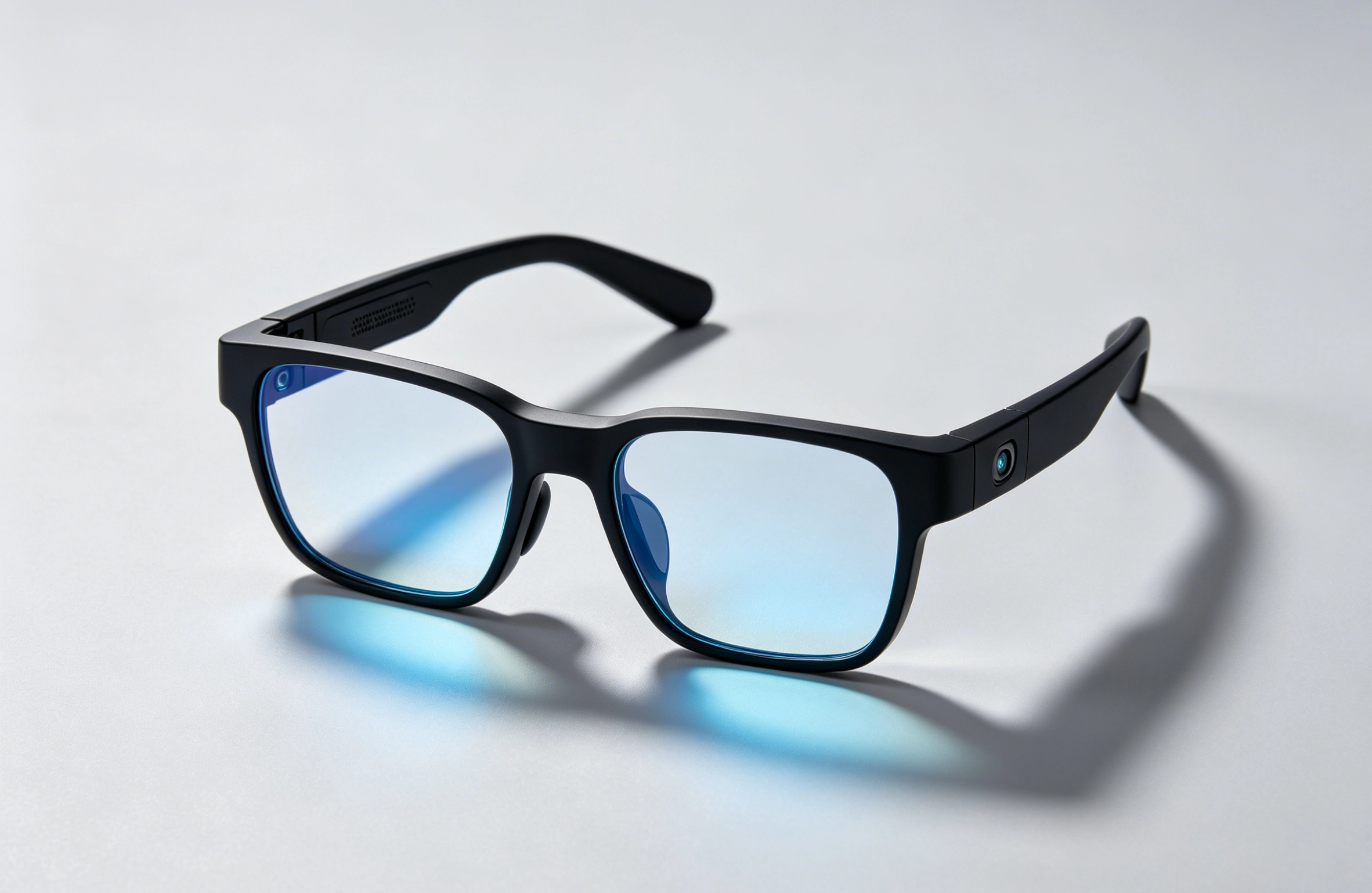
The form factor of mobility aids for visually impaired persons is converging toward wearable and hands-free designs. Here is an analysis of the four primary solutions currently defining the AI landscape:
Envision Ally Solos Glasses
These glasses serve as a powerful information-access tool.
Key Functionality: Utilizing a high-definition camera and open-ear audio, they provide AI-powered text reading, scene description, and object recognition.
User Benefit: Their multi-modal AI allows users to “ask” about their surroundings or connect with a sighted ally via video call, making them a versatile companion for daily information tasks.
Ray-Ban Meta Smart Glasses
Meta has brought accessibility into a mainstream, socially acceptable form factor.
Key Functionality: Through the “Look and Ask” AI feature, users receive detailed descriptions of objects and text. It also integrates with platforms like “Be My Eyes” for real-time volunteer assistance.
User Benefit: This is the benchmark for social integration, allowing users to access visual information discreetly and stylishly.
OrCam MyEye
OrCam remains a leader in portable, clip-on AI that attaches to any pair of existing glasses.
Key Functionality: It specializes in instant OCR (optical character recognition), facial recognition, and object identification, functioning largely offline.
User Benefit: Its strength is its immediacy and privacy. By processing information locally, it provides a fast and reliable reading experience without requiring constant internet access.
.lumen AI Glasses
Designed specifically for mobility, .lumen aims to emulate the functionality of a guide dog through advanced sensors.
Key Functionality: It uses haptic (tactile) feedback to guide the user away from obstacles and toward clear paths, mapping the environment in 3D.
User Benefit: This represents the peak of “perception-based” travel aids, moving beyond audio descriptions to provide physical guidance in complex urban environments.
AI Low Vision Wearables Comparison Table (2026)
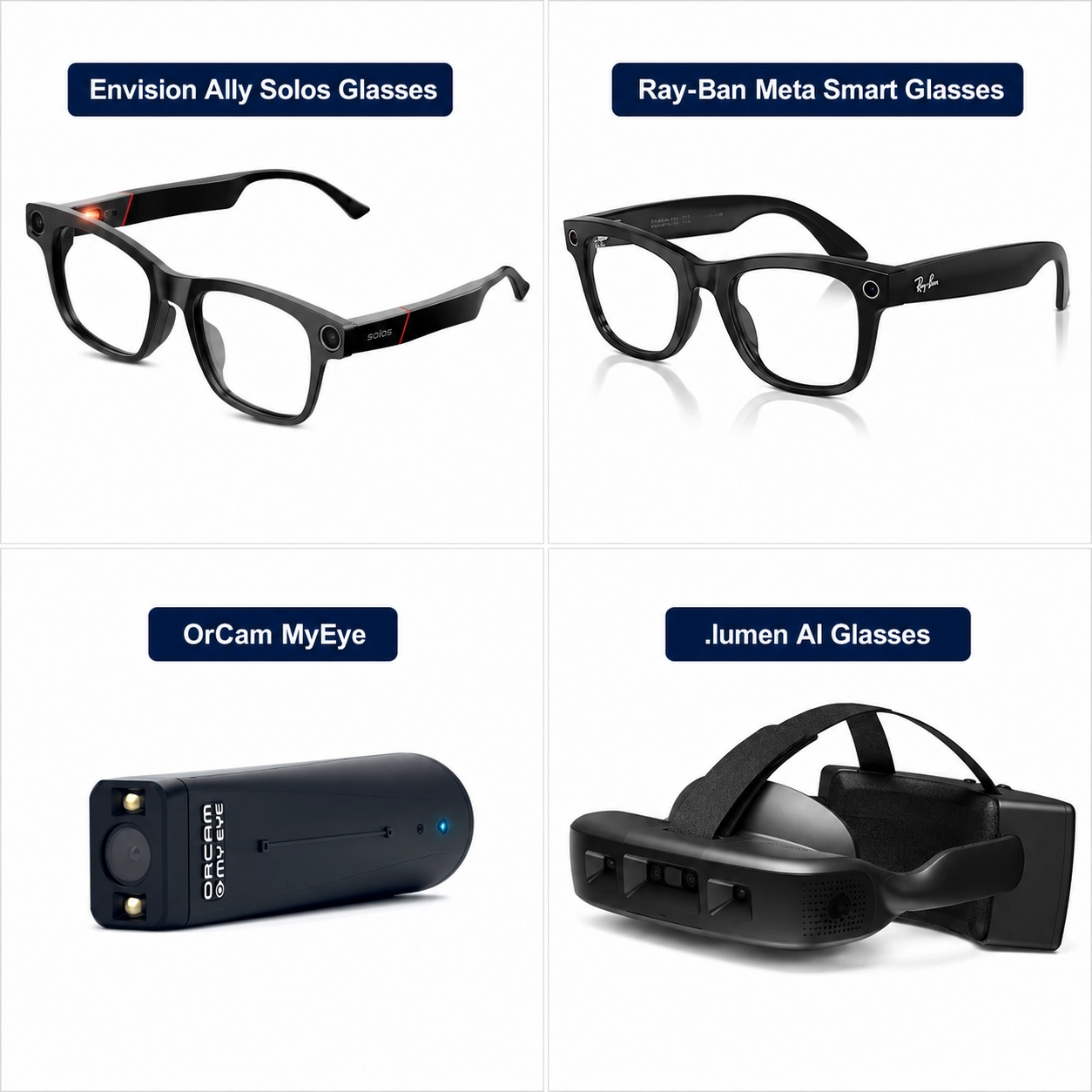
Image sources: Official product images and promotional materials from Envision, Meta (Ray-Ban), OrCam, and .lumen official websites.
Comparison Category | Envision Ally Solos Glasses | Ray-Ban Meta Smart Glasses | OrCam MyEye | .lumen AI Glasses |
Primary Form Factor | Lightweight smart glasses | Mainstream smart glasses | Clip-on AI module | Navigation-focused smart glasses |
Core AI Functions | Text reading, scene description, object recognition | “Look and Ask” AI, object & text recognition | OCR reading, facial & object recognition | 3D mapping and obstacle guidance |
Main User Benefit | Everyday AI assistance | Socially integrated accessibility | Fast private reading experience | Independent mobility support |
Interaction Method | Voice assistant | Voice + touch controls | Gesture + voice | Haptic feedback |
Connectivity | Smartphone-connected | Cloud-connected | Mostly standalone | Sensor-based onboard system |
Offline Capability | Partial | Limited | Strong | High |
Audio / Feedback Style | Open-ear audio | Open-ear speakers | Audio feedback | Tactile navigation feedback |
Mobility Assistance | Limited | Minimal | None | Advanced |
Best Use Case | Daily information access | Discreet mainstream wearable AI | Reading and recognition tasks | Urban navigation and travel |
Key Competitive Advantage | Accessibility-first conversational AI | Stylish mainstream ecosystem | Offline privacy-focused OCR | Guide-dog-inspired AI navigation |
Specifications and features are based on publicly available manufacturer documentation and third-party industry reviews as of 2026.
The Reliability Gap: Current Challenges in AI Adoption
While the potential of AI is immense, B2B procurement specialists and clinical practitioners must navigate the current immaturities of the technology:
Processing Latency: Many AI systems rely on cloud servers, creating a delay between an event (like a car approaching) and the audio notification. In mobility, a two-second delay can compromise safety.
Information Overload: Constantly hearing audio descriptions can be mentally exhausting and may mask important environmental sounds, such as traffic or sirens.
Connectivity Dependence: Many of the most advanced features fail in areas with poor cellular signal, such as elevators, subways, or rural locations.
Accuracy and Trust: AI can still misinterpret complex scenes. For users, the fear of a “hallucinated” clear path means that AI currently serves better as a secondary assistant rather than a primary navigation tool.