
When a family first learns their child has a brain-based vision condition, they almost immediately run into confusing terminology. Medical reports, school paperwork, and online resources flip back and forth between two phrases: cortical visual impairment and cerebral visual impairment. Both get shortened to CVI. For anyone new to this space, the first question is almost always the same: when it comes to cerebral visual impairment vs cortical visual impairment, is there actually a meaningful difference?
To help clear up that confusion, we’ll break this down simply, with no complicated medical terms or textbook jargon. We’ll cover where each name came from, what they actually mean for day-to-day life, and why the wording matters even though the core challenges are so similar.
Why Do Two Different Names Exist for CVI?
To understand the backstory of cortical visual impairment vs cerebral, it helps to start with a simple comparison.
Think of your eyes like the lens and sensor of a camera. They capture sharp, raw images of the world around you, perfectly well on their end. Those images are then sent over to be processed by a tiny, powerful image processing chip inside your brain. This chip doesn’t just “develop” the raw picture—it also recognizes faces, tells foreground from background, tracks movement, and stores visual memories.
In the earliest days of vision research, scientists thought all this processing work happened in just one specific spot on that chip: the visual cortex, a small, dedicated core module at the back of the brain. If that one module was damaged, vision broke down. That’s where “cortical visual impairment” came from—it was named after that single, known processing spot.
Over time, researchers learned the chip was far more complex. Visual signals travel through multiple circuits, processing stations, and connected regions before a person can truly “see” and understand what they’re looking at. A problem anywhere across this entire chip—from the incoming wiring to the recognition units—can disrupt how vision works.
That broader, system-wide understanding gave us “cerebral visual impairment.” “Cerebral” refers to the whole brain, and by extension the entire processing chip, not just one core module.
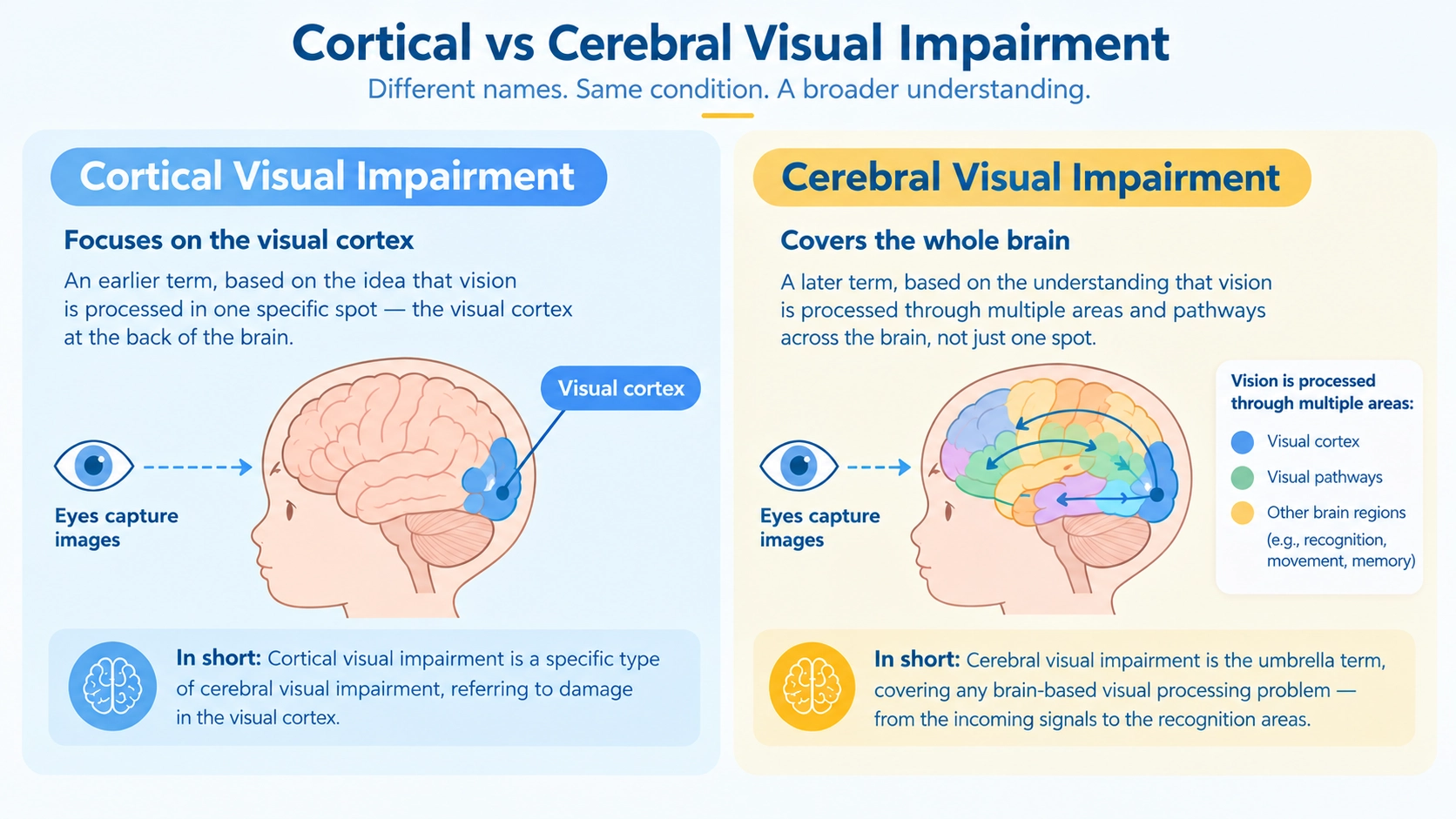
Put simply: cortical visual impairment is one specific type of cerebral visual impairment. “Cerebral” is the big umbrella term that covers every kind of brain-based visual processing problem. They are not two separate conditions—they are two names from two different eras of medical knowledge.
What Modern Medicine Actually Says About CVI Today
Today, global eye health authorities like the U.S. National Eye Institute broadly use the wider “cerebral” definition. The core idea is very straightforward: cerebral visual impairment causes trace back to the brain, not the eyes.
The eyes work perfectly well. They capture light, shapes, and movement exactly as they should. The issue is that the brain cannot fully organize, interpret, or make sense of the signals the eyes send over.
This is why the line between “cortical” and “cerebral” has blurred so much in everyday care. Whether the damage is limited only to the visual cortex or spread across wider brain pathways, the day-to-day visual challenges are nearly identical, and the basic ways to support a child are the same. For parents and teachers, what matters most is how the child experiences vision—not which exact word appears on a medical report.
Still, both labels remain in circulation. “Cerebral visual impairment” is now the preferred broad term, yet “cortical visual impairment” has not been abandoned. In some clinical settings, the narrower phrase is still used deliberately to describe injury confined to the visual cortex, as distinct from disruption across the broader visual processing network. Some older publications and regional systems may favor that wording, but doing so does not automatically make the information outdated; it can reflect a genuinely more localized diagnosis.
Why This Terminology Still Matters in Diagnosis and Education
If the core condition and basic support strategies are so similar, you might wonder: does the word choice actually matter?
The answer is yes—but not because one needs a totally different treatment than the other. The real impact shows up in how people access care, get support at school, and find reliable information. For families new to CVI, this wording mismatch can cause very real, very practical headaches.
It can lead to incomplete medical and rehabilitation plans
If an assessment is based solely on the label “cortical visual impairment,” a care team may focus only on basic visual acuity and field loss—the problems most closely linked to that one core processing module. They may overlook wider visual processing challenges that are still part of CVI, like difficulty switching attention between objects, recognizing faces, or remembering visual information. A thorough functional vision assessment for CVI helps avoid this gap by evaluating real-world visual abilities, not just medical diagnosis labels.
It’s not that anyone provides the wrong care. It’s that a narrow label can lead to a narrow evaluation, and miss parts of the child’s needs that would otherwise get support through vision rehabilitation and educational accommodations.
It can keep kids from getting the right school support
This is where the terminology gap hits families hardest. Most school support systems, individual education plans, and assistive technology programs are organized around specific diagnostic labels.
If a child’s medical report says “cortical visual impairment” but the school’s system only recognizes “cerebral visual impairment” as a qualifying category, several things can go wrong:
- School staff may not immediately connect the diagnosis to brain-based visual support strategies
- Requests for classroom accommodations or assistive devices can get held up in administrative review
- Teachers may default to supports for typical eye conditions, instead of strategies for visual processing differences
The support itself would work for either label. But if the label doesn’t match the system, the child may not get access to it at all.
It creates confusion and extra stress for families
For parents just learning about CVI, seeing two different terms across different doctors, reports, and websites can feel like getting two different diagnoses. It’s easy to wonder: Did one doctor get it wrong? Is this something more serious than we thought?
It can also make researching harder. If you only search for one term, you may miss huge amounts of helpful guidance, parent communities, and updated research published under the other term.
The takeaway here is not that one term is right and the other is wrong. It’s that everyone on a child’s team—doctors, TVIs, therapists, and family—should be speaking the same language, and understanding the same full picture of the child’s needs.
What CVI Actually Looks Like in Daily Life
Beyond labels and medical definitions, what does CVI vision look like for a child going about daily life?
The biggest myth is that kids with CVI have no usable CVI vision. Most children with CVI have some level of functional sight. The difference is that seeing takes work. Their brain has to put in extra effort to sort through visual information, filter out distractions, and make sense of what’s in front of them.
Every child is different, but there are four common patterns:
- Trouble picking out one thing from a busy or cluttered background
- Slower response to visual information, like recognizing a face or finding a toy
- Vision that changes depending on lighting, how tired they are, or how busy the space is
- Better reaction to movement or things seen out of the corner of the eye, compared to still objects right in front of them
These are not behavior problems or signs of not paying attention. They are just what happens when the brain’s visual processing system works differently.
How a Consistent Visual Environment Supports Daily Life and Learning Development
Because the core challenge in CVI is processing visual information, the world around a child makes a huge difference in how well they can use their vision. When their surroundings are simple, predictable, and consistent, the brain has less work to do—and the child can put their energy into the task itself.
In daily life: less visual chaos = more independence
Small routine moments that most families take for granted can feel overwhelming for a child with CVI.
Take mealtime. A plate full of different foods, with mixed colors and overlapping shapes, creates a lot of visual chaos. For a brain that struggles to tell foreground from background, it can be hard to tell one food from another, or even notice food on one side of the plate. Over time, this can slow meals down, reduce how much a child eats, and turn a simple routine into frustration.
The same happens with dressing, play, and self-care. A pile of mixed clothes or a bin full of toys forces the brain to work overtime to sort through everything. Kids may need constant reminders, or give up trying to do things on their own.
When spaces are consistent—items kept in the same spots, presented against plain backgrounds, with clear visual boundaries—children can find and recognize things much more easily. This is how visual structure builds real, everyday independence.
In learning: steady visuals help kids focus and keep up
In the classroom or at homework time, the same principle has an even bigger impact on learning.
A crowded worksheet, a wall covered in busy decorations, or a lesson that jumps quickly from one visual to the next can quickly overload a child with CVI. They may lose their place, miss instructions, or get visually tired long before the lesson is over.
When learning spaces are simplified and consistent—with clean layouts, fewer distractions, and step-by-step presentation—kids can direct their visual attention to the actual content. They stay focused longer, find information faster, and take part more fully in class activities.
Supporting Structured Vision at Home and in School
We know consistent visual structure works. The question is how to keep that consistency going, across all the different places and activities a child moves through every day.
Physical adjustments: the foundation of static visual support

For regular, unchanging spaces like the dining table at home or a child’s desk at school, physical environment adjustments are highly effective. They are almost always the first step in any good CVI support plan.
Simple, intentional choices—storing cups in the same place every day, using plain colored placemats, organizing shelves with clear dividers—create predictable visual cues kids can learn and rely on. For routine, daily activities, these changes work extremely well.
When static adjustments can’t keep up: flexible, portable support
Physical changes only work for fixed spaces and fixed routines. Kids’ lives are not fixed.
A school day brings new worksheets, different textbooks, group activities, and lessons that move from the whiteboard to paper to screens. At home, a child might move from the dinner table to the couch for reading, then to a desk for homework. Lighting changes throughout the day. Every room has its own layout and its own level of visual clutter.
You can’t rearrange a classroom wall or repaint a table every time a new worksheet is passed out. Static adjustments can’t keep up with that level of constant change.
This is where a portable electronic magnifier steps in. Unlike fixed physical changes, portable devices deliver a consistent visual experience no matter where the child is or what they’re working on. They can adjust magnification, contrast, and image layout on demand, creating a stable visual baseline even as everything else changes.
For teachers and therapists, this consistency is invaluable. Kids get the same type of visual support all day long, so they can focus on learning—not on adapting to a new way of seeing. It also creates reliable, repeatable conditions for assessment, so it’s easier to track progress over time.
How Assistive Technology Can Help Reduce Visual Complexity
Assistive technology for CVI is all about helping reduce visual complexity and making information easier for the brain to process. It does not change the underlying condition, but it is a powerful addition to physical environmental adjustments—extending structured visual support into dynamic, changing situations.
For children with CVI, the biggest daily barriers are not blurry vision, but visual clutter, difficulty tracking lines of text, and visual fatigue from constant processing. Standard electronic visual aids address these barriers directly with core features shared across most devices: adjustable magnification crops out surrounding distractions, guide lines and reading masks help children stay on the correct line, high-contrast modes sharpen edges and reduce the effort of separating foreground from background, and image stabilization cuts down on the need to constantly refocus. These features create a simpler, more manageable visual input, and form the foundation of visual support for learning and daily tasks.
For children navigating full school days and busy home routines, the Snow Pad — a portable tablet screen magnifier built specifically for low vision and vision rehabilitation — goes beyond these basics to address the unique, context-specific challenges of CVI.
Seamless near-far viewing with split-screen, no constant visual reorientation
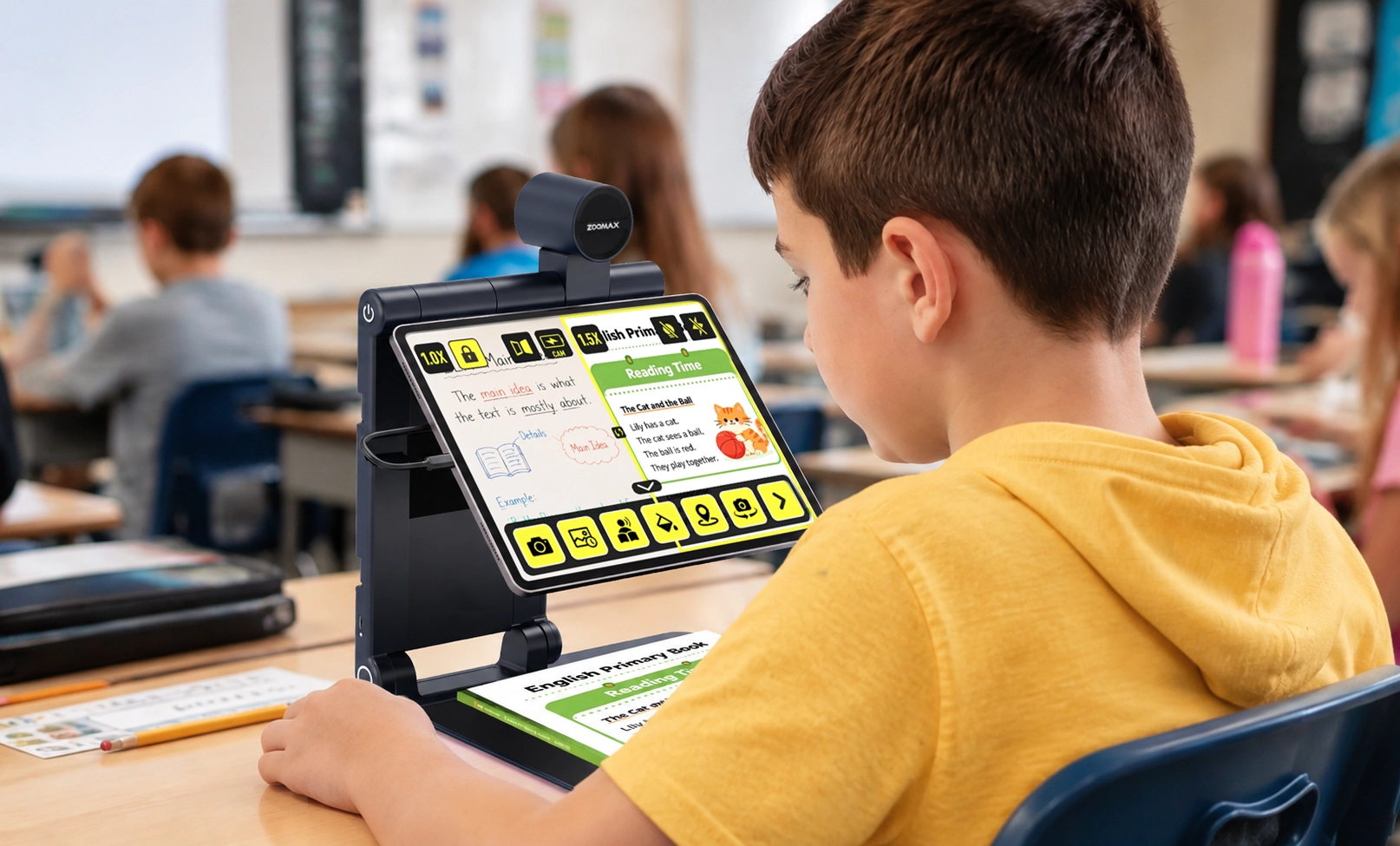
Children with CVI often struggle when switching their gaze between near work (like a textbook or worksheet) and faraway targets (like a teacher, whiteboard, or presentation). Each shift means re-finding their place, re-adjusting focus, and extra mental work. The Snow Pad’s split-screen feature displays both a magnified close-up view and a wider, distant view side by side on the same screen. This means children can reference their notes and follow the lesson at the front of the room without repeatedly looking up and down, searching for their place each time.
Truly portable design for consistent visual support across every setting
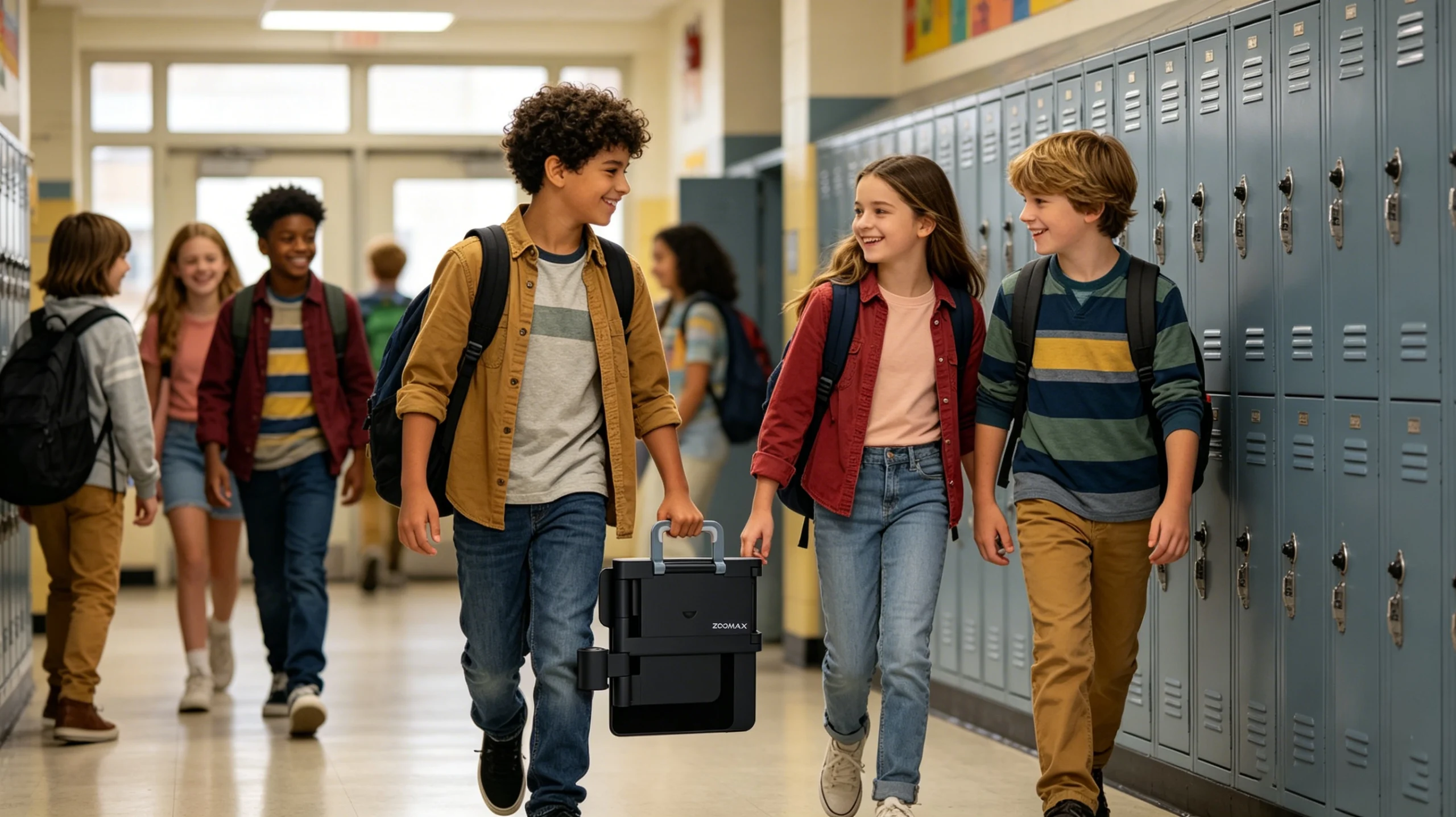
Children with CVI are highly sensitive to shifts in their visual surroundings, and having to re-adapt to a new visual setup every time they change rooms or locations adds extra cognitive load. The Snow Pad’s lightweight, portable form factor means it travels easily from home to school, from classroom to library, and even to after-school activities. Because children can bring their familiar visual setup with them everywhere, they avoid the disruption of re-learning how to use a different device or re-adjusting to new visual settings in every new space. This continuity is especially valuable for maintaining steady learning momentum across the whole day.
Multi-modal access via OCR and text-to-speech for high-fatigue moments
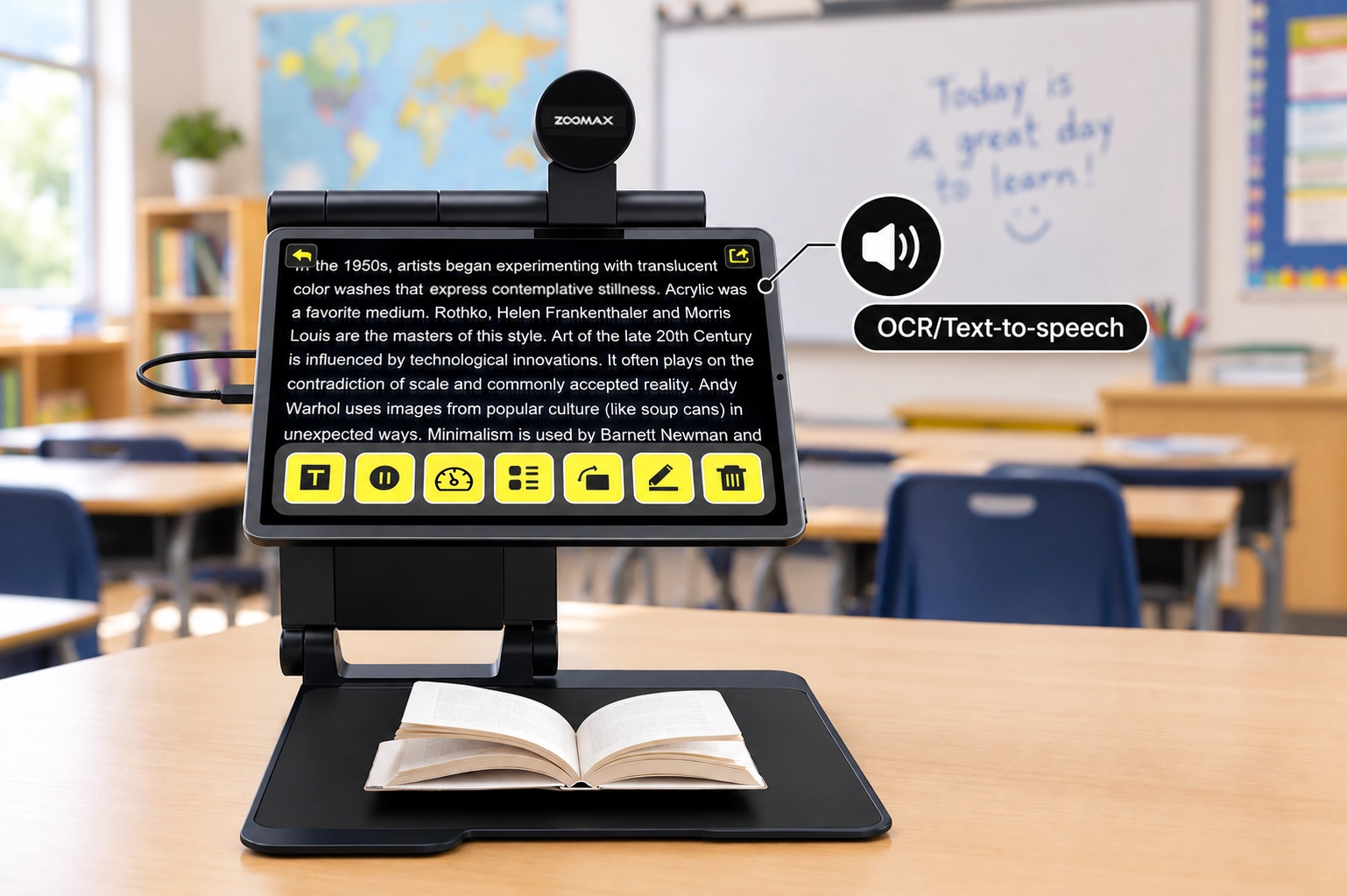
Visual processing fatigue is a common challenge for children with CVI. When reading for long periods becomes too much effort, built-in OCR and text-to-speech (TTS) functionality lets children listen to the text instead. This gives them an alternative way to access information without overloading their visual processing system, and helps them keep up with lessons and reading assignments even on high-fatigue days.
However, electronic magnifiers and similar devices are not suitable for every child with CVI. They involve a learning curve, and their benefits depend on individual visual stamina, cognitive load, and guidance from a qualified professional. It is equally important to remember that assistive technology is just one piece of a full support system. It works best when paired with thoughtful environmental changes, informed teaching strategies, and personalized intervention plans.