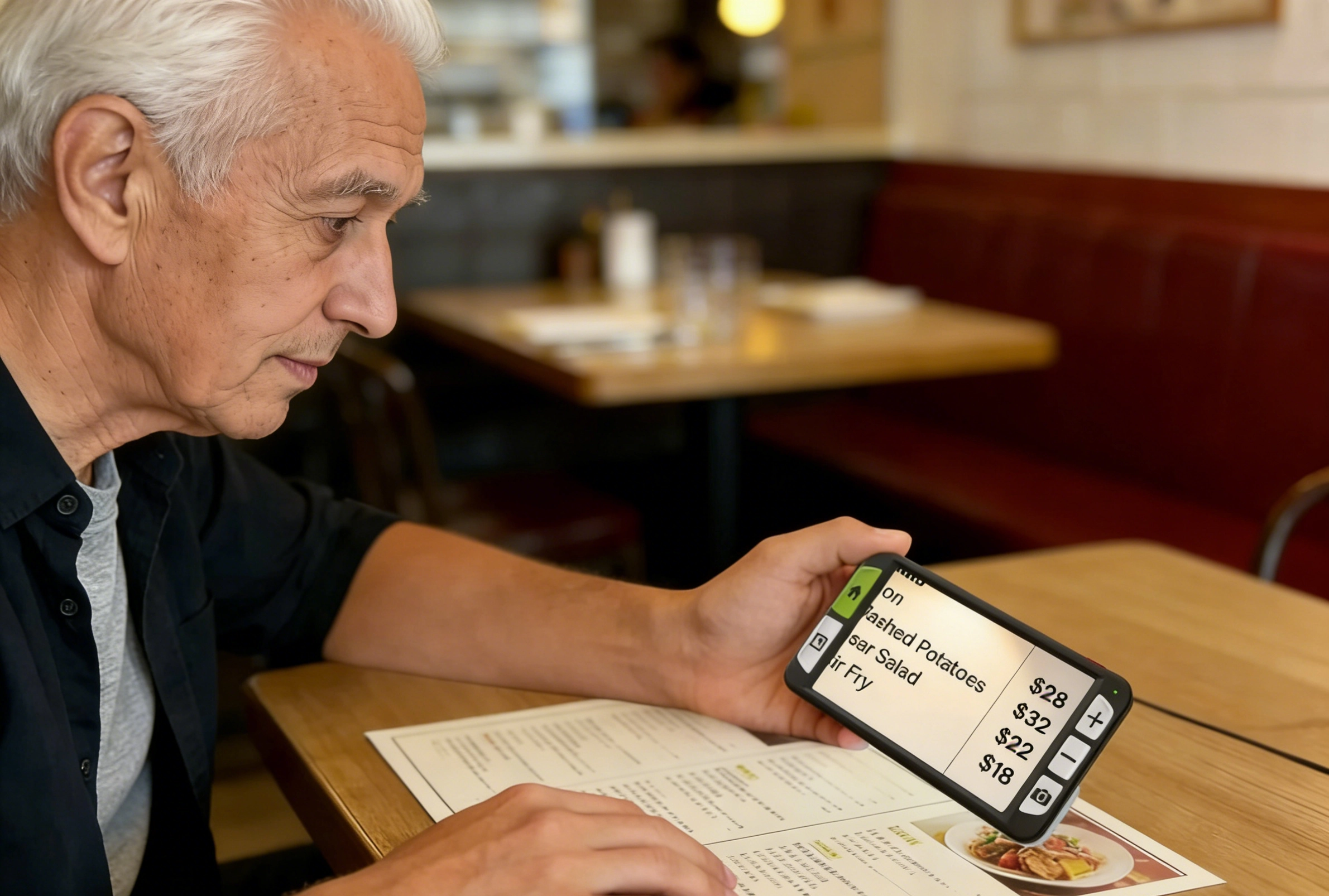











One of the major misconceptions about visual impairments is that it means someone cannot see at all. In fact, while many people with vision problems will be said to have 20/200 vision, the actual range of sight issues they have can vary quite considerably. For some people it may mean complete loss of sight, but for others, it can mean a wide range of issues that severely restrict their vision in different ways. One of the more common of those is peripheral vision loss, which is often referred to as tunnel vision. But what is peripheral vision, what causes the loss, and how can we prevent it?
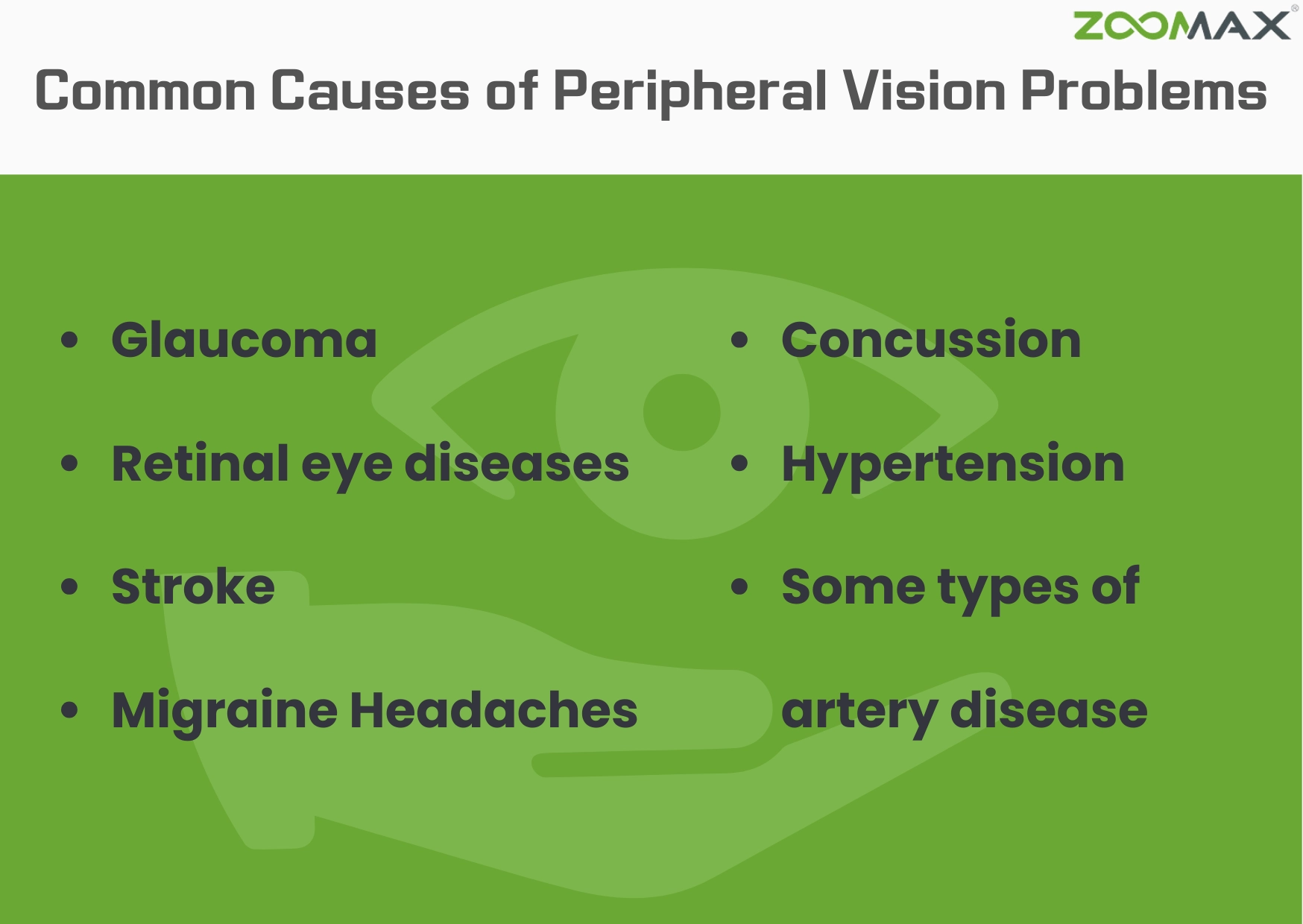
Common Causes of Peripheral Vision Problems
Eye diseases are a significant issue for anyone because even minor problems can result in long term vision challenges, and they are the main causes of peripheral vision problems. These include:
- Glaucoma – A disease of the optic nerve that can cause a number of vision issues.
- Retinal eye diseases – Including macular degeneration, retinitis pigmentosa, retinal vein occlusion, optic neuritis and diabetes-related retinopathy
- Stroke –Loss of peripheral vision can be a lasting effect after a stroke.
- Migraine Headaches
- Concussion
- Hypertension
- Some types of artery disease
Glaucoma and various retinal eye diseases tend to cause permanent peripheral vision loss, however in the case of many of these illnesses and diseases, the tunnel vision effect may be temporary. In all cases it is crucial that professional medical help is sought immediately to ensure that everything that can be done to mitigate the issue is put into practice.
Symptoms of Peripheral Vision Problems
In most cases, peripheral vision loss doesn’t happen immediately, and is a gradual process that gets progressively worse over time. Peripheral vision problems are not always easy to recognize though, as they affect your field of vision (FOV), but in a very specific way. There are two types of vision that make up how we see the world around us with healthy vision, the first is central vision. This refers to the objects that are directly in front of you, that are in the center of your vision when your eyes are pointed at something. This is where the eyes focus, which is why objects in this central vision are sharper and clearer than anywhere else in your vision range, even if you have completely healthy eyesight.
 The second type of vision is peripheral vision. This is the areas surrounding that central vision area, where your eyes are not as tightly focused, that tends to be a little less sharp. Sometimes called side vision, it is what we see from the corner of our eyes, and can be incredibly useful when driving, riding a bike or any number of other activities.
C'est cette deuxième zone de la vision, la vision périphérique, qui est affectée par la perte de vision périphérique. Cela peut commencer par une vision périphérique floue, ou peut simplement sembler plus sombre vers les bords, réduisant ainsi votre champ de vision de manière à ce que vous puissiez voir moins que vous ne le pourriez normalement.
As you lose side vision, so the width of your overall vision decreases and you can see little beyond that central vision area, this is known as the tunnel vision effect. This is because it mimics the effect of standing in a dark tunnel looking out of the opening at bright sunlight. You see that central part clearly, but everything else is dark, indistinct and lacking in clarity.
 C'est l'effet de la perte de vision périphérique, et il est vraiment important de demander une assistance médicale si vous remarquez un début de problème, même s'il semble mineur. Vous pouvez passer un test de vision périphérique avec votre ophtalmologiste si vous avez des inquiétudes, mais la bonne nouvelle est que de nombreux types de problèmes de vision périphérique peuvent être traités, et que plusieurs causes de problèmes de vision périphérique peuvent être évitées grâce à des choix de mode de vie raisonnables.
Peripheral Vision Tests
The best way to maintain your eye health and prevent eye diseases of all kinds, including the loss of peripheral vision, is by having regular eye exams. These allow your ophthalmologist to spot problems early, and with a treatable problem like tunnel vision that can make all the difference. This is especially true for anyone suffering from diabetes, where annual eye exams should be a minimum, and can often be the different in treating your vision problems.
There are three types of eye test that can be useful in dealing with peripheral vision issues, these are:
Test visuel de confrontation
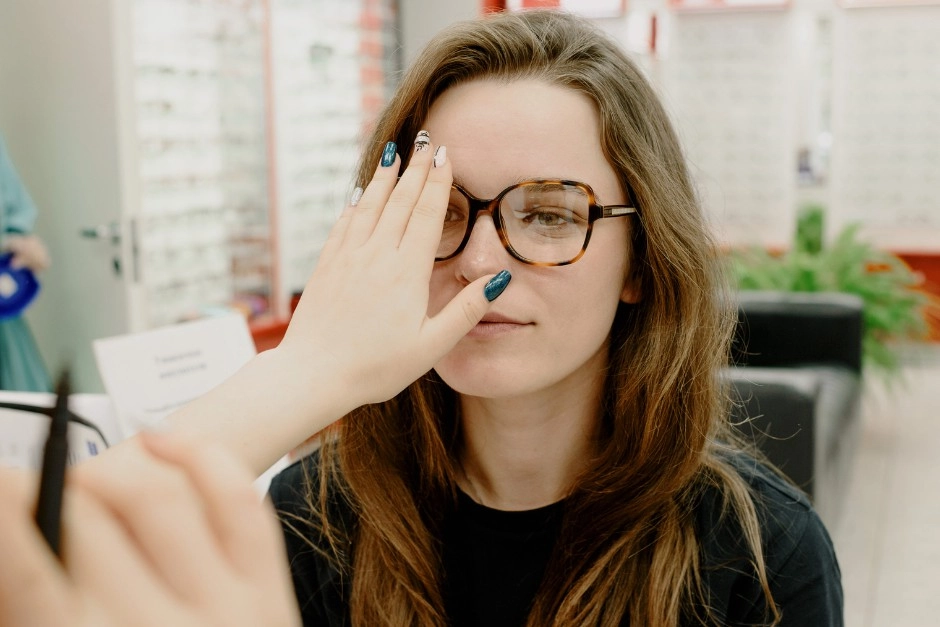 A simple test most people will be familiar with, it involves covering one eye and having the doctor or eye care technician hold up fingers for you to count within your peripheral vision. This is then repeated with the other eye. Simple and easy to administer, it gives a broad idea of the level of side vision someone has, however as it used no instruments for measurement, it may not always catch small side vision defects.
Automated Static Perimetry test
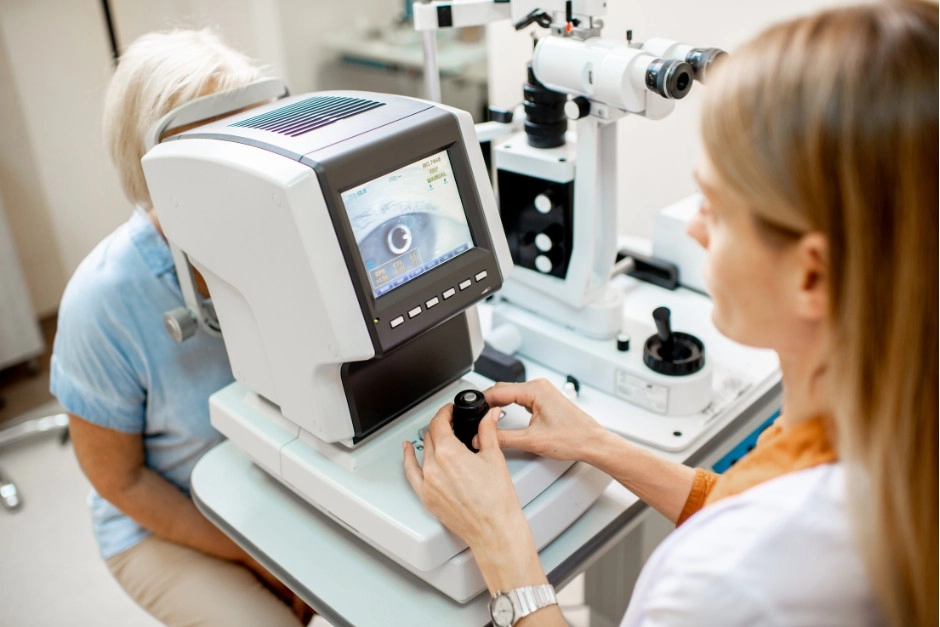 Ce test utilise un appareil spécialement conçu pour tester la vision périphérique, connu sous le nom de Périmètre. Un œil est couvert et le patient est invité à appuyer sur un bouton chaque fois qu'il voit apparaître des lumières. Les lumières sont situées tout autour de la zone, à la fois dans la vision centrale et dans la vision latérale, et apparaissent dans un ordre aléatoire. Une fois le test terminé avec un œil, il est répété avec l'autre. Le fait de ne pas noter l'apparition de certaines lumières peut mettre en évidence une perte de la vision périphérique dans certaines zones, ce qui permet à l'ophtalmologiste d'approfondir son examen. Ce test est particulièrement utile pour identifier les problèmes causés par le glaucome.
Test visuel cinétique
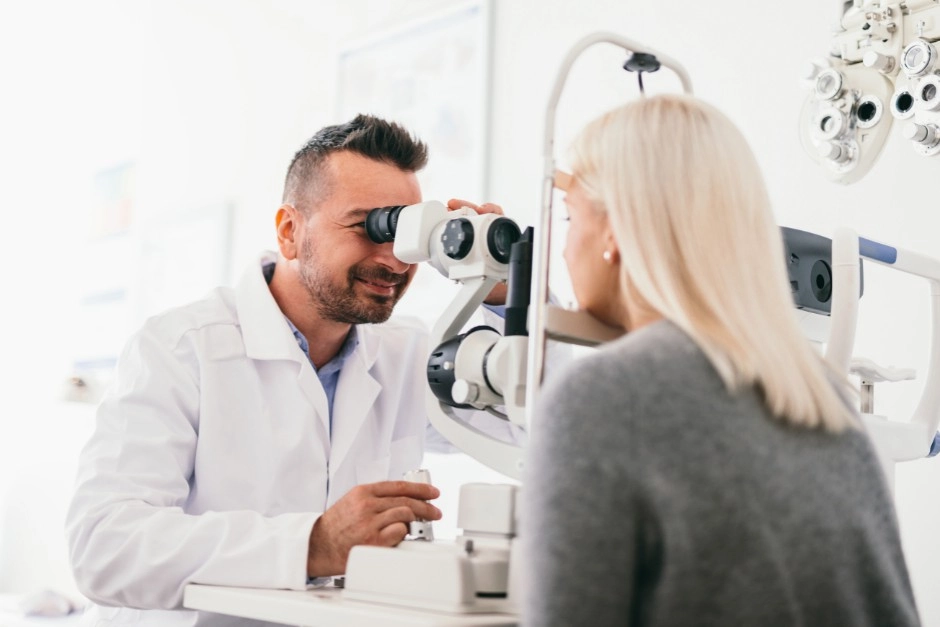 The last type of peripheral vision test, which also uses the same dedicated perimeter machine as the previous test. Here though, light moves in and out of your side vision, rather than appearing in one place and disappearing after. This approach allows a more accurate understanding of where the issues with peripheral vision begin in terms of the field of view, and are particularly useful for diagnosing retinal diseases and neuro ophthalmological issues.
La santé visuelle est également liée à l'état de santé général, de sorte qu'une alimentation saine, beaucoup d'exercice et un mode de vie sain en général peuvent avoir un impact considérable. La protection des yeux en fait également partie, mais comme de nombreux problèmes entraînant une perte temporaire de la vision périphérique sont associés à un manque général de santé, faire l'effort de maintenir un mode de vie plus sain peut vraiment être la meilleure approche pour la santé des yeux également.
 However, while taking care of yourself is great advice, with regular eye exams to identify issues early, you may still find problems that need treating. Tunnel vision is one of the more common eye diseases we suffer from, and as a result there is extensive medical understanding of the disease and its treatment.
In general, tunnel vision is treated by dealing with the underlying issue that is causing it. Whether that is glaucoma, retinal diseases and so on, by solving this issue in a large number of cases, the loss of peripheral vision is also resolved too. In a similar way, issues caused by strokes, hypertension, concussion and migraines tend to be temporary too, and as the underlying issue is dealt with, so the vision health issue will be too.
Cependant, dans certains cas, la perte de la vision périphérique est permanente, et l'objectif est alors d'aider les patients à gérer leur condition pour qu'elle ait un impact aussi minime que possible. Les aides visuelles de la série Acesight E-glasses, telles que Acesight et Acesight VR, sont en mesure d'aider les personnes souffrant d'une perte de vision périphérique. Ce type d'aide visuelle est équipé de la fonction mode étroit, qui permet à l'utilisateur de déplacer l'écran à un endroit approprié, afin de s'adapter à la situation de vision en tunnel. De plus amples informations sur les lunettes électroniques Acesight et Acesight VR sont disponibles sur le site officiel : https://www.acesight.com/. Grâce à un large éventail de technologies, les problèmes de vision périphérique peuvent être gérés efficacement et permettre aux personnes ayant une vision de 20/200 de conserver leur mode de vie et leur indépendance.
Références
https://my.clevelandclinic.org/health/symptoms/24435-tunnel-vision-peripheral-vision-loss
https://dmei.org/blog/peripheral-vision-loss-what-is-it-and-how-to-treat-it/
https://www.aao.org/eye-health/symptoms/vision-loss-peripheral-side