Age-related macular degeneration (AMD) is one of the leading causes of central vision loss in older adults. Although both wet AMD and dry AMD affect the macula—the part of the retina responsible for sharp central vision—they can impact daily life in different ways.
Understanding these differences can help individuals and families identify the most appropriate tools and strategies for maintaining independence and continuing everyday activities.
Wet AMD vs Dry AMD: Understanding the Real Functional Difference
Dry AMD, the more common form (accounting for roughly 80-90% of cases), involves gradual thinning of the macula and accumulation of drusen, leading to progressive central vision loss. Patients often experience increasing difficulty with tasks requiring sustained focus, such as extended reading, due to slowly enlarging blurred or distorted areas.
Wet AMD, which can develop from dry AMD, involves abnormal blood vessel growth (choroidal neovascularization) that leaks fluid or blood. This often results in more rapid onset of central distortion (metamorphopsia), wavy lines, and sudden central scotomas, impacting activities like face recognition or distance viewing more abruptly.
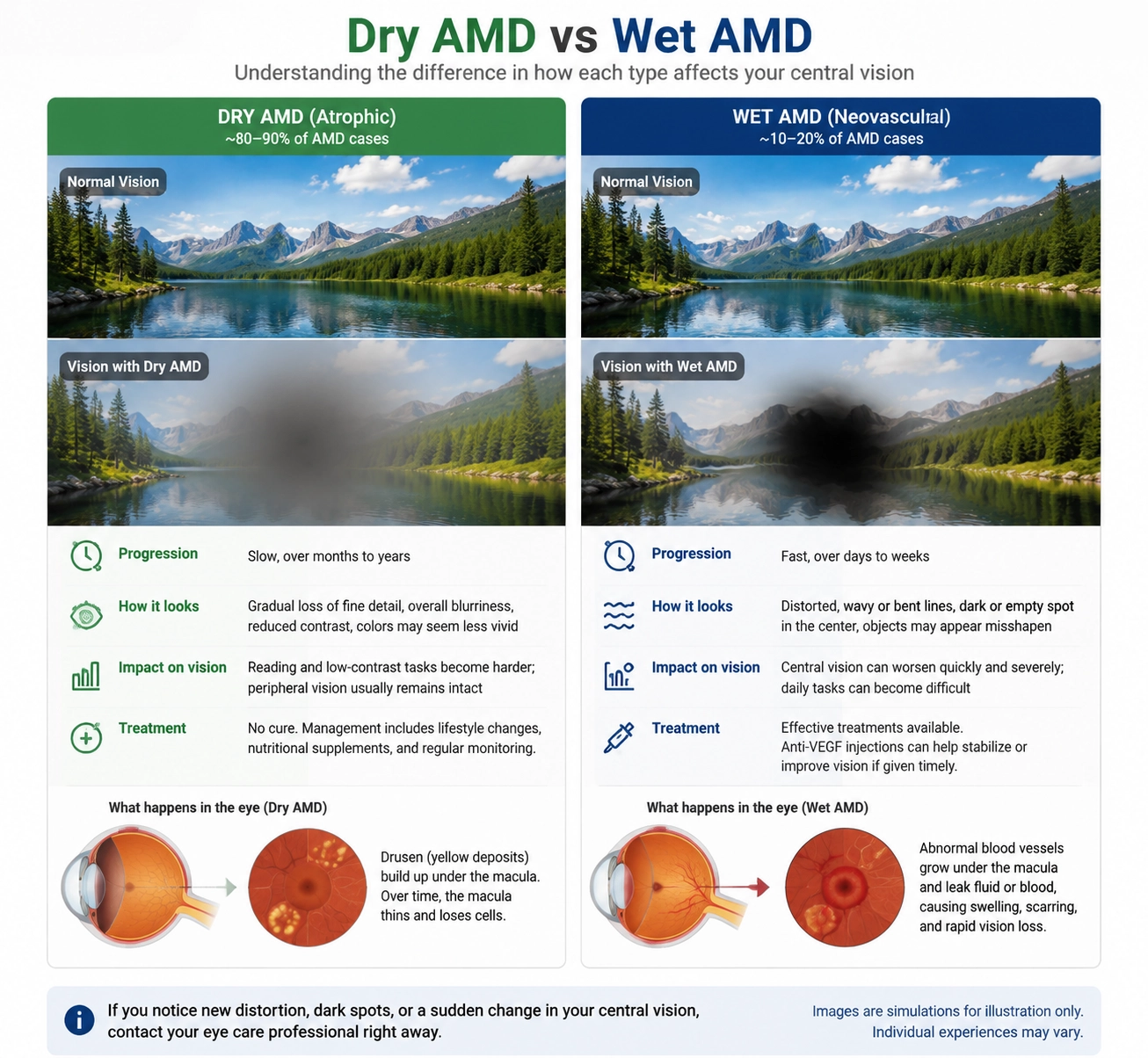
The difference between wet and dry AMD is not simply about disease progression. It is also about how vision loss affects everyday life. People with dry AMD often struggle most with reading and detailed tasks, while those with wet AMD may experience greater challenges with face recognition, television viewing, and distance observation.
Why Traditional Magnifiers Fail Many AMD Users
Faced with the visual challenges caused by AMD, various low vision aids have become indispensable companions in daily life. Nevertheless, optical magnifiers often fall short for moderate to advanced AMD due to central scotomas.
Many people with AMD initially try traditional optical magnifiers. While these aids can be helpful for mild vision loss, they often become less effective as symptoms progress.
Common challenges include:
- Limited field of view
- Difficulty tracking lines of text
- Frequent repositioning of reading materials
- Increased eye strain and fatigue
- Lack of contrast enhancement options
Electronic magnifiers for low vision address many of these limitations by providing adjustable magnification, customizable contrast settings, larger viewing areas, and improved comfort during prolonged use.
However, different types of electronic low vision devices offer different strengths. The functional needs of dry and wet AMD users vary significantly, and selecting the right device should be based on the specific characteristics of the eye condition. In the following sections, we will explore Zoomax solutions tailored to each AMD type to provide practical guidance for users, families, and eye care professionals.
Vision Aids for Dry Macular Degeneration: Reading and Daily Living Support
Why Dry AMD Users Struggle With Everyday Reading
Progressive geographic atrophy leads to enlarging central blind spots, making sustained reading increasingly difficult. Users often lose their place while reading, struggle with medication labels, and experience eye fatigue during prolonged near tasks.
Because dry AMD progresses gradually, many patients require different reading aids for macular degeneration as their vision changes over time.
In the early stages of dry AMD, vision loss is relatively mild, and the demand for high magnification is low. A portable, small-screen device can easily handle daily needs such as reading labels and checking bills, and it is convenient to carry when going out. As the condition progresses to moderate or advanced stages, the central vision defect worsens, and users usually require higher magnification and a larger display area for comfortable reading.
Zoomax Luna 6 for Early-Stage Dry AMD and Active Lifestyles
For many people with early dry AMD, independence is often affected during daily activities. In the early stage, vision has not yet deteriorated to the point of severely hampering reading, but small print on restaurant menus, grocery labels, receipts, or prescription information has already become difficult to see.
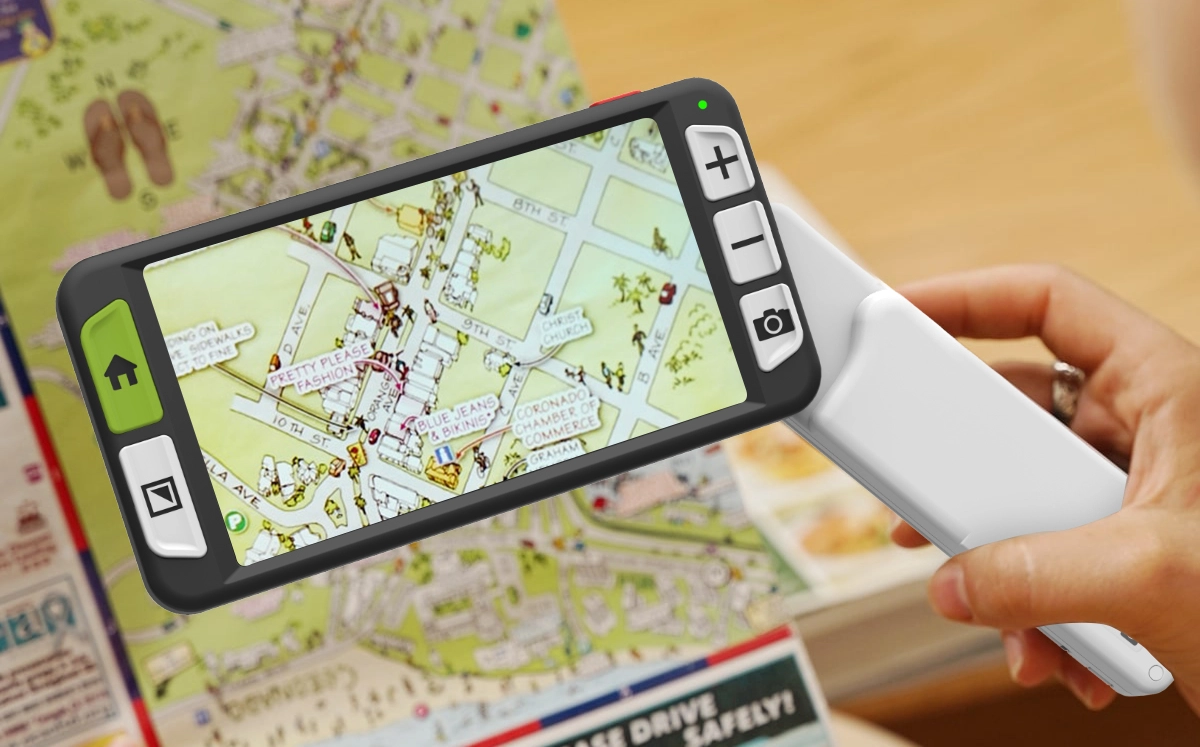
Zoomax Luna 6 handheld electronic magnifier is designed for these situations. Lightweight and easy to carry, it provides adjustable magnification and multiple viewing modes in a compact device that can be used both at home and while traveling.
Whether reading a menu at a restaurant, checking a price tag in a store, viewing a map while navigating an unfamiliar area, or reviewing mail while away from home, Luna 6 offers a simple and convenient way to make text easier to see.
Zoomax Luna HD 24 Pro for Moderate to Advanced Dry AMD
For people with moderate to advanced dry AMD, the enlarged central blind spot means that even short, temporary reading tasks have become significantly more difficult than in the early stage. The progressive vision loss demands not only higher magnification to make out fine details but also a larger display to keep more of the text in view at once, reducing the need for constant head or eye movements.
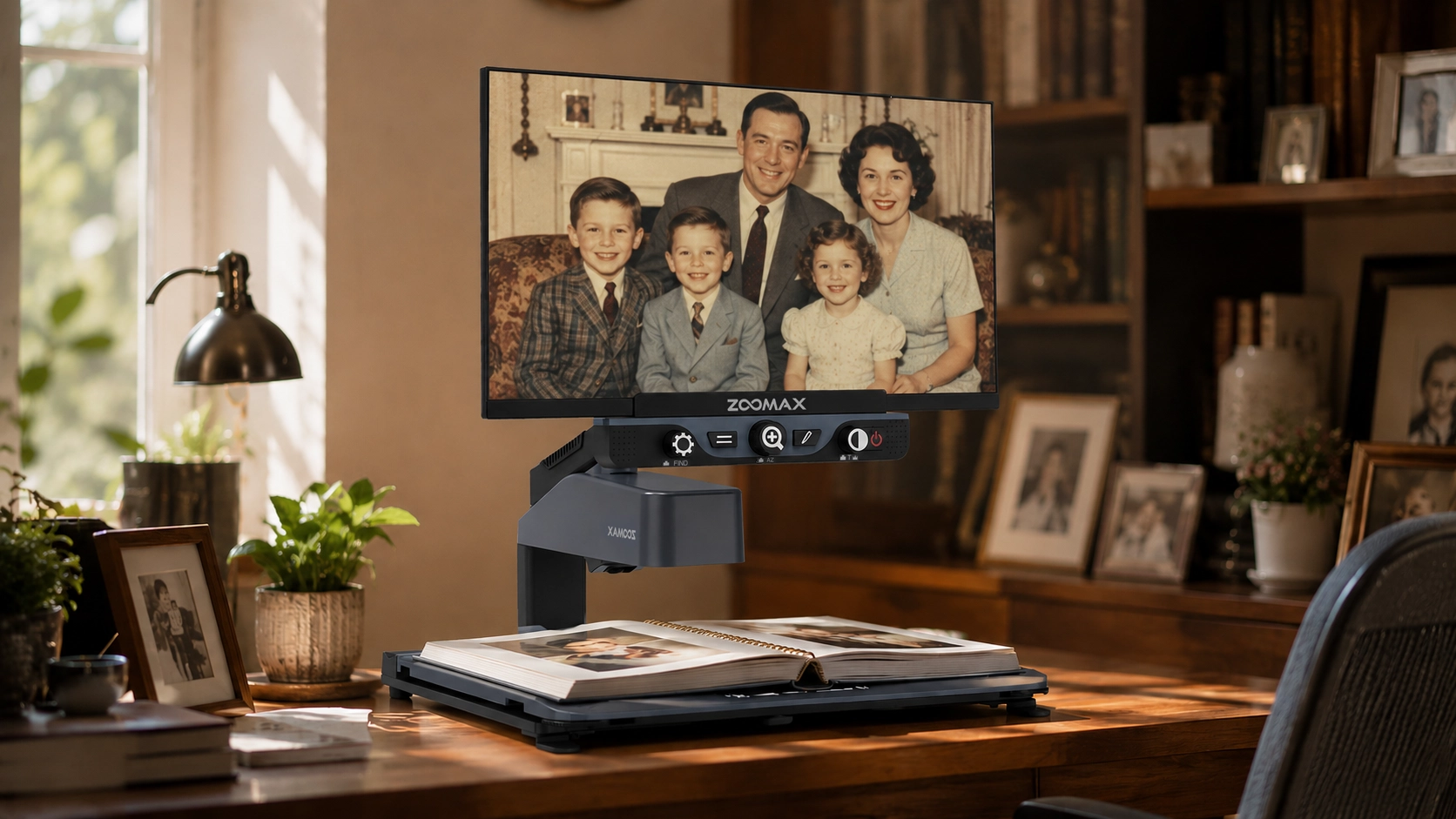
Luna HD 24 Pro electronic magnifier cctv is designed to make reading tasks more comfortable. Its large 24-inch HD display allows users to see more content at once, reducing the need for constant repositioning.
The spacious X-Y reading table glides smoothly in multiple directions, making it easier to navigate across newspapers, letters, family photographs, and other large-format materials. Adjustable magnification, autofocus, and multiple color contrast options further enhance readability.
For individuals who spend significant time reading at home, Luna HD 24 Pro can provide a more comfortable and enjoyable viewing experience. For users with advanced dry AMD who still need occasional reading support, the large-screen system also provides an advantage in maintaining orientation within text. The wider viewing area helps compensate for reduced central clarity by allowing users to locate readable regions more easily, even at higher magnification levels.
Vision Aids for Wet Macular Degeneration: Flexible Viewing for Near and Distance Tasks
Common Challenges for Wet AMD Patients
Wet AMD can affect vision suddenly and unpredictably. In addition to central distortion and blind spots, many people find it difficult to clearly view objects at different distances throughout the day.
Simple activities such as recognizing a family member across the room, enjoying the scenery outside a window, grooming in front of a mirror, or working on a favorite hobby can become increasingly challenging.
Because visual needs often change from one activity to another, flexibility becomes just as important as magnification.
Why Flexible Viewing Systems Help Wet AMD Users
Many low vision devices are designed primarily for reading. However, people with wet AMD often need support for a broader range of visual tasks.
They may want to observe something in the distance one moment and focus on detailed handwork the next. A device that can adapt easily between different viewing situations can help users stay engaged in daily activities and hobbies.
Why Zoomax Luna Eye Is Especially Helpful for Wet AMD
For many people living with wet AMD, maintaining independence means more than simply reading text. It means being able to enjoy the world around them, take part in hobbies, and manage everyday personal care with confidence.
Luna Eye combines a large high-definition 24-inch display with a flexible rotating camera system. For wet AMD users, one of the most significant challenges is central vision instability caused by distortion, scotomas, and uneven visual perception. This often makes it difficult to maintain a stable visual reference within the overall visual field loss when switching between different tasks or viewing distances. In this context, a device that provides a large field of view, high-resolution imaging, and strong magnification performance (up to 72x) can help users better locate usable visual areas even when central vision is compromised.
Building on these visual challenges, Luna Eye’s three viewing modes—near viewing, distance viewing, and self-viewing—allow users to adapt the device to different daily needs without changing tools or settings.
For near-viewing activities, Luna Eye’s flexible camera first provides robust support for basic reading. The built-in reading line and mask function help with accurate positioning and effectively cover the distorted areas caused by the disease, reducing visual interference within the usable peripheral vision. The adjustable camera position allows users to place materials comfortably while maintaining a clear enlarged image on the screen. Moreover, to address the rapid progression and unstable reading state typical of wet AMD, Luna Eye supports instant startup and physical button operation, allowing users to quickly switch magnification levels, contrast and brightness, so they can always obtain a stable viewing experience. Beyond reading, many users enjoy hobbies that require fine visual detail, such as painting, knitting, sewing, jewelry making, model building, crafting, or other creative projects, and the flexible camera makes these activities just as accessible.
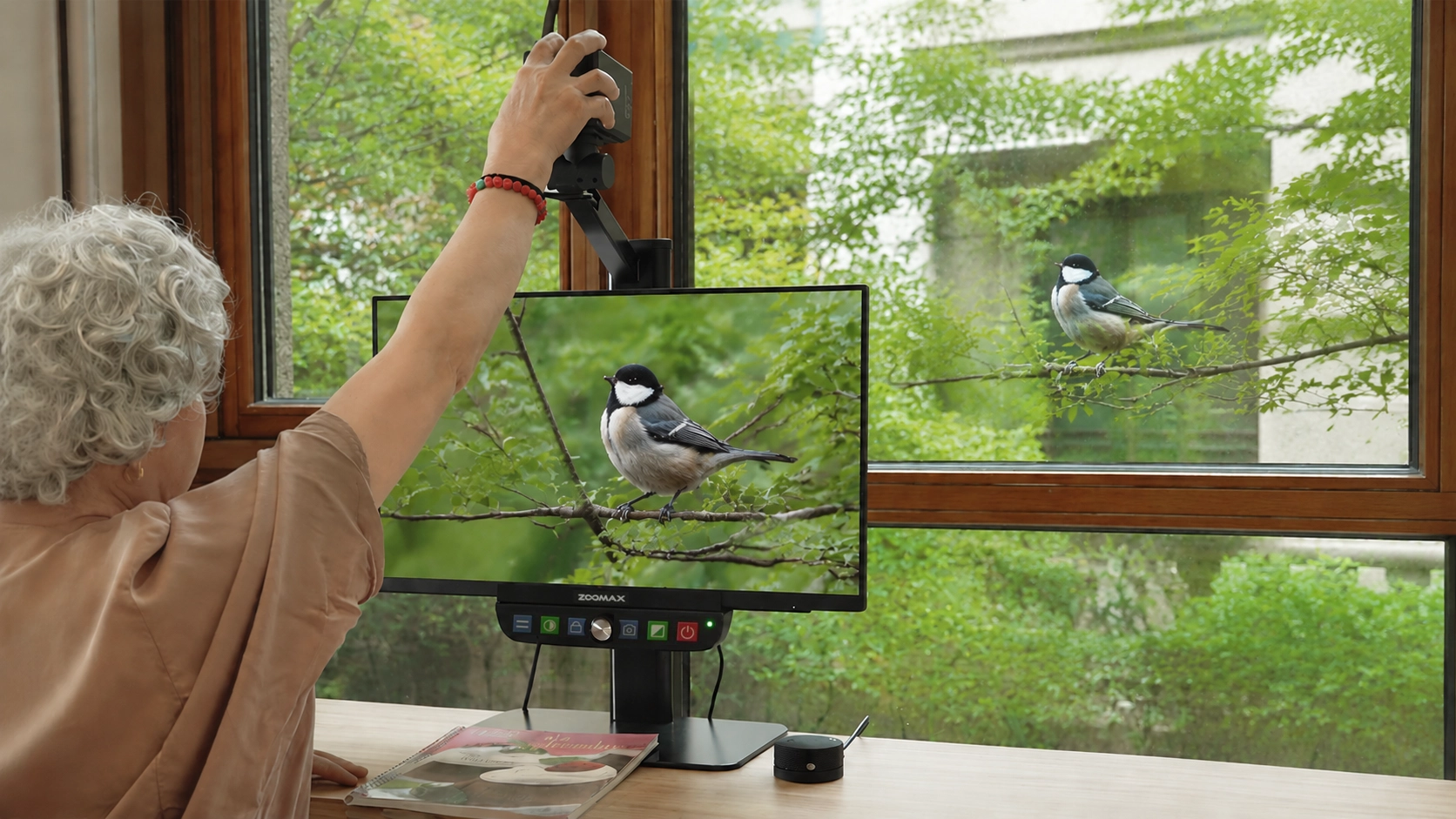
For distance viewing, users can point the camera toward a window to enjoy outdoor scenery, observe birds in the garden, follow activities taking place across a room, or simply appreciate details that might otherwise be difficult to see.
Its unique selfie mode can also support personal grooming activities. Tasks such as applying makeup, shaving, styling hair, or checking facial details become easier when users can clearly view themselves on a large screen.
Rather than focusing on a single activity, Luna Eye large desktop magnifier is designed to support a wide variety of everyday visual experiences, helping users remain active, independent, and connected to the activities they enjoy.
Summary: Wet AMD vs Dry AMD – Key Differences and Zoomax Devices
Understanding the difference between wet and dry AMD enables patients, family members, and caregivers to recommend the most suitable low vision aids for macular degeneration quickly and effectively. Zoomax provides targeted, high-quality devices in both categories.
Aspect | Wet AMD | Dry AMD |
Primary Visual Challenge | Distortion and central blind spots | Gradual central vision loss |
Main Daily Impact | Viewing objects at different distances, hobbies, self-care activities | Reading, writing, detailed near tasks |
Recommended Device Type | Flexible viewing system with movable camera | Portable and desktop electronic magnifiers |
Recommended Solution | Luna Eye | Luna 6 (early stage), Luna HD 24 Pro (moderate to advanced) |
Key Benefit | Supports distance viewing, self-viewing, and creative activities | Supports comfortable reading and daily tasks |
Discover Zoomax Low Vision Solutions
Living with AMD does not mean giving up the activities that matter most. With the right assistive technology, many people can continue reading, pursuing hobbies, staying connected with loved ones, and maintaining greater confidence in everyday life.
As a global leader in low vision solutions, Zoomax assistive living technology company has spent more than 20 years developing innovative technology for people with vision loss. Today, Zoomax products help users around the world read, learn, work, and live more independently.
Whether you are living with dry AMD and need a portable digital magnifier or desktop reading solution, or managing wet AMD and require a flexible system for both near and distance viewing, Zoomax offers technology designed to support your specific visual needs.