Glaucoma is often called the “silent thief of sight” because it can damage the optic nerve before noticeable symptoms appear. The National Eye Institute (NEI) notes that many people have no early symptoms, and vision loss may only become noticeable as the disease progresses.
Although glaucoma is often discussed as a single condition, the experience varies considerably among the different types of glaucoma. Open-angle glaucoma and angle-closure glaucoma follow distinct pathways — one usually develops slowly, while the other can appear suddenly.
Understanding differences between open-angle glaucoma and angle-closure glaucoma can help patients recognize changes and find better ways to maintain independence.
Open-Angle Glaucoma: Slow Progression and Peripheral Vision Loss
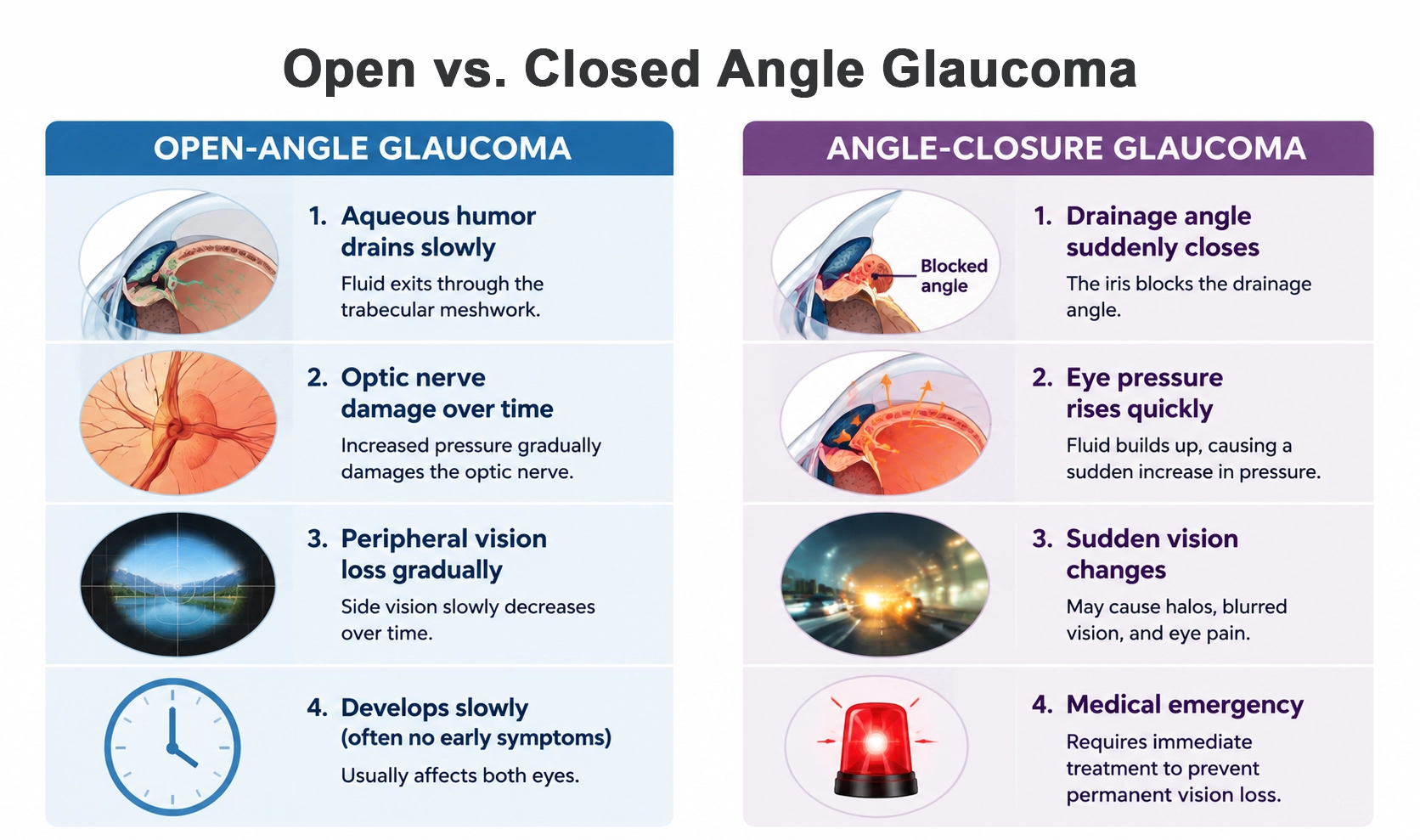
Open-angle glaucoma is the most common form of glaucoma. It develops gradually when fluid inside the eye does not drain efficiently, which can lead to optic nerve damage over time.
Because the changes are slow, many people do not notice them at first. Vision loss often begins with peripheral vision — the ability to see what is happening outside your direct line of sight.
You may still be able to read, recognize faces, and watch television, but everyday activities may become more challenging:
- Missing objects beside you
- Bumping into furniture or door frames
- Not noticing someone approaching from the side
- Feeling less confident in unfamiliar places
The difficulty is that the brain can gradually adapt to missing visual information, making early changes easy to overlook.
Angle-Closure Glaucoma: Sudden Vision Changes That Need Attention
Angle-closure glaucoma follows a different pattern. When the drainage angle becomes blocked, eye pressure can rise quickly and cause sudden symptoms.
Unlike open-angle glaucoma, which often progresses quietly, angle-closure glaucoma may cause:
- Severe eye pain
- Redness
- Blurred vision
- Halos around lights
- Nausea or vomiting
An acute angle-closure attack is a medical emergency and requires immediate attention.
While open-angle glaucoma often affects how people notice their surroundings over time, angle-closure glaucoma can create a sudden change in visual comfort and clarity.
How These Two Types of Glaucoma Affect Daily Vision
Although the two conditions develop differently, both can influence how people use their vision in everyday life.

A person’s ability to function visually depends on more than just reading letters on an eye chart. Daily activities also require:
- Awareness of surroundings
- Contrast detection
- Comfortable reading vision
- Adaptation to different lighting conditions
For someone with open-angle glaucoma, the main challenge may be missing information outside their central vision.
For someone affected by angle-closure glaucoma or more advanced vision changes, difficulties may involve blur, glare, or reduced visual comfort after vision changes occur.
Once people understand these changes, they often ask an important question: “Can treatment restore my vision or prevent it from getting worse?”
While there is currently no cure for glaucoma, early diagnosis and treatment can help slow eye disease progression and protect remaining vision. Understanding what treatment can and cannot achieve is an important step in managing glaucoma.
What Glaucoma Treatment Can Do — and What It Cannot Restore
For people living with glaucoma, treatment is essential for protecting remaining vision.
Depending on the type and severity of glaucoma, doctors may recommend treatments such as eye drops, laser procedures, or surgery to help control eye pressure and slow further optic nerve damage.
However, current treatments for glaucoma cannot restore areas of vision that have already been lost. This is why early diagnosis and ongoing eye care are so important — the goal is to preserve the vision you still have.
When glaucoma begins affecting daily activities, medical treatment is only one part of the journey. Many people also benefit from learning new ways to use their remaining vision more effectively.
This is where vision rehabilitation becomes an important part of long-term glaucoma care.
Vision Rehabilitation for Glaucoma: Adapting to Vision Changes
While glaucoma treatments focus on slowing disease progression, vision rehabilitation focuses on helping people adapt to existing vision changes and continue performing daily activities independently.
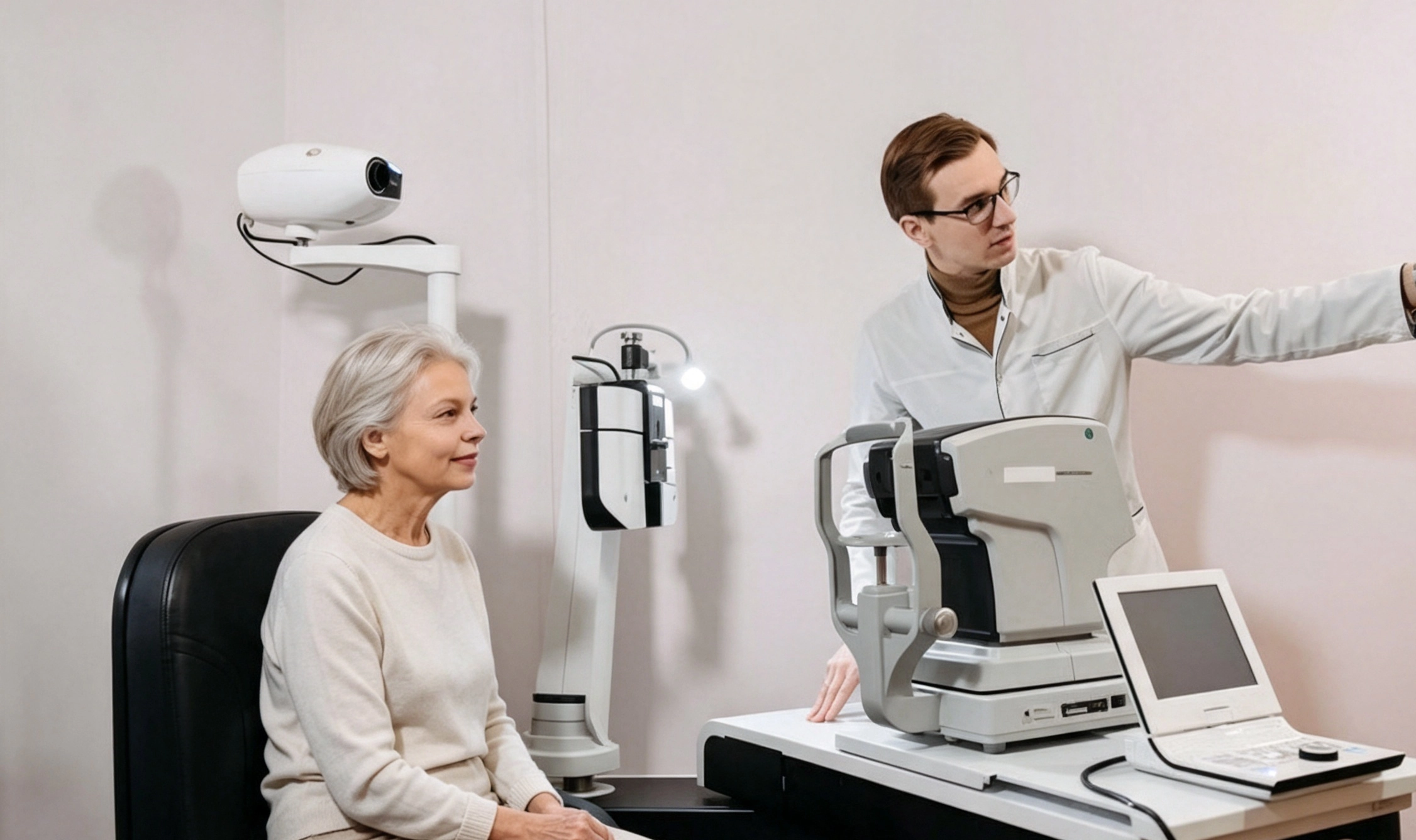
Vision rehabilitation is not a single solution. It may include learning new visual strategies, improving home safety, adjusting lighting and contrast, and using assistive technologies that make daily tasks easier.
Because open-angle and angle-closure glaucoma can affect vision differently, rehabilitation priorities may also vary.
For people with open-angle glaucoma, rehabilitation often focuses on adapting to peripheral vision loss — such as improving awareness of surroundings, developing safer scanning habits, and reducing the risk of missing important visual information.
For people affected by angle-closure glaucoma, rehabilitation may focus more on adapting to changes in visual clarity, glare, contrast, or reading ability after vision has been affected.
The goal is not to restore lost vision, but to help each person make the best use of their remaining sight. Yet adapting to vision changes goes beyond clinical strategies. It is also about finding new routines, rebuilding confidence, and staying engaged with the people and activities that matter most. The following stories show how people with glaucoma are doing exactly that — and how life can still feel full and independent.
Living Well With Glaucoma: Stories of Adaptation and Independence
These personal journeys of adaptation remind us that while glaucoma changes how you see, it doesn’t have to define what you can do. Living with glaucoma often involves more than managing changes in eyesight. For many people, the biggest challenge is finding new ways to continue the activities that once felt effortless — reading a favorite book, managing paperwork, using technology, or staying active at work and home.
Many people in the glaucoma and low vision community describe a similar journey: the adjustment is not only about losing certain visual abilities, but also about discovering new strategies that make daily life easier again. With the support of vision rehabilitation, accessibility features, and assistive technology, everyday tasks can become more manageable.

For example, someone who finds small print increasingly difficult may return to reading by combining better lighting, larger text, and an electronic magnifier. A person who struggles with glare or reduced contrast may improve their visual comfort by adjusting their environment and using tools designed to enhance visibility. Electronic magnifiers can be especially helpful for tasks such as reading labels, checking mail, reviewing documents, or accessing important information independently.
Adaptation also includes learning how to communicate vision needs with others. A simple explanation such as, “I may not notice things on one side, so please walk on my right side,” can help family and friends provide support while allowing the person with glaucoma to remain engaged and independent.
The most meaningful change is often not about seeing exactly as before, but about realizing that new tools and strategies can create new possibilities. Once you understand how glaucoma affects your daily vision, the next practical step is finding the right glaucoma low vision aids for your specific needs. With the right support, many people with glaucoma continue to read, work, enjoy hobbies, and stay connected with the people and activities that matter most.
Choosing Electronic low vision aids Based on Glaucoma-Related Reading Difficulties
With that in mind, choosing the right electronic low vision aid is one of the most practical ways to support daily independence. While no low vision aid can bring back vision that has been lost, the right device can help you use your remaining sight more effectively. The right choice depends less on whether you have open-angle or angle-closure glaucoma and more on how your reading and close-up tasks have been affected.
Open-angle glaucoma — mainly peripheral visual field loss
Reading-related impact: It may be harder to locate text on a page, you may miss the beginning or end of lines, scanning for information takes longer, and prolonged reading becomes tiring.
After angle-closure glaucoma or in advanced glaucoma — reduced clarity and contrast more noticeable
Reading-related impact: Small print is harder to see, text appears washed out in low light, glare makes reading uncomfortable, and detailed tasks cause fatigue.
Quick matching table
Main visual difficulty | Common glaucoma context | Key features to look for |
Difficulty locating text, missing line beginnings or endings | Open-angle glaucoma (mainly peripheral field loss) | Reading guide line & mask |
Difficulty seeing small print or labels | Both; more noticeable after angle-closure or in advanced glaucoma | Adjustable magnification, contrast enhancement |
Reduced contrast or glare sensitivity | More noticeable after angle-closure glaucoma | High-contrast reverse color modes (e.g., yellow-on-black or white-on-black), brightness control |
Fatigue with long reading or detailed tasks | Both | Large screen, stable platform, adjustable settings |