










One of the major misconceptions about visual impairments is that it means someone cannot see at all. In fact, while many people with vision problems will be said to have 20/200 vision, the actual range of sight issues they have can vary quite considerably. For some people it may mean complete loss of sight, but for others, it can mean a wide range of issues that severely restrict their vision in different ways. One of the more common of those is peripheral vision loss, which is often referred to as tunnel vision. But what is peripheral vision, what causes the loss, and how can we prevent it?
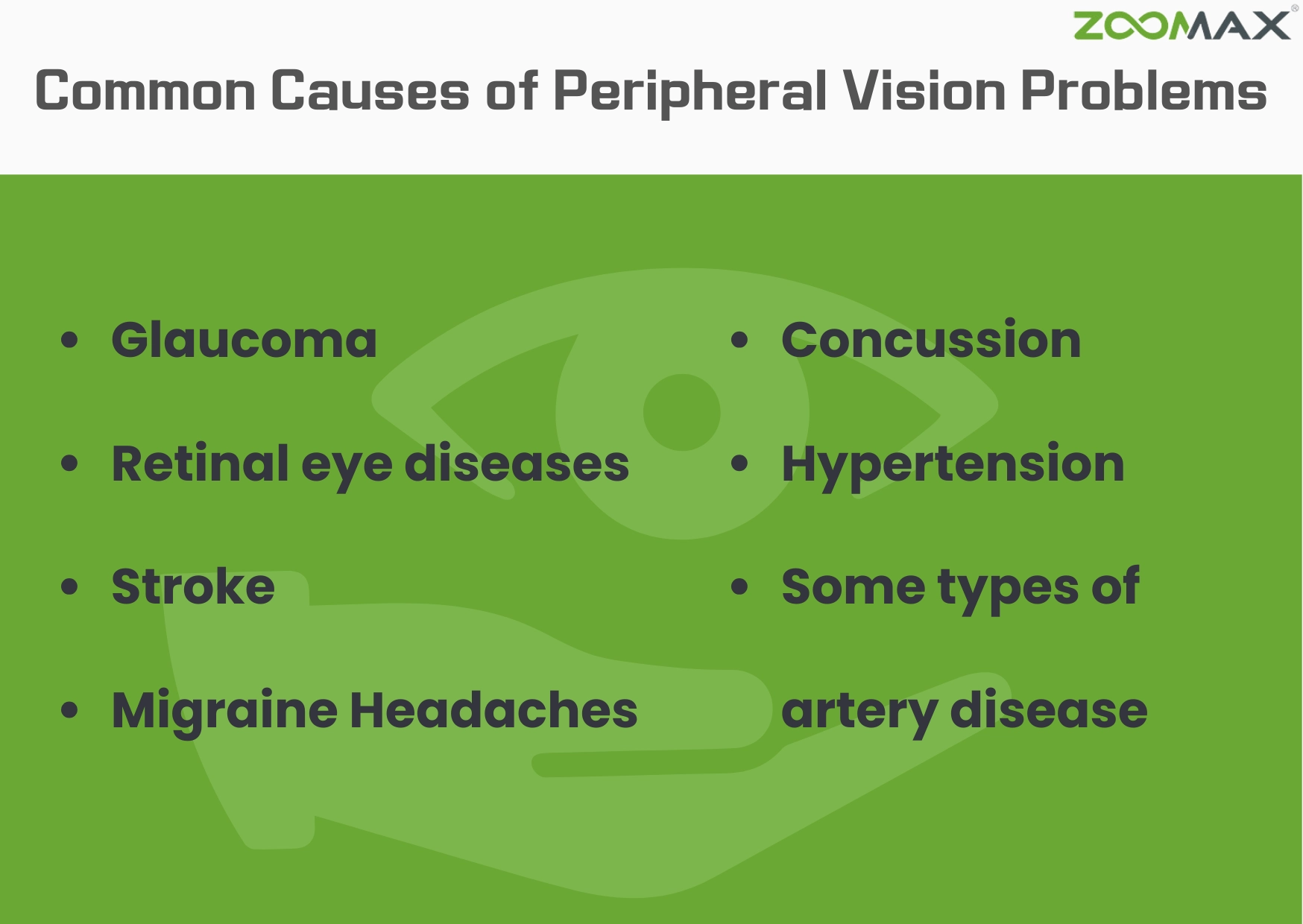
Common Causes of Peripheral Vision Problems
Eye diseases are a significant issue for anyone because even minor problems can result in long term vision challenges, and they are the main causes of peripheral vision problems. These include:
- Glaucoma – A disease of the optic nerve that can cause a number of vision issues.
- Retinal eye diseases – Including macular degeneration, retinitis pigmentosa, retinal vein occlusion, optic neuritis and diabetes-related retinopathy
- Stroke –Loss of peripheral vision can be a lasting effect after a stroke.
- Migraine Headaches
- Concussion
- Hypertension
- Some types of artery disease
Glaucoma and various retinal eye diseases tend to cause permanent peripheral vision loss, however in the case of many of these illnesses and diseases, the tunnel vision effect may be temporary. In all cases it is crucial that professional medical help is sought immediately to ensure that everything that can be done to mitigate the issue is put into practice.
Symptoms of Peripheral Vision Problems
In most cases, peripheral vision loss doesn’t happen immediately, and is a gradual process that gets progressively worse over time. Peripheral vision problems are not always easy to recognize though, as they affect your field of vision (FOV), but in a very specific way. There are two types of vision that make up how we see the world around us with healthy vision, the first is central vision. This refers to the objects that are directly in front of you, that are in the center of your vision when your eyes are pointed at something. This is where the eyes focus, which is why objects in this central vision are sharper and clearer than anywhere else in your vision range, even if you have completely healthy eyesight.
 The second type of vision is peripheral vision. This is the areas surrounding that central vision area, where your eyes are not as tightly focused, that tends to be a little less sharp. Sometimes called side vision, it is what we see from the corner of our eyes, and can be incredibly useful when driving, riding a bike or any number of other activities.
É esta segunda área de visão, a visão periférica, que é afetada pela perda de visão periférica. A perda de visão periférica pode começar com uma visão periférica desfocada, ou pode simplesmente parecer mais escura em direção às extremidades, reduzindo o seu campo de visão para que possa ver menos do que normalmente veria.
As you lose side vision, so the width of your overall vision decreases and you can see little beyond that central vision area, this is known as the tunnel vision effect. This is because it mimics the effect of standing in a dark tunnel looking out of the opening at bright sunlight. You see that central part clearly, but everything else is dark, indistinct and lacking in clarity.
 Este é o efeito da perda de visão periférica, e é realmente importante procurar assistência médica se notar qualquer início do problema, mesmo que pareça menor. Pode fazer um teste de visão periférica com o seu oftalmologista se tiver alguma preocupação, mas a boa notícia é que muitos tipos de problemas de visão periférica são tratáveis, e várias causas de problemas de visão periférica podem ser evitadas por completo com escolhas de estilo de vida sensatas.
Peripheral Vision Tests
The best way to maintain your eye health and prevent eye diseases of all kinds, including the loss of peripheral vision, is by having regular eye exams. These allow your ophthalmologist to spot problems early, and with a treatable problem like tunnel vision that can make all the difference. This is especially true for anyone suffering from diabetes, where annual eye exams should be a minimum, and can often be the different in treating your vision problems.
There are three types of eye test that can be useful in dealing with peripheral vision issues, these are:
Teste visual de confronto
 A simple test most people will be familiar with, it involves covering one eye and having the doctor or eye care technician hold up fingers for you to count within your peripheral vision. This is then repeated with the other eye. Simple and easy to administer, it gives a broad idea of the level of side vision someone has, however as it used no instruments for measurement, it may not always catch small side vision defects.
Automated Static Perimetry test
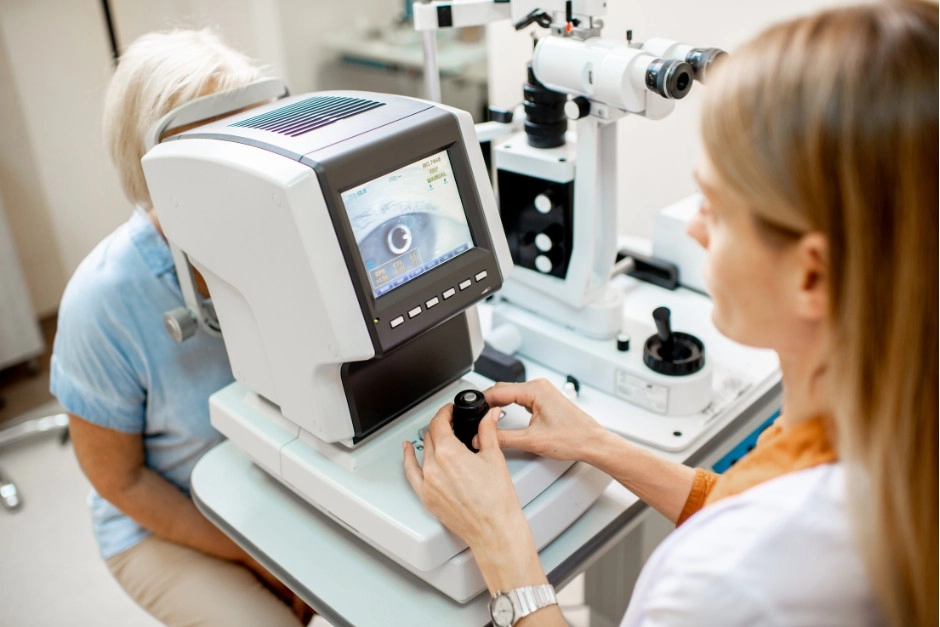 Este teste utiliza um dispositivo concebido especificamente para testar a visão periférica, conhecido como Perímetro. Um dos olhos é tapado e pede-se ao doente que prima um botão sempre que vê aparecerem luzes. As luzes estão situadas em toda a área, tanto na visão central como na visão lateral, e aparecem numa ordem aleatória. Uma vez terminado o teste com um olho, repete-se com o outro. O facto de não se notar o aparecimento de determinadas luzes pode evidenciar uma perda de visão periférica em determinadas zonas, permitindo ao oftalmologista investigar mais aprofundadamente. Este teste é especialmente útil para identificar problemas causados pelo glaucoma.
Teste visual cinético
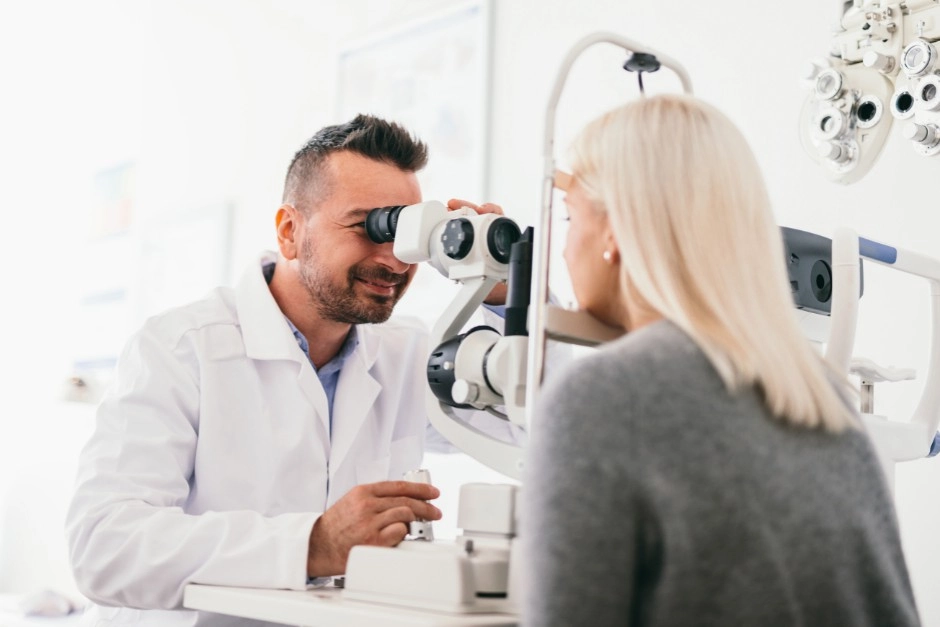 The last type of peripheral vision test, which also uses the same dedicated perimeter machine as the previous test. Here though, light moves in and out of your side vision, rather than appearing in one place and disappearing after. This approach allows a more accurate understanding of where the issues with peripheral vision begin in terms of the field of view, and are particularly useful for diagnosing retinal diseases and neuro ophthalmological issues.
A saúde da visão também está relacionada com a sua saúde geral, pelo que uma alimentação sensata, a prática de muito exercício físico e um estilo de vida saudável em geral podem ter um enorme impacto. Proteger os olhos também faz parte desse processo, mas com muitos problemas que causam a perda temporária da visão periférica associados à falta de saúde geral, fazer um esforço para manter um estilo de vida mais saudável pode ser a melhor abordagem para a saúde dos olhos.
 However, while taking care of yourself is great advice, with regular eye exams to identify issues early, you may still find problems that need treating. Tunnel vision is one of the more common eye diseases we suffer from, and as a result there is extensive medical understanding of the disease and its treatment.
In general, tunnel vision is treated by dealing with the underlying issue that is causing it. Whether that is glaucoma, retinal diseases and so on, by solving this issue in a large number of cases, the loss of peripheral vision is also resolved too. In a similar way, issues caused by strokes, hypertension, concussion and migraines tend to be temporary too, and as the underlying issue is dealt with, so the vision health issue will be too.
No entanto, há alguns casos em que a perda de visão periférica é permanente e, neste caso, o objetivo é ajudar os doentes a gerir a sua condição para que o impacto seja o mínimo possível. Os auxílios visuais da série Acesight E-glasses, como o Acesight e o Acesight VR, são capazes de ajudar as pessoas com perda de visão periférica. Este tipo de auxílio visual está equipado com a função de modo estreito, que permite ao utilizador mover o ecrã para um local adequado, de modo a adaptar-se à situação de visão de túnel. Mais informações sobre os óculos Acesight e Acesight VR E-glasses estão disponíveis no sítio Web oficial: https://www.acesight.com/. Com uma vasta gama de tecnologias de ajuda, os problemas de visão periférica podem ser geridos eficazmente e permitir que as pessoas com visão 20/200 mantenham o seu estilo de vida e independência.
Referências
https://my.clevelandclinic.org/health/symptoms/24435-tunnel-vision-peripheral-vision-loss
https://dmei.org/blog/peripheral-vision-loss-what-is-it-and-how-to-treat-it/
https://www.aao.org/eye-health/symptoms/vision-loss-peripheral-side