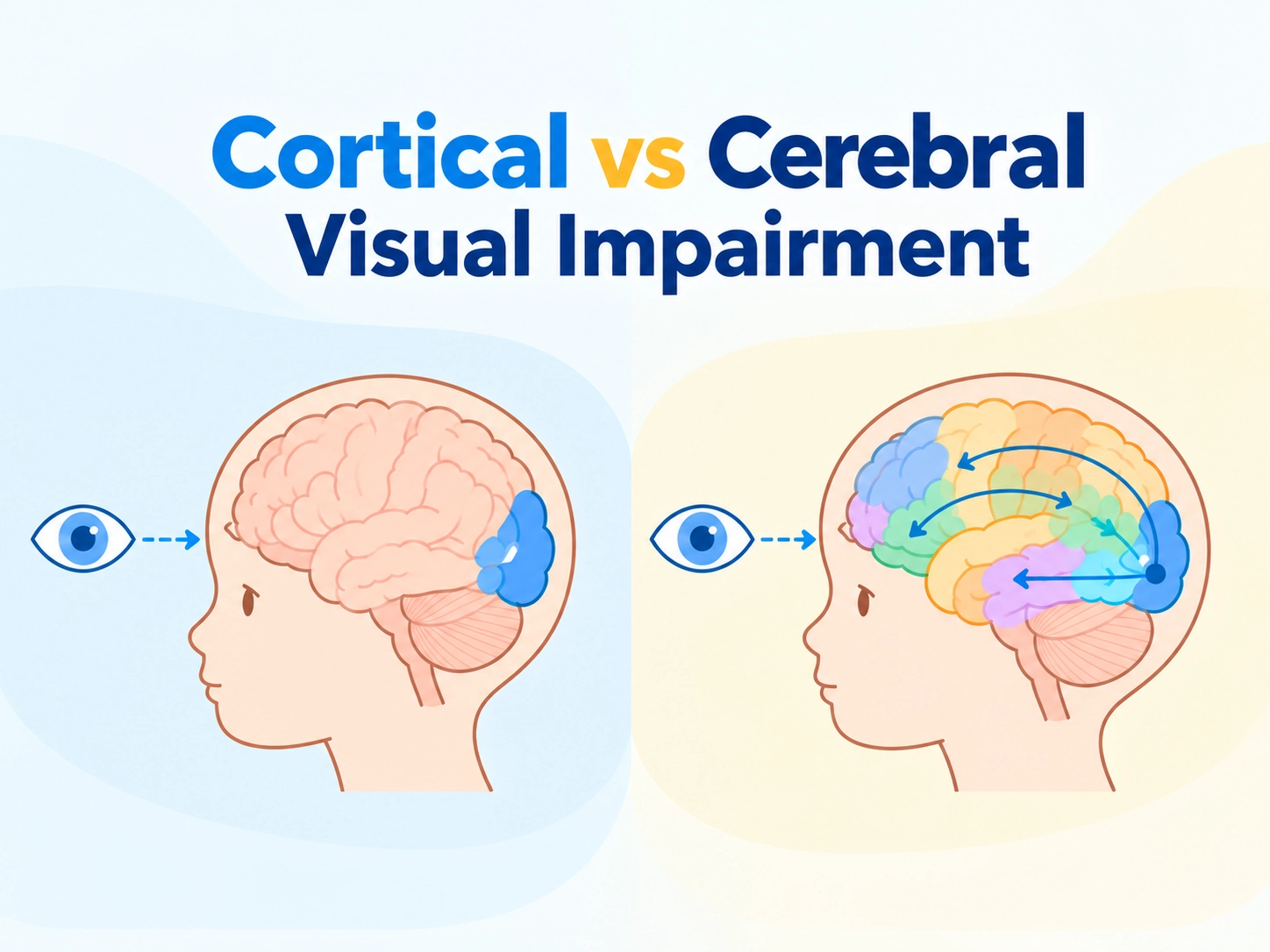
In the early generations of assistive technology, Optical Character Recognition (OCR) was considered a breakthrough capability. The ability to capture printed text and convert it into speech significantly improved access to information for people with visual impairments. However, as artificial intelligence rapidly evolves, OCR alone is no longer enough.
Today, the conversation has shifted from whether a device can recognize text to whether it can understand, interpret, and interact with information in real time. Emerging advances in Vision-Language Models (VLMs), edge AI computing, and conversational interfaces are transforming OCR from a standalone feature into part of a broader intelligent reading ecosystem.
For organizations evaluating next-generation assistive technologies, understanding this shift is becoming increasingly important. Recent research on text accessibility assessment demonstrates that evaluating OCR assistant performance from the perspective of low-vision users is becoming increasingly important for next-generation assistive technologies. At the same time, deployment challenges such as latency, reliability, privacy, and user experience remain critical considerations for clinical and educational environments.
The Rise of Real-Time AI Reading in Wearable Vision Technology
Traditional OCR systems were designed to perform a relatively straightforward task: detect text, convert it into digital characters, and read it aloud. While this capability remains valuable, modern users increasingly expect more dynamic and contextual interactions.
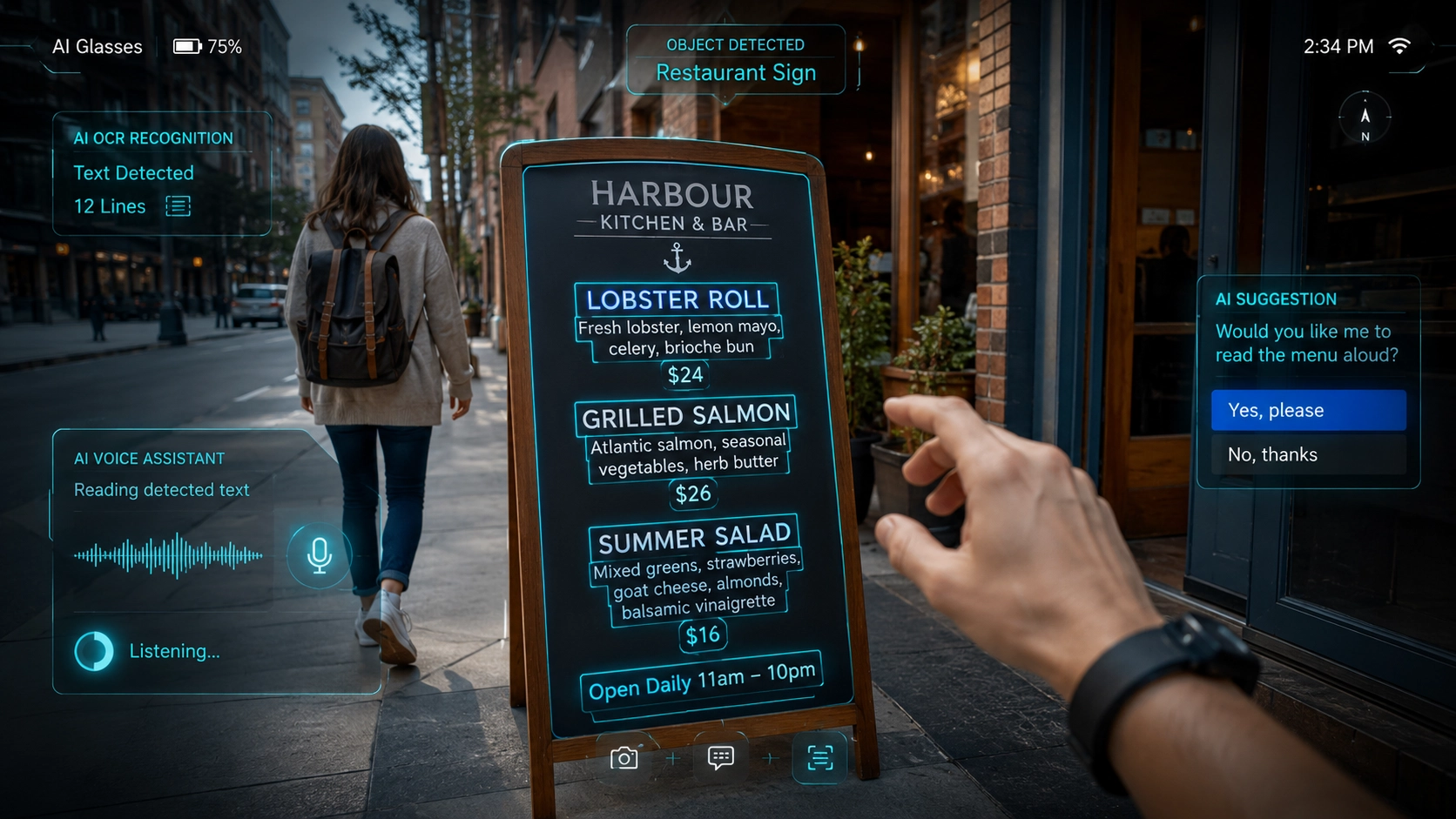
The emergence of ai assisted OCR and large Vision-Language Models has expanded the role of OCR beyond simple text extraction, enabling new forms of multimodal AI systems for blind and low vision users. Instead of merely reading words, AI-powered systems can increasingly provide contextual explanations, summarize information, answer questions, and assist users in navigating complex visual environments. Research published in 2026 demonstrates how wearable vision assistance systems are integrating real-time object recognition with contextual understanding through large vision-language models, enabling a more intelligent form of environmental interaction.
This evolution is also reflected in broader technology trends. Wearable devices showcased at CES 2026 highlighted the growing adoption of AI voice interfaces, real-time translation, contextual awareness, and hands-free interaction capabilities, indicating a broader industry movement toward intelligent wearable computing.
As a result, modern OCR for visually impaired users is becoming less about isolated reading tasks and more about creating a continuous information layer between the user and their environment.
This transition from text recognition to contextual reading is reshaping expectations across low vision rehabilitation and assistive technology sectors.
Why Latency, Camera Positioning, and Edge AI Stand as Deployment Essentials
While AI capabilities often attract the most attention, successful implementation depends heavily on underlying system design.
Organizations evaluating wearable OCR solutions should consider several critical performance indicators that directly influence rehabilitation outcomes and user adoption.
Low Latency Enables Natural Reading
In practical reading scenarios, excessive processing delays can interrupt comprehension and increase cognitive fatigue.
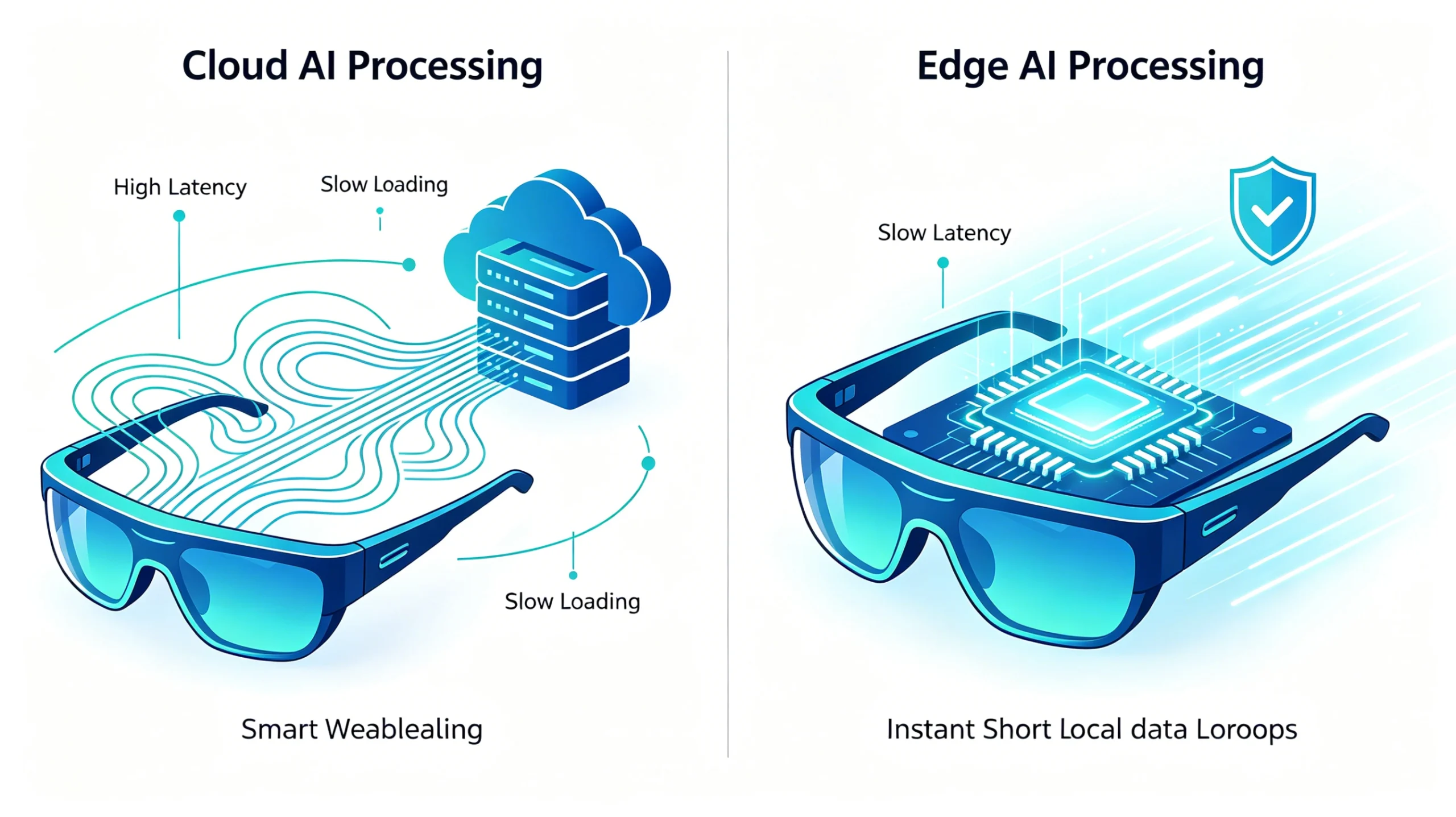
Edge-based AI architectures reduce dependence on cloud processing by performing recognition and inference directly on the device. Recent assistive technology research highlights that local processing can reduce latency while simultaneously improving privacy and reliability.
For users reading menus, textbooks, medication labels, or classroom materials, responsiveness becomes as important as recognition accuracy.
Camera Placement Directly Influences OCR Performance
Camera positioning remains one of the most overlooked factors in wearable OCR design.

Recent studies evaluating OCR performance in assistive technology environments found that recognition accuracy is affected by viewing angle, user movement, walking speed, and camera placement. Head-mounted and body-mounted configurations can significantly influence the quality of captured text and the overall user experience.
Edge AI Supports Privacy and Reliability
For healthcare and educational environments, privacy considerations are becoming increasingly important.
Edge AI enables sensitive visual information to remain on-device rather than being continuously transmitted to cloud servers. This architecture can help institutions address concerns related to data security, regulatory compliance, and network reliability while improving system responsiveness.
Procurement Challenges Facing Schools, Clinics, and Rehabilitation Centers
As AI-powered OCR technologies mature, procurement decisions are becoming more complex.
Organizations must evaluate not only device specifications but also long-term operational sustainability.
Key Questions Buyers Commonly Evaluate
- Multilingual OCR Support:Many institutions serve diverse populations and require OCR systems capable of recognizing multiple languages accurately. Recent multilingual OCR research highlights ongoing challenges associated with language coverage, recognition accuracy, and edge deployment performance.
- Training and Adoption Costs:Even highly capable systems may experience limited adoption if users face steep learning curves. Simple interfaces, intuitive workflows, and accessible onboarding programs can significantly improve long-term utilization rates.
- Software Updates and Future Readiness:The rapid pace of AI development means that software architecture is increasingly important. A device purchased today should be designed with the capability to continuously receive future enhancements, including improvements in AI reading capabilities, expanded language support, more advanced conversational interaction functions, upgraded accessibility features, and ongoing security updates. This level of future readiness ensures that the device remains relevant and adaptable as technology and user expectations continue to evolve.
- Long-Term Service and Support:Rehabilitation programs often operate under multi-year equipment lifecycles, which makes long-term service and support a critical factor in procurement decisions. Organizations typically evaluate whether warranty coverage is comprehensive, whether technical support is consistently available, how software maintenance is managed over time, and how stable the overall product lifecycle is. In addition, distributor training resources also play an important role in ensuring effective deployment and sustained usage. Together, these factors can have a significant impact on the total cost of ownership and long-term operational efficiency.
Technical Evaluation Framework for AI OCR Devices
Based on the key questions outlined above, the evaluation framework below provides a consolidated reference to support more confident procurement decisions.
Evaluation Factor | Why It Matters |
OCR Accuracy | Determines reading reliability across diverse materials |
Processing Latency | Influences reading flow and user comfort |
Camera Positioning | Affects text capture quality during daily use |
Edge AI Capability | Supports privacy, responsiveness, and offline functionality |
Multilingual Support | Expands accessibility across diverse user populations |
AI Voice Interaction | Enables natural hands-free control |
Software Upgrade Path | Extends product lifespan and future adaptability |
Technical Support Infrastructure | Reduces operational risk for institutions |
Why AI-Ready OCR Systems Will Define the Next Generation of Low Vision Devices
The future of OCR in low vision devices is moving toward intelligent understanding rather than simple text extraction.
Emerging multimodal AI systems are increasingly capable of:
- Conversational Reading:Users can ask follow-up questions about documents instead of listening to entire pages.
- Text Summarization:AI can identify key information and provide concise summaries for lengthy documents.
- Context-Aware Assistance:Modern Vision-Language Models combine OCR with scene understanding, enabling richer explanations of visual content.
- AI Voice Interaction:Voice-driven interfaces are becoming a central component of next-generation accessibility technology, enabling more natural communication between users and devices.
As these capabilities mature, competitive differentiation will increasingly depend on how effectively AI can understand information rather than simply read it aloud.
In other words, the future of mobile OCR is not merely recognition—it is comprehension.
How Zoomax Continues to Advance Reading Technology Beyond OCR
At Zoomax, innovation has always focused on transforming advanced technologies into practical reading experiences for people with low vision. Rather than treating OCR as a standalone feature, we continue to explore how emerging technologies can enhance accessibility, independence, and long-term usability—building a more comprehensive low vision solution that evolves alongside advances in AI and user needs.
Our upcoming Snow Pad Pro, featuring AI OCR capabilities, embodies this vision. It makes the leap from simple text recognition to deep reading comprehension based on contextual understanding, bringing intelligent reading assistance into everyday life for individuals with low vision. Stay tuned for its launch and more exciting innovations to come.
As one of the industry’s established innovators among modern assisted living technology companies, Zoomax recognizes that the future of reading assistance extends beyond OCR alone. The next generation of assistive technology will increasingly combine recognition, contextual understanding, and intelligent interaction into a unified user experience.