Overview
- Growing Patient Need: Cataract complex patients are increasing in aging populations.
- Awareness Opportunity: June’s Cataract Awareness Month highlights patient education and engagement.
- Precision Solutions: Devices like Luna 8, Snow 12, and Luna HD 24 Pro address layered visual challenges.
- Key Device Features: Adjustable magnification, brightness, OCR, portability, and ergonomic design are essential.
- Market Potential: The 60–80 age group drives demand for home and portable low vision devices.
- B2B Benefits: Partners can improve patient satisfaction, differentiate services, and expand market reach.
Raising Awareness During Cataract Awareness Month
June is recognized globally as Cataract Awareness Month, providing a unique opportunity for healthcare institutions, rehabilitation centers, and specialized schools to enhance public education on visual health. Cataracts remain a leading cause of vision impairment worldwide, with prevalence increasing in aging populations [1]. During this month, organizations can engage patients and caregivers, raise awareness of vision aids for cataracts, and introduce innovative solutions for low vision tailored to individuals with cataract complex conditions.
Understanding Cataract Patients with Coexisting Low Vision Conditions
Many cataract complex patients present with coexisting visual disorders, including macular degeneration, glaucoma, or diabetic cataracts [2]. These conditions exacerbate vision challenges, affecting daily activities such as:
- Reading prescription labels and medical instructions
- Identifying medication packaging
- Performing household tasks safely
- Participating in rehabilitation exercises
Standard magnifiers often cannot meet these patients’ layered visual requirements. Professional adaptive devices for low vision must ensure sufficient contrast, magnification, and clarity, supporting independent living and rehabilitation[3] .
Clinical Needs and Technological Demands
Patients with cataracts and macular degeneration, cataract and glaucoma, or diabetic cataracts have specific low vision device requirements:
- Adjustable Magnification:
- Near tasks (e.g., reading medication labels or recipes) require precise control, often 4x–20x.
- Distance tasks (e.g., identifying street signs or whiteboard text) require 2x–10x options.
- Brightness and Contrast Optimization:
- Adjustable illumination for varying light conditions.
- High-contrast display modes to reduce glare, critical for cataract complex
- Smart Text Recognition (OCR):
- Reads printed text aloud or displays it enlarged.
- Supports independent reading, medication management, and rehabilitation exercises.
- Portability and Ergonomics:
- Handheld devices for outdoor or short-term use.
- Lightweight design reduces fatigue for elderly patients with cataracts.
- Multi-Environment Adaptability:
- Suitable for home, rehabilitation centers, or travel.
- Devices should accommodate both handheld and full-page desktop use.
- Ease of Use:
- Intuitive interface reduces training time for patients and caregivers.
Technical Specification Summary: Devices should be CE/FDA/RoHS certified, high-resolution, ergonomically designed, and feature adaptive contrast and brightness to support extended use without eye strain.
Market Trends, User Demographics, and Growth Opportunities
The aging population is expanding the market for low vision solutions. Most cataract complex patients are aged 60–80, creating demand for large-screen devices for extended home use and portable devices for daily errands or travel.
Emerging trends include:
- Smart recognition features for reading and labeling
- Enhanced portability for independent living
- Compatibility with telehealth and home rehabilitation programs
For distributors, eye care institutions, and rehabilitation centers, investing in precision low vision devices ensures a competitive advantage, meeting patient needs while addressing a growing market segment.
Recommended Products for Complex Cataract Patients
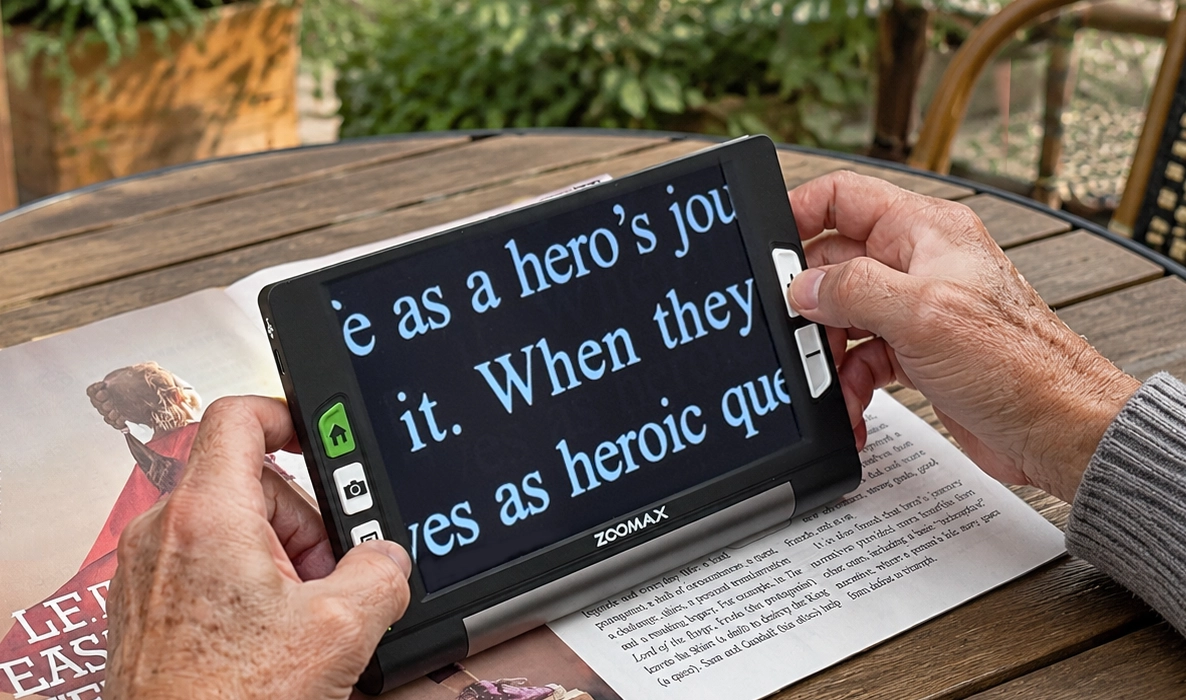
Zoomax Luna 8 – Compact Handheld Digital Magnifier
Use Case Example:
Mrs. Li, 72, diagnosed with cataracts and mild glaucoma, wants to read her medication labels and books both at home and while traveling. Zoomax Luna 8, provides adjustable magnification, allowing her to comfortably enlarge text wherever she is. Its lightweight design and long battery life make it easy to carry for extended use without fatigue.
User Quote:
“I can finally read my prescription labels without asking for help, and I take it with me everywhere. It makes daily tasks so much easier!”
Zoomax Snow 12 – Mid-Size Desktop Digital Magnifier
Use Case Example:
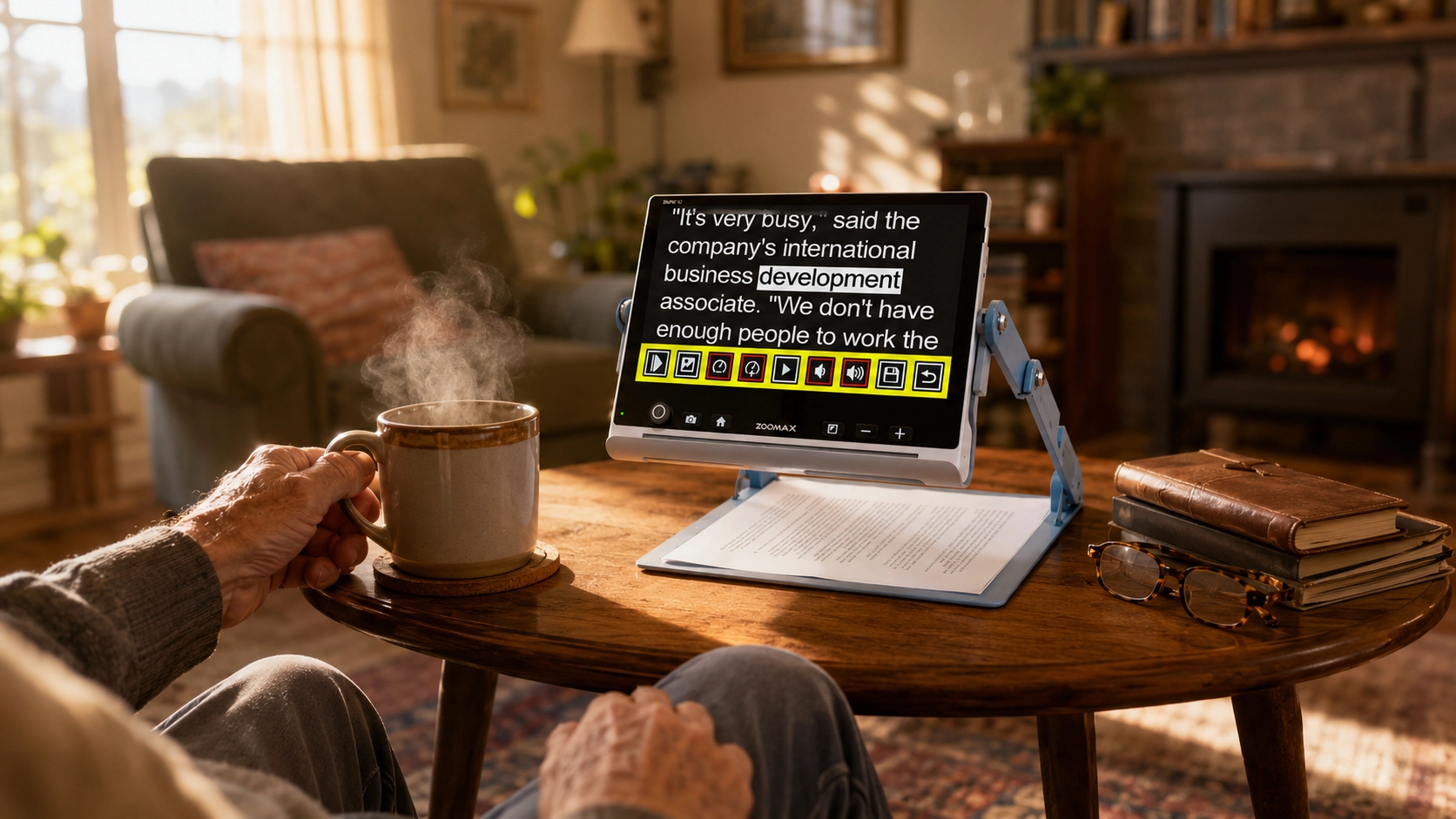
Mr. Johnson, 68, with cataracts and early-stage macular degeneration, is left-handed and needs to write notes while reading bills. Using the OCR text-to-speech function of Snow 12 video magnifier, he can have printed books read aloud clearly, allowing him to continue enjoying literature independently without straining his eyes. This feature, combined with the adjustable screen and foldable stand, makes daily reading comfortable and accessible.
User Quote:
“Being able to listen to my favorite books again is amazing. The adjustable lights make writing notes so much simpler too.”
Luna HD 24 Pro – Large-Screen Digital Magnifier Solution
Use Case Example:
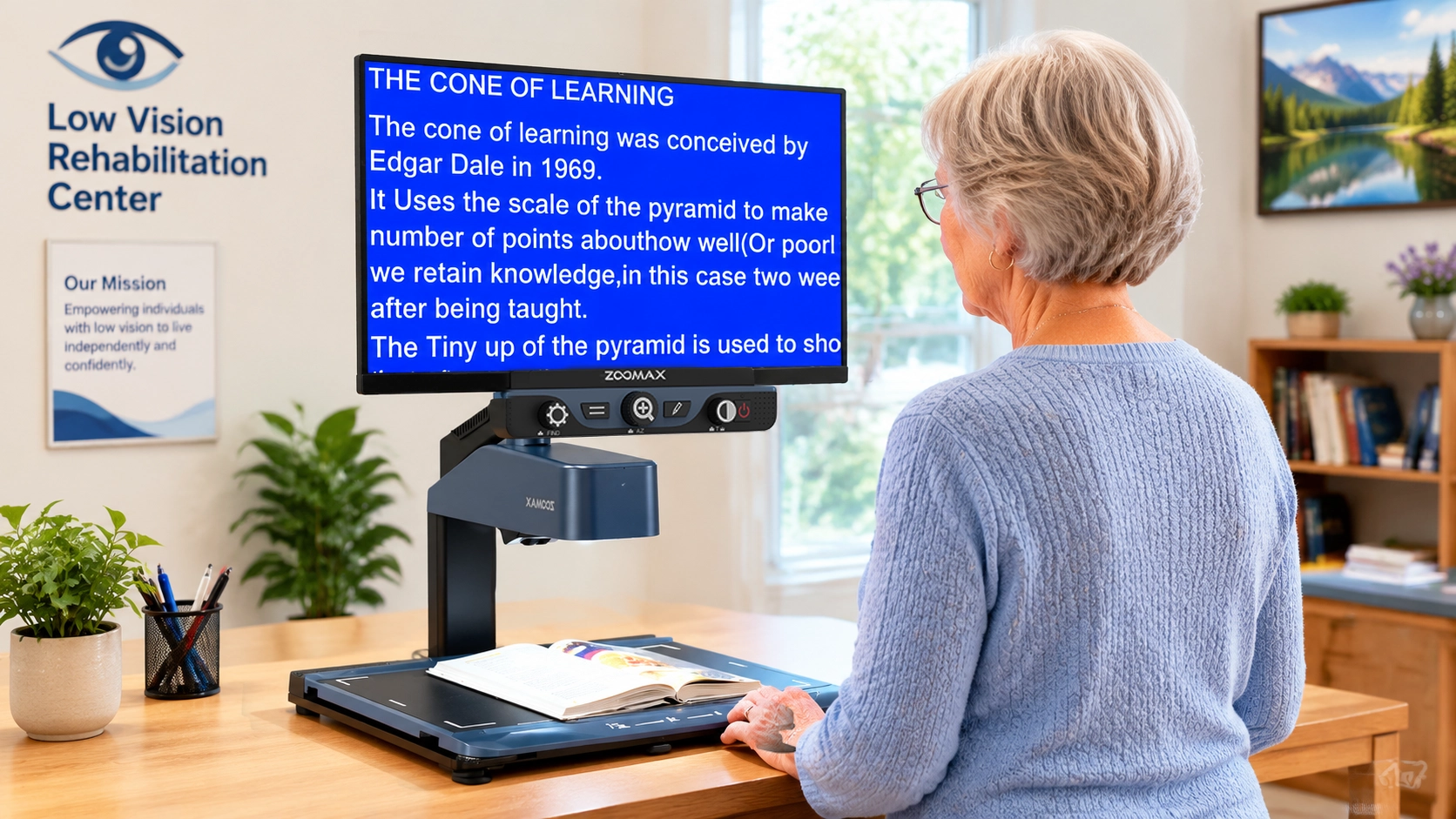
Ms. Rodriguez, 75, with diabetic cataracts, participates in rehabilitation exercises and reads full-page documents at home. Luna HD 24 Pro full page desktop magnifier offers a flexible XY table, allowing her to slide documents side-to-side and front-to-back, so she can comfortably view full pages while sitting or standing. This single feature makes long reading or rehab sessions easier and less tiring.
User Quote:
“I can now read full-page documents without straining my eyes, and adjusting the screen to my sitting or standing position makes rehab much more comfortable.”
Zoomax Cataract Complex Low Vision Products Catalog
Feature / Device | Luna 8 | Snow 12 | Luna HD 24 Pro |
Screen Size | 8” | 12” | 24” |
Portability | High – handheld, lightweight | Moderate – desktop with foldable stand | Low – large desktop, stationary |
Key Features | Adjustable magnification, brightness & contrast, up to 8-hour battery life | Smart OCR, foldable stand for writing, independent left & right LED lights for varying lighting and writing habits | Full-page HD magnification, multi-mode display, high contrast, X-Y table glides 80 cm side-to-side & 70 cm front-to-back, adjustable monitor bracket rotates 45° up/90° down/90° left-right |
Typical Patient Scenario | Reading medication labels or books at home or outdoors (e.g., elderly patient with cataracts and mild glaucoma) | Reading, writing, or paying bills at home (e.g., elderly patient with cataracts and early-stage macular degeneration); foldable stand and LED lights make handwriting or annotation easy for left- or right-handed users | Rehabilitation center or home full-page reading (e.g., elderly patient with diabetic cataracts); flexible XY table and adjustable monitor allow patient to sit or stand comfortably while reading or writing full-page documents |
Recommended Use Environment | Home, travel, long-duration reading (up to 8 hours battery) | Home, desk work, writing, moderate reading & text recognition | Rehabilitation center, long-duration reading, full-page documents, flexible working positions |
Professional Tip: Emphasize patient-specific scenarios to B2B partners during demonstrations, showing how devices address white cataract complex cases for daily living and rehabilitation.
Partnering with Zoomax for Enhanced Value in Cataract Awareness Month
Zoomax delivers more than devices—we provide a complete solution for low vision ecosystem:
- Training and support for clinicians and staff
- Marketing and channel resources to boost patient engagement
- Local service and technical assistance to reduce operational burdens
- Global expertise: CE/FDA/RoHS certifications, 20+ years of experience, distribution in 80+ countries
- Warranty and innovation: 2-year coverage and ongoing R&D