Key Takeaways
- Most gradual vision shifts in adults over 60 are normal parts of aging, but some symptoms may signal underlying eye disease.
- The five most prevalent age-related eye conditions are presbyopia, cataracts, age-related macular degeneration, glaucoma, and dry eye disease.
- Regular comprehensive eye exams every 1–2 years enable early detection, which can slow or halt progression of most serious eye diseases.
- For permanent low vision, rehabilitation and assistive technology help maximize remaining sight and support daily independence.
- Electronic video magnifiers are a practical low vision aid for both at-home reading and on-the-go daily tasks.

If you’re over 60, you’ve likely noticed gradual vision shifts: holding reading material farther away to focus, struggling with headlight glare at night, needing brighter light to see indoors, or dealing with dry, gritty eyes and faded colors. These everyday frustrations often leave people wondering: are these changes just a normal part of aging, or warning signs of something more serious?
Many of these shifts stem from natural physical changes in the eye as we age. The lens stiffens and loses elasticity, making near focus harder. Pupils shrink and let in less light, explaining the need for brighter lighting and difficulty with dark environments. Tear production slows, causing dryness and irritation, while the lens gradually yellows and retinal light sensitivity declines, dulling color and contrast. For most people, these are normal changes, not disease—but some symptoms should not be dismissed as “just getting old,” as they can be early signs of eye diseases. Below are the five most common age-related eye conditions and how they impact daily life.
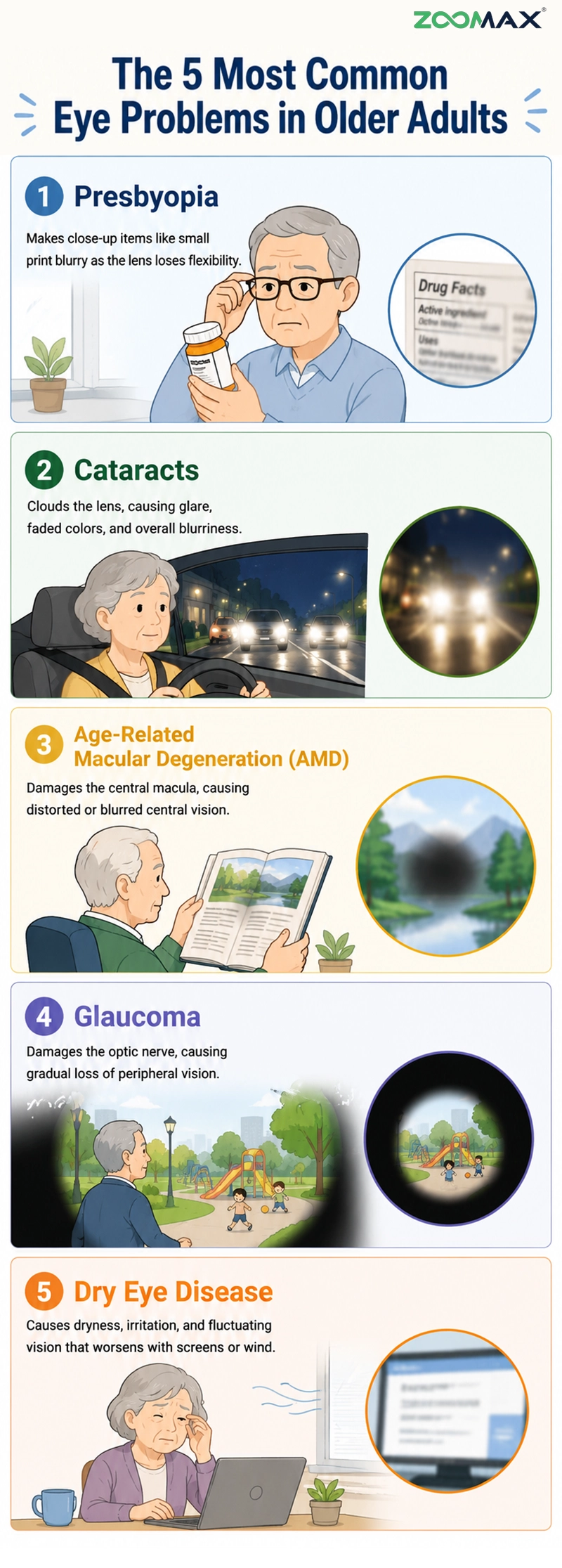
The 5 Most Common Eye Problems in Older Adults—and How They Affect Daily Life
1. Presbyopia
Presbyopia is nearly universal by age 65, caused by the lens’s declining flexibility. It makes small print on medicine labels, menus, and phones blurry up close, leading people to hold items farther away to see. In most cases, mild near-vision fuzziness from presbyopia can be corrected with reading glasses. However, if text remains unclear even with glasses on, or if a dark spot appears in the center of your sight, these are not typical presbyopia symptoms—they may point to more serious conditions such as macular degeneration, which require professional low vision aids.
2. Cataracts
Cataracts are one of the most common eye diseases globally in adults over 75, forming when the eye’s natural lens clouds over like a fogged window. Day to day, they cause increased glare from headlights, faded colors, and general blurriness that makes recognizing faces or watching television feel like looking through a smudged pane of glass.
3. Age-Related Macular Degeneration (AMD)
AMD is the leading cause of permanent low vision in older adults worldwide, damaging the retina’s central macula that controls sharp, detailed vision. Early on, straight lines may appear wavy and small print hard to read; as it progresses, a dark blurry spot forms in central vision, making faces, reading, and detailed handwork difficult, even while peripheral vision remains intact.
4. Glaucoma
Known as the “silent thief of sight”, glaucoma damages the optic nerve with no obvious early symptoms, gradually eroding peripheral vision. Over time, people may bump into furniture, miss steps, or feel disoriented in crowds, with vision eventually narrowing to a tunnel-like field. Regular eye exams are the only reliable way to detect it early.
5. Dry Eye Disease
Chronic dry eye is a widely underrecognized eye problem in older adults, occurring when eyes lack sufficient quality tears. Beyond a gritty, sandy sensation, it causes stinging, burning, and fluctuating vision that worsens with reading, screen time, or exposure to wind and air conditioning, making extended focus difficult.
With so many shared symptoms between normal age-related vision changes and early eye problems in the elderly, it can be hard to tell harmless, gradual shifts apart from the first signs of a developing condition. Knowing how to distinguish between the two is key to protecting your long-term sight and getting timely treatment when needed.
Is It Just Aging—or Should You See an Eye Doctor?
Mild, gradual changes are typically harmless: slowly needing to hold reading material farther away, requiring brighter light for close work, occasional mild eye fatigue after long screen use, and slowly fading color vibrancy over years are all expected parts of aging.
However, certain symptoms are not normal and require prompt medical evaluation. Seek care right away if you experience:
- Sudden, unexplained vision loss in one or both eyes
- A sudden spike in floaters paired with flashes of light
- Dark, blank, or blurry spots in your central vision
- Severe eye pain, redness, or persistent headache
- Blurred vision that does not clear with blinking or rest
- Rapidly worsening difficulty adjusting to darkness
Unlike presbyopia, which advances gradually, conditions such as glaucoma and macular degeneration can cause sudden, irreversible damage if early warning signs are overlooked. This makes timely detection critical: the World Health Organization estimates that at least 80% of visual impairment globally could be avoided with prompt care. For glaucoma, AMD, and diabetic retinopathy, beginning treatment early can slow or halt deterioration, helping preserve as much functional sight as possible. For this reason, comprehensive eye exams every 1–2 years are advised for all adults over 60, even if no noticeable changes have occurred.
Still, certain age-related eye diseases may progress to permanent low vision despite the best available treatment. When that happens, low vision rehabilitation becomes essential, empowering individuals to make the most of their remaining functional vision.
Living Well with Low Vision: The Next Step After Diagnosis
It is important to note that not all age-related eye conditions lead to permanent low vision. Cataracts, for example, can often be successfully treated with surgery to restore clear vision. But for chronic, progressive conditions like glaucoma, age-related macular degeneration, and diabetic retinopathy, there is currently no cure, and many people will experience lasting vision loss even with the best available medical care.
For these people, low vision rehabilitation is the next most important step forward. It works alongside—not in place of—ongoing medical treatment, combining professional low vision assessments, personalized vision rehabilitation training, and assistive technology to help people make the most of their remaining sight. The goal is never to restore vision to “normal,” but to support continued engagement in the activities that matter: following a favorite recipe, sorting household bills and mail, reading handwritten notes from family, and recognizing product labels and price tags while out shopping.
Across all these daily tasks that rely on clear close-up vision, low vision assistive tools make a tangible difference. Among them, electronic video magnifiers stand out for their ability to deliver sharp, stable, adjustable magnified imagery, turning once-frustrating routines into manageable, independent activities.

How the Right Visual Aids for Visually Impaired Seniors Can Help You Stay Independent
To get the most out of these tools, it helps to match the right device to your daily routine—and it is completely normal to have questions and concerns when exploring your options.
Common Concerns When Exploring Visual Aids
Many older adults considering electronic video magnifiers share three common hesitations: that the devices will be overly complicated to operate, too bulky to carry for everyday errands, or not cost-effective compared to simpler alternatives like basic handheld magnifiers or smartphone camera zoom.
Ease of Use Built for Older Adults
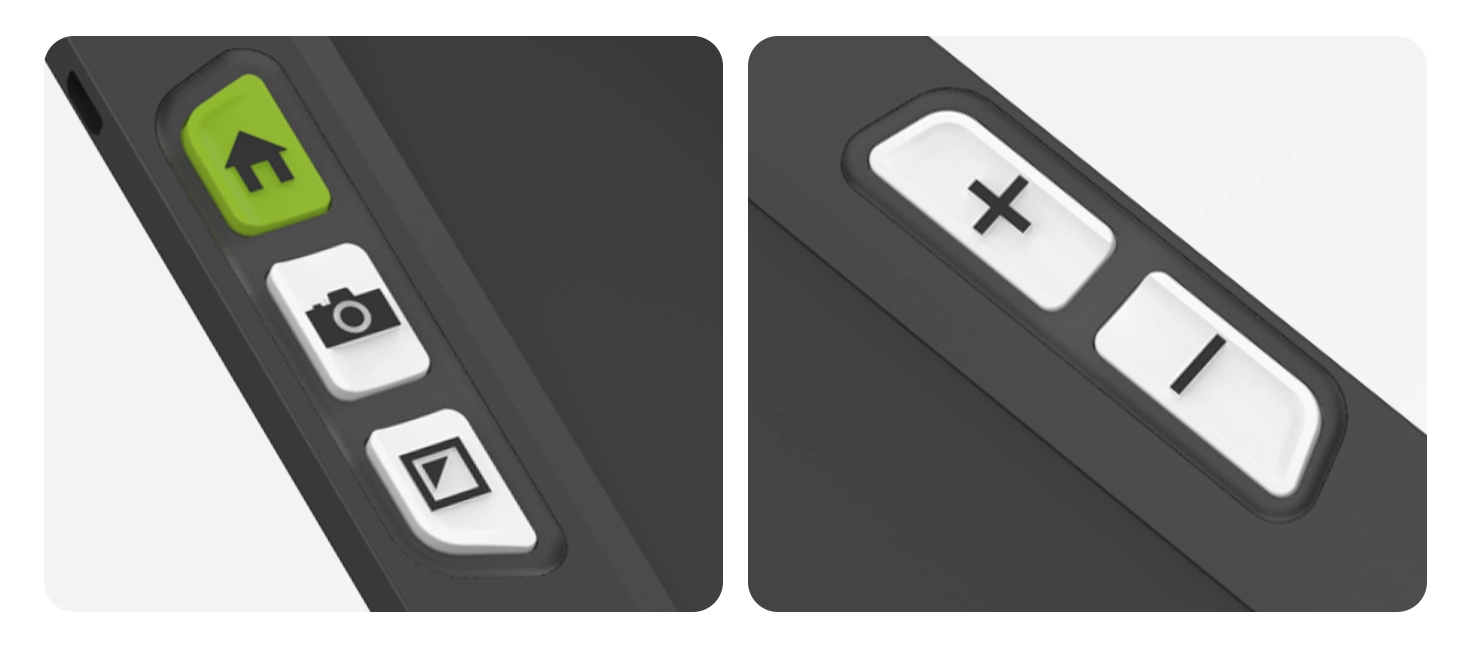
Ease of use is a foundational design priority for low-vision magnifiers. Purpose-built for older adults and people with visual impairment, these devices such as Zoomax Luna 8 feature large, tactile buttons and intuitive, streamlined controls for core functions. Most models activate magnification with a single press, with no complex menus, lengthy setup, or technical expertise required, so users can operate them confidently and independently right out of the box.
Compact Portability for Daily Errands
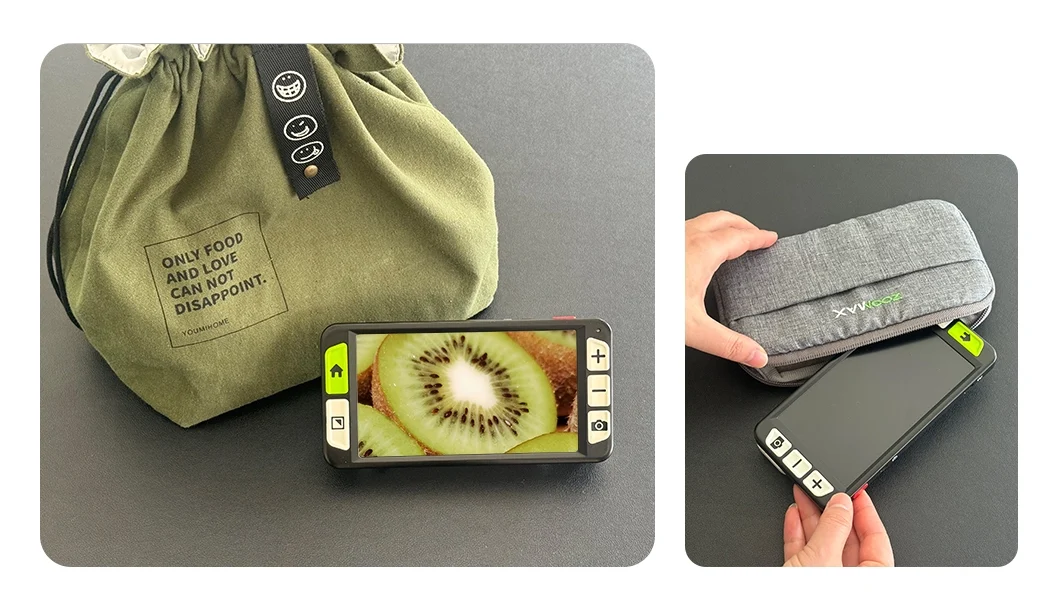
For those who need visual support outside the home, handheld magnifiers like Zoomax Luna 6 are engineered to be compact and lightweight, with a form factor comparable to a standard smartphone. They slip easily into a purse, jacket pocket, or shopping tote, making them readily accessible for reading product labels, price tags, restaurant menus, and transit schedules during routine outings.
Professional-Grade Performance for Long-Term Value
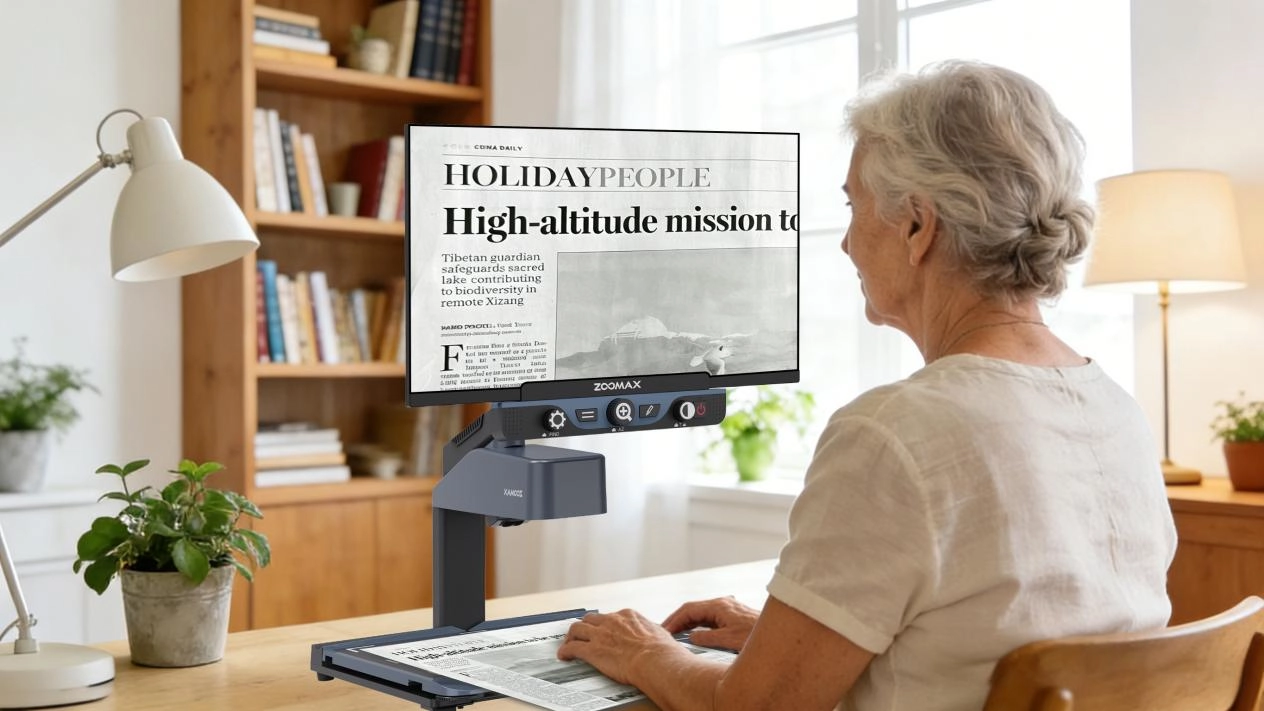
When it comes to value, it is important to distinguish professional assistive technology from consumer-grade alternatives. While basic magnifying glasses or smartphone zoom carry a lower upfront cost, they cannot match the consistent optical clarity, stable auto-focus, flicker-free displays, and customizable contrast modes that are engineered specifically for age-related low vision. Assistive technology devices for low vision are designed for repeated, extended daily use, with features that reduce eye strain and perform reliably, such as Zoomax Luna HD 24 Pro. This level of specialized performance delivers greater long-term value by supporting sustained independence and reducing the frustration that often comes with ill-suited visual tools.
Key Factors to Compare Before You Buy
When comparing options, focus on practical factors that align with your specific vision needs and daily lifestyle:
- Adjustable magnification levels and screen sizes that match your degree of vision loss
- A bright high-resolution display with multiple contrast settings
- Controls that are easy to use without fine motor dexterity
- Ergonomic design for comfortable extended use
- Battery life that supports your typical time away from home
- Reliable auto-focus that functions consistently even if your hands are unsteady
Above all, the right visual aid is one that fits seamlessly into your life, removing barriers rather than adding new ones. It is not meant to restore vision to “normal”—it is meant to help you carry out daily tasks with confidence and autonomy.
Explore Funding Options Before You Buy
Before purchasing a low vision device, check whether you may qualify for government funding, subsidies, or other financial assistance in your area. Many countries and regions—including Australia, Japan, and Europe—offer funding, subsidies, or other support for eligible older adults or people with vision loss. Programs and eligibility requirements vary by location.
Your local low vision organization, vision rehabilitation service, or blindness and low vision association can help you learn about available funding and choose an appropriate device. You can also contact Zoomax for information about potential funding or support options in your region.